A tourist visiting Oslo last February left with one striking impression: electric vehicles have become completely ubiquitous across the Norwegian capital. Every taxi hailed ran on battery power, a visible sign of a decades-long transition that has positioned Norway as the global trailblazer for electric vehicle adoption.
Last year, driven by generous government tax incentives and subsidies, new electric vehicle sales captured 95.9% of Norway’s total new car market, jumping from 88.9% in 2024. While EVs already dominate new purchases, two-thirds of the country’s total passenger vehicle fleet still runs on fossil fuels — a gap Norway is rapidly working to close. In 2025, EVs surpassed diesel-powered vehicles for the first time to become the most common powertrain on Norwegian roads, putting the country on track to meet its goal of a fully fossil-free new car fleet.
Norway’s rapid EV transition is not an isolated trend. Global adoption of electric vehicles has been fueled first by growing urgency around climate change, and more recently by supply chain and price volatility for oil-driven by geopolitical conflicts such as the Iran war, which pushed more nations to prioritize domestic, low-carbon transportation.
Last year, EVs made up 55% of all new car sales in China and 28% in Europe. The International Energy Agency projects that 28% of all new car sales globally will be electric this year, with 50% growth in EV sales across Asia-Pacific markets outside China and 45% growth in Latin America. By 2035, the IEA forecasts that half of all new cars sold worldwide will be electric.
The United States stands out as a stark outlier to this global trend. Last year, EVs accounted for less than 10% of new car sales in the U.S., and sales have declined further this year. The current Trump administration, which has prioritized supporting domestic oil production, has rolled back nearly all pro-EV policies enacted by the previous administration.
Detroit’s Big Three automakers, which had poured tens of billions of dollars into EV development and battery manufacturing, have reversed course after receiving clear signals from the administration. Multiple planned new EV models have been canceled, and billions in EV-related investments have been written off as losses. While the major U.S. automakers still offer EVs and have tentative plans for future models, their enthusiasm and investment in the sector have sharply declined.
For veteran auto journalist Urban Lehner, the author of this analysis and former Detroit bureau chief for The Wall Street Journal, this pattern of complacency in the face of rising global competition feels familiar. In 1984, when Lehner took up his post in Detroit after three years covering the Japanese auto industry in Tokyo, Detroit’s executives showed almost no curiosity about the competitive threat from Japanese manufacturers that would go on to reshape the global industry. Most dismissed the trend, changing the topic to local sports rather than engaging with the shifting market.
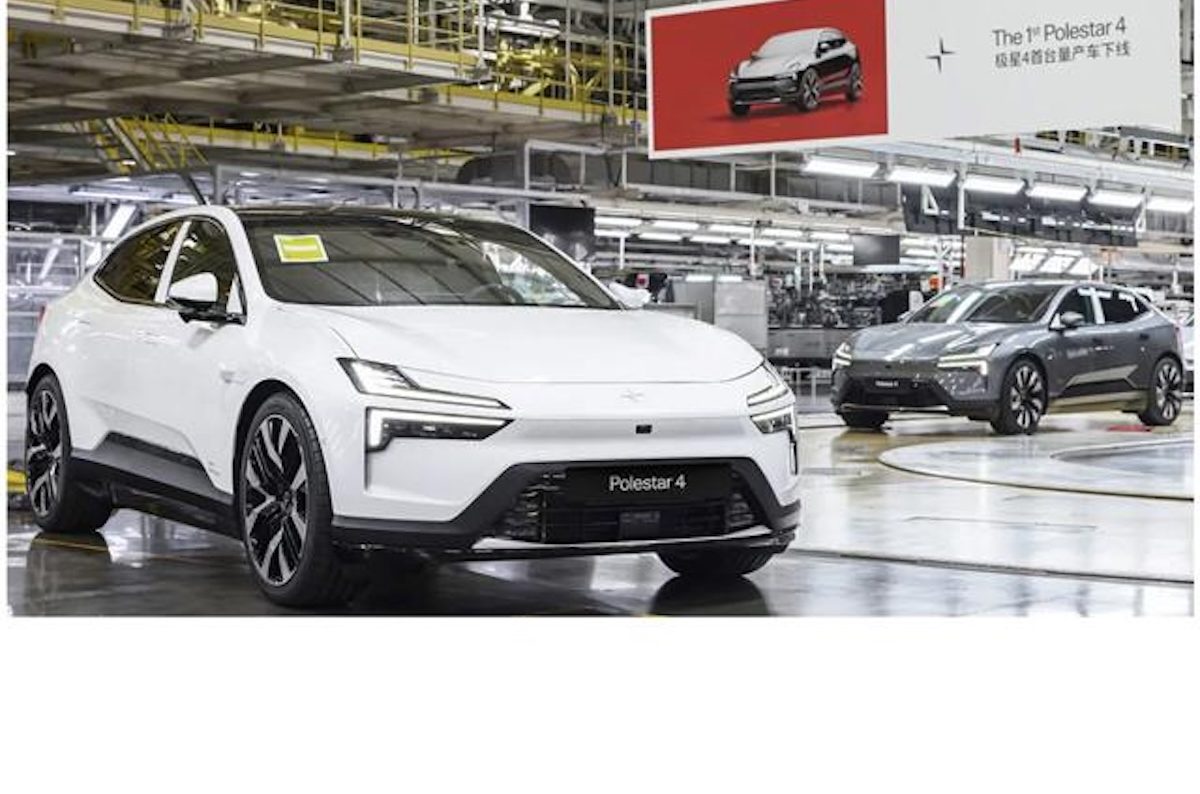
Today, the rising competitive threat comes from China, which dominates global EV production. The IEA reports that China manufactured nearly 75% of the world’s EVs last year and controls nearly 80% of global battery cell production. Cutthroat domestic competition has pushed Chinese manufacturers up the learning curve rapidly, with vehicle quality and technology improving steadily year over year. In China, many EVs are already cheaper than comparable gas-powered cars, and as battery technology improves, experts expect they will reach price parity globally without relying on government subsidies. EVs already outperform gas-powered cars in acceleration, noise level, and maintenance costs, with driving range continuing to improve rapidly.
The U.S. currently imposes 100% tariffs on Chinese-made EVs, shielding domestic manufacturers from direct competition in the short term. Still, Ford Executive Chairman recently warned that the U.S. cannot block Chinese EVs from its market forever. Lehner notes that while Detroit’s executives today are far more aware of the Chinese threat than their 1980s predecessors were of Japan, they face structural headwinds: a large domestic market with underdeveloped EV charging infrastructure, and constant policy whiplash from Washington that flips pro- and anti-EV policies every four years with changes in administration.
Lehner argues that U.S. consumers will not remain insulated forever. While Chinese EVs are blocked from the U.S. market today, their growing success in third markets such as Mexico, Canada, Brazil, and Norway will eventually create spillover. If Chinese EVs capture large market share in Mexico and Canada in the coming years, they will inevitably become more visible to American consumers, who may well prefer their lower prices and better performance.
As the world rapidly shifts toward mass EV adoption, the U.S. remains an outlier — but how long can that last? For Detroit, repeating the 1980s pattern of complacency in the face of rising global competition would mean playing catch-up in an industry that will define the 21st century automotive market.