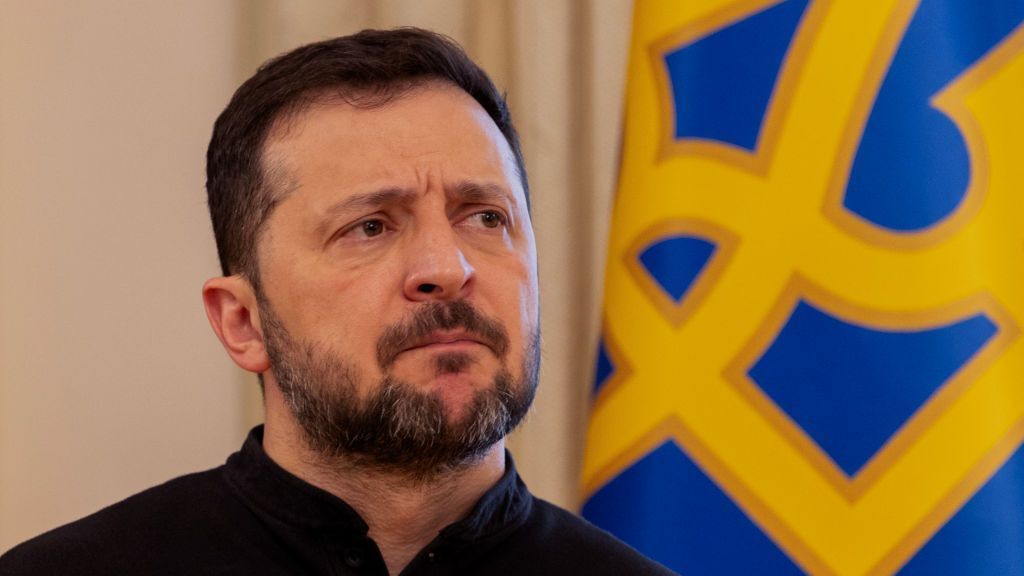
As Ukraine ramps up its cross-border drone campaign targeting Russian territory, Ukrainian President Volodymyr Zelensky has issued a stark public warning to all commercial airlines and aviation insurers that continue to operate in Russian airspace: the skies over Russia are rapidly becoming unacceptably dangerous, and will effectively be closed to civilian traffic by Kyiv’s sustained military operations.
Zelensky delivered the caution in his regular Tuesday nightly video address, making clear that Ukraine’s military action does not target civilian aircraft intentionally, but the growing scale of drone operations across Russian territory creates unavoidable risks that carriers cannot ignore. “We want to warn every airline that uses Russian airspace, every insurer, everyone who still uses key Russian airports: the Russian sky is becoming completely dangerous,” Zelensky stated. “Ukraine does not threaten civilian aviation as such — not a single civilian aircraft. There will simply be drones in Russia’s skies on a scale that has to be taken into account. The war started by Russia is closing its skies.”
His warning was specifically directed at airlines that still maintain regular service to major Russian aviation hubs including Moscow and St. Petersburg. In recent months, Ukraine has expanded its strike operations deep into Russian territory, hitting critical energy infrastructure, retail facilities and other key sites far beyond the immediate conflict border zone.
Following the warning, Russian President Vladimir Putin issued a sharp rebuke during a press appearance at the Shanghai Cooperation Organization summit held in Kyrgyzstan. Putin dismissed Zelensky’s statement as an open declaration of state terrorism, and doubled down on Russia’s own commitment to intensifying attacks on Ukraine. “They are asking us to resume negotiations… but you don’t negotiate with terrorists,” Putin told reporters.
Independent aviation risk analysts have backed up Zelensky’s assessment of growing danger for civilian flights over Russia. Osprey Flight Solutions, a leading global aviation risk advisory firm, noted in a recent client alert that while most Ukrainian strikes have occurred within 300 kilometers of the Russia-Ukraine border, deep cross-border attacks are almost certain to continue at daily frequency through 2025, and strike rates could even increase in the near term. The firm warned that the dense air activity linked to the conflict raises significant risks of accidental misidentification or operational miscalculation that could threaten civilian aircraft.
The current standoff over Russian airspace comes amid a wider escalation of the two-year full-scale invasion. On Monday, a new wave of heavy Russian strikes across Ukraine killed 12 civilians, and Russian military officials have publicly confirmed they are preparing for massive coordinated strikes targeting Ukraine’s national power grid ahead of the winter season.
Putin acknowledged that Ukrainian cross-border strikes have caused damage to Russian infrastructure, but downplayed the impact, claiming that only 10 percent of damaged oil refining capacity remains to be repaired.
Following the 2022 full-scale invasion, nearly all Western commercial airlines suspended operations over Russian territory, but a small number of carriers from China, Turkey, and Gulf Cooperation Council states continue to use the airspace to cut travel time and fuel costs on long-haul routes between Asia and Europe. Ukraine has kept its own airspace completely closed to civilian traffic since the start of the full-scale invasion.
The renewed debate over aviation safety over Russia also follows two high-profile past civilian air disasters linked to the conflict. In 2014, Malaysia Airlines Flight MH17 was shot down over eastern Ukraine, killing all 298 passengers and crew on board. A 2024 ruling from the United Nations’ aviation agency confirmed the downing was the responsibility of Russia, a conclusion the Kremlin has repeatedly rejected. More recently, in 2024, Putin issued a formal apology to Azerbaijan’s president after a Azerbaijani civilian airliner was downed in Russian airspace, killing 38 people. Putin stated at the time that the crash occurred when Russian air defense systems were intercepting incoming Ukrainian drones.