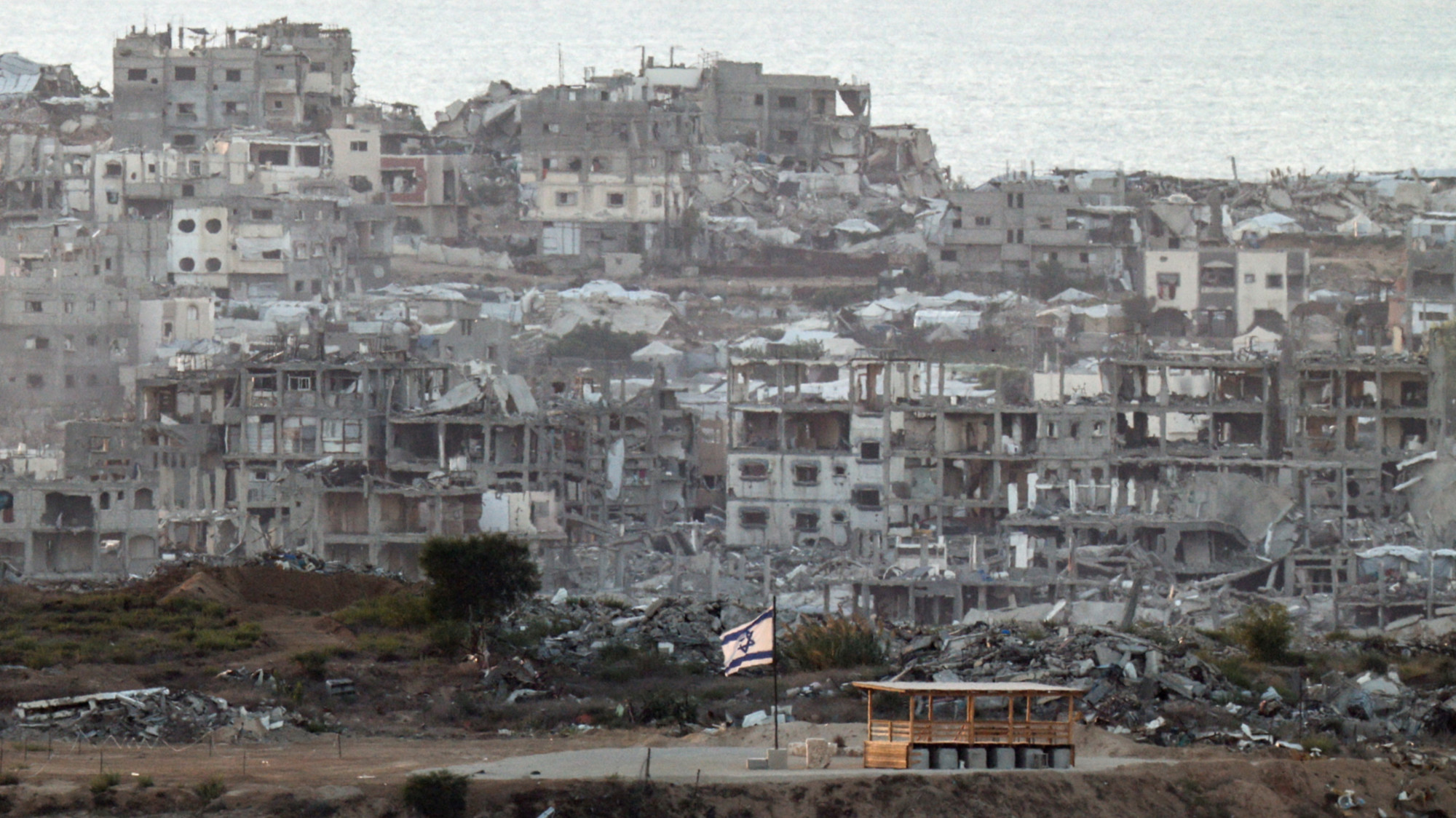
A devastating new report released Thursday by the United Nations Conference on Trade and Development (UNCTAD) has painted a catastrophic portrait of economic and social collapse across the Gaza Strip, documenting what the body calls the most severe economic crisis recorded in modern history after three years of intensive Israeli military operations.
The report details that the ongoing conflict has left more than 92 percent of Gaza’s economic infrastructure damaged or destroyed, and displaced nearly the entire Palestinian population of the enclave. UNCTAD’s analysis estimates that a staggering $71.5 billion in funding will be required to kickstart recovery and reconstruction efforts once hostilities cease.
“Gaza has experienced the world’s most severe economic crisis on record,” the report’s official summary confirms. The UN body called on the international community to move quickly once a permanent ceasefire is reached to mobilize massive financial and technical support aimed at rebuilding Palestinian productive capacity that has been entirely erased by the conflict. “A viable, sovereign, independent Palestinian State, as called for in United Nations resolutions, is a precondition for regional and global peace. Yet it cannot be built on a collapsed economy,” the report added.
The analysis contextualizes Gaza’s current collapse as the culmination of 59 years of systematic “de-development” of the Palestinian economy under Israeli occupation, which began in 1967. Israel has imposed strict structural constraints on Palestinian economic activity for decades, but UNCTAD emphasized that the human and economic cost of occupation has skyrocketed dramatically since the escalation of hostilities in October 2023.
Since that time, unprecedented military operations have brought almost all productive activity in Gaza to a complete standstill. By 2024, real GDP per capita in Gaza fell to $161 – the lowest figure recorded for any economy tracked by the World Bank’s global development indicators. That number rose only marginally to $212 in 2025, equal to roughly $0.58 per person per day in GDP terms. More than 90 percent of working-age Palestinians in Gaza are currently unemployed, pushing the entire population into severe multidimensional poverty.
Nearly every critical sector of Gaza’s society has been completely destroyed or rendered non-functional. Around 90 percent of all housing units in the Strip have been damaged or destroyed, making the housing sector the hardest hit by military activity. The agricultural sector, once a core part of Gaza’s local economy, has collapsed entirely. The enclave’s public health system has been effectively eliminated, and an estimated 93 percent of all educational facilities require full reconstruction after being damaged or destroyed in operations.
The report also warns that the catastrophic impact of the conflict in Gaza has spilled over into the occupied West Bank, where Israeli policies are increasingly reshaping the region’s demographic and economic landscape. Israel is currently fragmenting the West Bank into disconnected isolated areas, the report says, while accelerating settlement expansion amid a clear shift toward formal annexation of Palestinian territory.
A range of Israeli policies are blocking the development of a cohesive, functional Palestinian economy in the West Bank, including expanded restrictions on Palestinian movement, ongoing home demolitions and forced displacement, denial of access to critical groundwater resources, frequent settler attacks on Palestinian agricultural operations including olive harvests, and continuous expansion of illegal settlements.
The UNCTAD report highlights a stark system of dual legal governance in the West Bank that enshrines systemic inequality: one set of rules for Israeli settlers, and a separate, far less protective regime for Palestinians that creates unequal access to movement, land, livelihoods, and essential public services.
Unemployment in the West Bank has surged since 2023, climbing from 13.1 percent in 2022 to 31.4 percent in 2024, before dipping slightly to 28.7 percent in 2025. The destruction of public and private assets and the intentional elimination of livelihoods, the report argues, creates a coercive environment that pushes Palestinians to leave their homeland. When combined with the steady growth of the settler population, this process is gradually altering the demographic makeup of the West Bank. Displacement figures underscore this trend: 1,697 Palestinians were displaced from the West Bank in just the first three months of 2026, already exceeding the total number of Palestinians displaced across the whole of 2025.