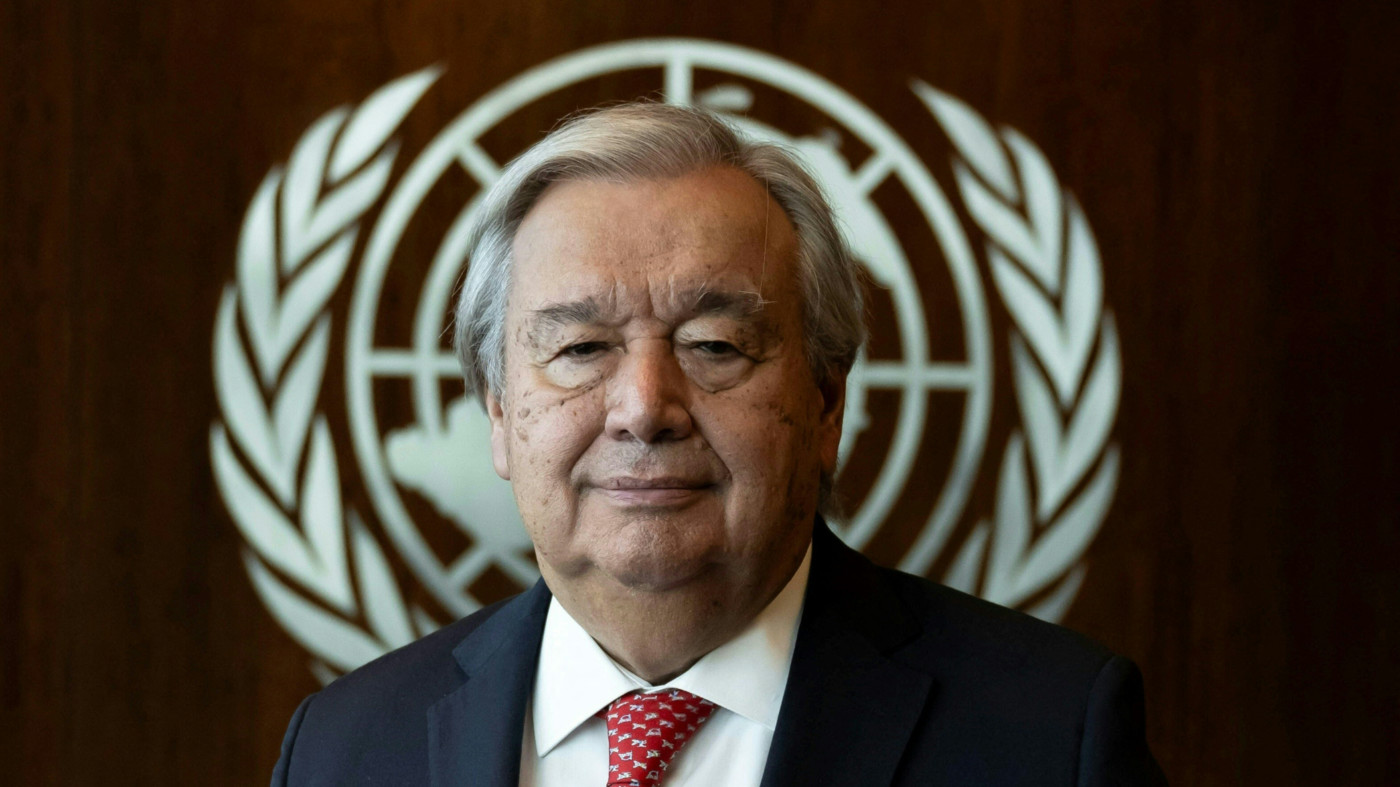
For nearly eight decades, the office of United Nations Secretary-General has stood as one of the most consequential yet constrained positions on the global stage. Unlike heads of state or military commanders, the UN’s top leader commands no armed forces and holds no legal authority to compel sovereign nations to act. Yet from averting full-scale conflict to brokering landmark peace deals and coordinating global responses to catastrophic humanitarian crises, successive secretaries-general have shaped the course of international relations since the UN’s founding in 1945. Today, as current incumbent António Guterres prepares to wrap up his second five-year term on December 31, 2026, the world body is in the final stages of selecting its 10th secretary-general, a process unfolding at a moment of unprecedented challenge to the UN and the rules-based international order it was built to uphold.
Defined by the UN Charter simply as the UN Secretariat’s “chief administrative officer” rather than a formal political leader, the role of secretary-general has evolved dramatically over its 81-year history, shaped by the actions and priorities of the nine men who have held the post to date. A long-standing informal tradition bars candidates from the UN Security Council’s five permanent veto-wielding members – the United States, United Kingdom, France, China and Russia – ensuring the role always goes to a national from a middle or smaller power not aligned with any of the major global blocs.
The office’s trajectory was set early on by its second holder, Dag Hammarskjöld of Sweden, who expanded its political scope after taking office in 1953. Hammarskjöld pioneered the practice of preventive diplomacy, leveraging the secretary-general’s “good offices” to mediate in disputes that split the major powers, turning the Charter into a framework for launching fact-finding missions and deploying UN peacekeeping forces. His tenure cut short by a 1961 plane crash while en route to resolve the Congo conflict – a crash that remains mired in conspiracy theories of targeted attack – Hammarskjöld posthumously received the Nobel Peace Prize, and his expansion of the role laid the foundation for all future holders.
Every successive secretary-general built on that foundation: Myanmar’s U Thant defused the 1962 Cuban Missile Crisis through quiet diplomacy; Austria’s Kurt Waldheim advanced shuttle diplomacy in the Middle East, Cyprus and Namibia; Peru’s Javier Pérez de Cuéllar mediated a permanent ceasefire to end the 1988 Iran-Iraq War; Egypt’s Boutros Boutros-Ghali mapped out a new agenda for UN peace operations in the post-Cold War era; Ghana’s Kofi Annan, the first secretary-general to rise through the UN’s internal ranks, shared the 2001 Nobel Peace Prize with the entire organization; South Korea’s Ban Ki-moon made climate change a top global priority; and current leader Guterres has steered the UN through an era of crippling funding cuts and repeated Security Council deadlock, driven by permanent member vetoes, over catastrophic conflicts in Gaza, Ukraine and Sudan.
Time and again, secretaries-general have stepped in to act when the Security Council is split along major power lines. During the 1956 Suez Crisis, after Britain, France and Israel invaded Egypt following the nationalization of the Suez Canal, Hammarskjöld oversaw the creation of the United Nations Emergency Force – the UN’s first armed peacekeeping operation – which oversaw the invading forces’ withdrawal by early 1957 and set a enduring precedent for global peacekeeping. In 1988, Pérez de Cuéllar spent a year mediating between Iran and Iraq to turn a Security Council ceasefire resolution into a lasting end to their eight-year war. In 1998, Kofi Annan brokered a landmark memorandum of understanding with Saddam Hussein’s government that secured access for UN weapons inspectors and averted an immediate U.S.-British invasion. Most recently, in December 2023, Guterres made the first explicit formal invocation of Article 99 of the UN Charter in decades, bringing the catastrophic Gaza war before the Security Council with a warning that it threatened global peace and security. Though his push for a ceasefire was ultimately vetoed by the United States and drew calls for his resignation from Israel’s UN envoy, the move underscored the unique platform the secretary-general holds to highlight pressing global threats.
Article 99 remains the only explicit independent political power granted to the secretary-general in the UN Charter, allowing the holder to bring any issue they deem a threat to international peace and security directly before the Security Council. It has been formally invoked only a handful of times in history. In practice, the role is defined by four core functions: mediating between conflicting parties, publicly or privately; setting the global agenda as the UN’s official global spokesperson; administering the Secretariat and appointing senior officials and special envoys; and raising early warnings of emerging threats before the Security Council takes formal action. All of these functions depend entirely on the cooperation of UN member states, particularly the five permanent Security Council members that hold veto power.
Three long-standing informal rules govern the selection process. The first is informal regional rotation: while the UN has no official rotation policy, the post has cycled between world regions for decades, and the last holder from Latin America and the Caribbean left office 35 years ago. That has created widespread pressure for the next secretary-general to come from the region, a dynamic reflected in the current candidate pool: five of the six official candidates hail from Latin America and the Caribbean. The second rule, as noted, bars permanent Security Council members from putting forward their own nationals. The third requires that any candidate be acceptable to all five permanent members, each of whom can veto a candidate during the Security Council selection process. The only exception in modern history came in 1996, when the U.S. vetoed a second term for Boutros Boutros-Ghali, citing concerns that he operated too independently of U.S. interests and clashed with Washington over UN interventions in Somalia and the Balkans.
The 2026-2027 selection process follows a six-step framework laid out in General Assembly resolutions, culminating in the new secretary-general taking office on January 1, 2027. The process began in November 2025, when the presidents of the Security Council and General Assembly formally invited member states to submit nominations. All nominations were submitted by mid-June 2026, with each candidate put forward by one or more member states (self-nominations are not permitted) and required to submit a CV, policy vision statement and campaign finance disclosure. Candidates have already completed public interviews before the General Assembly, civil society groups and other stakeholders, and all six will participate in a full public debate in the UN General Assembly Hall on July 23, 2026, hosted by General Assembly President Annalena Baerbock.
After the debate, the Security Council will begin holding informal secret straw polls, where the 15 council members mark each candidate as “encourage,” “discourage” or “no opinion.” Permanent members use colored ballots distinct from non-permanent members, allowing negotiators to identify early which candidates face an eventual veto. Polling continues until one candidate emerges with no veto from a permanent member and at least nine total votes from the 15-member council. The Security Council is expected to formally forward its recommended candidate to the General Assembly between September and early October 2026, aligning with the timeline of the General Assembly’s 81st session and annual high-level general debate. The 193-member General Assembly will then hold a final vote, and has never rejected the Security Council’s recommendation. The winner will receive a five-year term, renewable once for a maximum of 10 years in office.
The current candidate pool marks a potential historical turning point for the UN: of the six candidates, four are women, a first for an organization that has only ever had male leaders. The candidates are: Michelle Bachelet, former president of Chile and former UN High Commissioner for Human Rights; María Fernanda Espinosa, former president of the UN General Assembly from Ecuador; Rafael Grossi, Argentine head of the International Atomic Energy Agency; Rebeca Grynspan, Costa Rican secretary-general of the UN Conference on Trade and Development; Carolyn Rodrigues-Birkett, Guyana’s permanent representative to the UN; and Macky Sall, former president of Senegal (the only candidate from outside Latin America and the Caribbean).
Whoever takes office will inherit an organization at a crossroads, grappling with overlapping crises that threaten its very viability. The UN currently faces a record financial shortfall, driven in large part by U.S. funding cuts and withheld dues. Under the second Trump administration, the United States – which has long been assessed to contribute 22 percent of the UN’s regular core budget – has withdrawn from 66 UN bodies and international organizations, including the World Health Organization, UNESCO and the UN Human Rights Council, and withheld billions in mandated contributions. By the end of 2025, outstanding unpaid dues across the UN system hit a record $1.57 billion, forcing the organization to cut its 2026 regular budget by more than 15 percent and reduce staffing by nearly 19 percent. In early 2026, Guterres warned member states that the UN faced “imminent financial collapse” and could run out of operating cash by July 2026.
Beyond the funding crisis, the UN faces growing gridlock in the Security Council, where permanent member vetoes have blocked action on ongoing conflicts that have killed hundreds of thousands and displaced millions. Critics increasingly question the legitimacy of a post-WWII international order designed to prevent global war, at a time when the United States – the primary architect of that system – has itself emerged as one of the greatest threats to the rules and institutions it built.