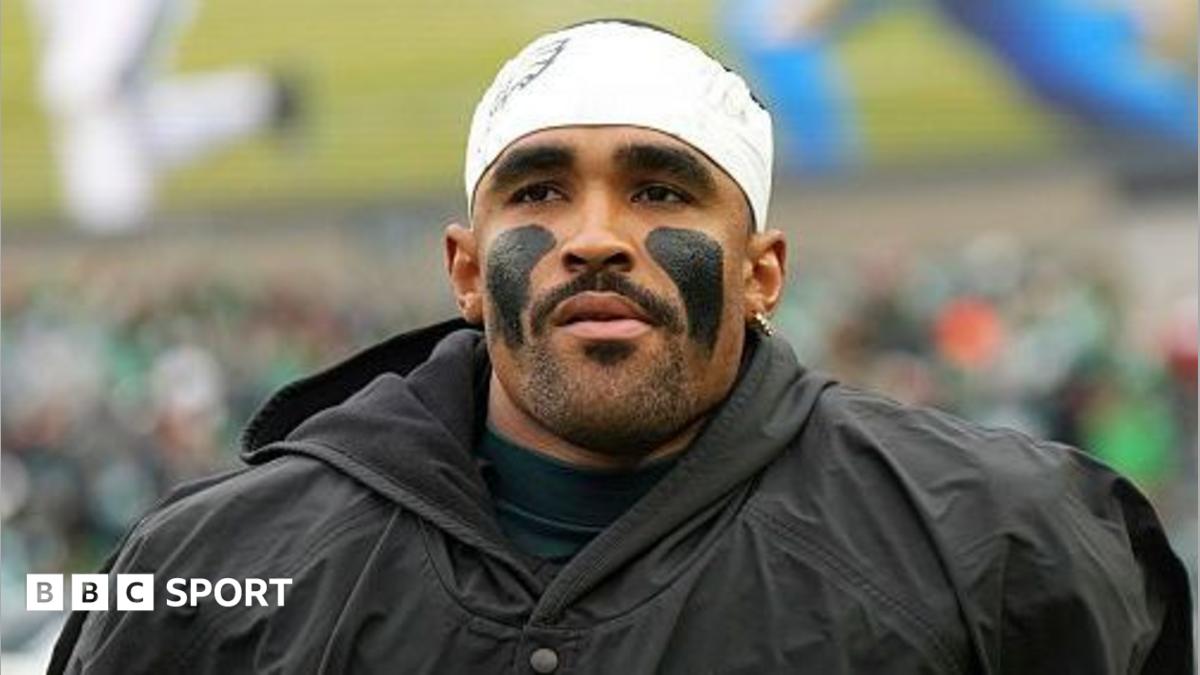
Philadelphia Eagles two-time Super Bowl quarterback Jalen Hurts, who led the franchise to its 2025 NFL championship, has sent shockwaves through the entire American football community after details emerged that he suited up for a full international series game in London just hours after being diagnosed with a superficial calf blood clot, a decision that has now left him sidelined for the remainder of the 2025 season due to life-threatening multiple pulmonary emboli. The timeline of events, verified by BBC Sport’s Ben Collins, unfolds over a three-week stretch that has laid bare critical gaps in the NFL’s player safety framework, particularly for its fast-growing overseas matchups. The sequence began on October 4, when Hurts sustained a left calf contusion during a narrow loss to the Los Angeles Rams, playing through the full 60 minutes of competition without reporting lingering discomfort immediately post-game. Four days later, on October 8, Hurts notified team medical staff of persistent calf soreness, receiving targeted therapeutic treatment over the following two days while still participating in full team training sessions. The Eagles traveled to London on the morning of October 10, and Hurts underwent an ultrasound at the NFL’s official London sports medicine partner, the Cleveland Clinic’s UK branch, that evening, where clinicians identified a superficial vein thrombosis in his calf. Despite the diagnosis, he received medical clearance to compete in the October 11 matchup against the Jacksonville Jaguars at Tottenham Hotspur Stadium, even returning to the team hotel at 3 a.m. that same day before suiting up to play the entire contest, where he recorded 220 passing yards and one touchdown in a narrow 19-17 last-second Jaguars victory. Post-game, he was cleared to board the team’s transatlantic return flight to Philadelphia, with medical staff only recommending a follow-up ultrasound within 72 hours. Subsequent testing on October 14 revealed the original clot had dislodged and traveled from his calf, and further scans on October 19 confirmed a diagnosis of deep vein thrombosis and bilateral pulmonary emboli, meaning multiple clots had lodged in both of his lungs. While medical professionals have confirmed Hurts is expected to make a full recovery with a course of blood-thinning medication, the 28-year-old 2025 Super Bowl MVP will miss the rest of the current season, and will face elevated lifelong risk of recurrent embolisms per leading sports medicine experts. The incident has ignited fierce debate over the NFL’s lack of formal, league-wide protocols for vascular injuries, a stark contrast to the established, highly structured rules in place for concussions, extreme heat response, and in-stadium emergency care. NFL chief medical officer Dr. Allen Sills, who was present in London for the weekend game, initially defended the medical team’s decisions as “incredibly conservative” during a press briefing, noting he had full confidence in the Eagles’ handling of Hurts’ case, and pushed back on suggestions the care process was flawed. But the NFL Players Association (NFLPA) swiftly pushed back, first criticizing the league’s initial refusal to launch a formal review before announcing a joint collaborative investigation with the NFL to audit every step of the care Hurts received. Leading independent sports medicine specialist Dr. Niko Mihic, Real Madrid’s chief medical officer and the designated lead physician for the NFL’s upcoming November 8 international game in Madrid, noted that blood clot cases in elite athletes are relatively rare, and often difficult to diagnose in a timely fashion because the symptoms do not align with typical contact sports injuries, adding that decisions around long-haul air travel for patients with confirmed clots rely heavily on clinical judgment rather than one-size-fits-all rules. The high-profile incident arrives at a pivotal moment for the NFL, which is hosting a record nine international games in the 2025 season, with long-term plans to expand that slate to 16 overseas fixtures per year. The league has already faced recent pushback from the players’ union over safety concerns related to the 16-hour trans-Pacific flight required for the league’s first-ever Australia-based game earlier this year, as well as complaints about substandard field conditions at the Brazil international matchup. For the Philadelphia Eagles, the loss of their franchise quarterback has sent the once-dominant franchise into a tailspin: third-string backup Tanner McKee, who lacks meaningful regular season starting experience, has led the team to five consecutive defeats, capped off by a lopsided 38-21 home loss to division rival the Dallas Cowboys, marking the longest losing streak of head coach Nick Sirianni’s tenure. With the NFL trade deadline just two weeks away, franchise executives now face a critical crossroads, weighing whether to push for a short-term veteran quarterback rental to salvage the season, or trigger a full rebuild for a team that had appeared to be a perennial Super Bowl contender, having reached two of the past four league championships.