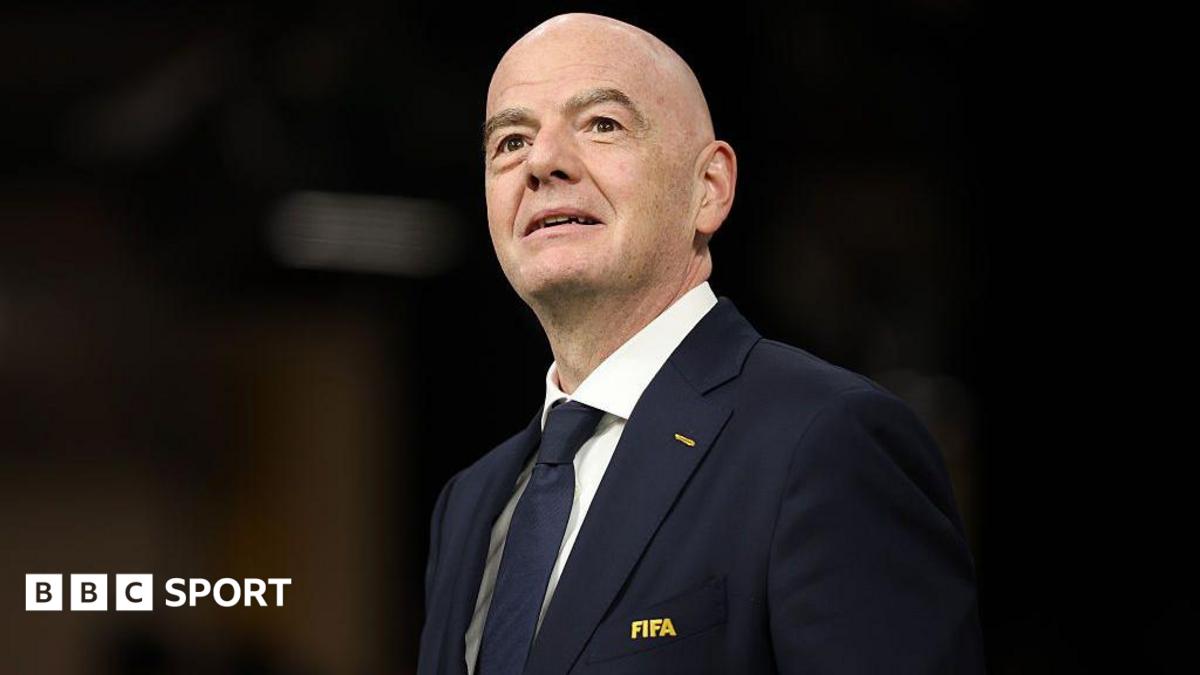
Gianni Infantino has secured continued tenure as FIFA president after earning a formal vote of confidence from the organization’s senior management board during an emergency meeting held in Rabat, Morocco. The gathering was convened by Infantino himself this Wednesday, in direct response to cascading criticism over his scrapped plan to sell private stakes in top FIFA competitions, including the men’s and women’s World Cups, via a newly created subsidiary called FIFA Forward Enterprise (FFE). Four hours after discussions concluded, FIFA released an official statement confirming the board’s unified support for its leader.
The controversy erupted after The Times broke news of the FFE proposal on July 28, triggering immediate backlash from across global football. European football’s governing body UEFA led the charge over the weekend, issuing a formal declaration that it had lost all confidence in Infantino, dismissing the FFE initiative as a “shabby, back room, opaque deal.” Criticism even extended to the highest ranks within FIFA: Secretary General Mattias Grafström, who attended the Rabat meeting, had described the entire situation as “a sad and reproachable series of events” in an internal memo circulated to FIFA staff just one day earlier. Yet in a striking reversal following Wednesday’s closed-door talks, Grafström joined the full management board in “reaffirming their full support” for Infantino’s leadership.
As part of the meeting’s outcomes, FIFA openly acknowledged that missteps were made throughout the FFE process. The organization admitted it was never its intention to leave the FIFA Council and member associations feeling sidelined, conceding that the initiative “should have been handled differently.” Additional errors were acknowledged in how FIFA responded after the proposal was leaked to the press. FIFA has since issued formal apologies to the council and all member associations for these missteps, pledged to prevent similar missteps in the future, and announced it will launch a full internal review of the process.
FIFA also pushed back firmly against a separate unsubstantiated report from The Times claiming Infantino had promised Morocco the right to host the 2030 World Cup final in exchange for its political backing. The organization dismissed the allegation as “false and misleading,” noting that any final decision on the 2030 final host location—co-hosted by Morocco, Spain and Portugal—will be made at a later appropriate date. The statement also added a firm warning, saying FIFA “will no longer tolerate any attacks on its integrity, good governance and due process and will take all necessary measures to protect and safeguard its name and reputation,” while also asserting that “everything that was done was done in full compliance with the FIFA regulatory framework.”
Despite the management board’s backing, opposition to Infantino remains widespread and vocal. Canadian Prime Minister Mark Carney, whose country co-hosted the 2026 men’s World Cup alongside the United States and Mexico, has publicly stated he no longer has confidence in the FIFA president. Former Portuguese football star Luis Figo, who withdrew from the 2015 FIFA presidential race against former president Sepp Blatter, has called on Infantino to step down immediately. “Infantino has debased the office that he promised to elevate,” Figo said. “It is too late to save his dignity but it is not too late to save football.”
The 56-year-old Swiss executive has made clear he intends to stand for re-election to a fourth term, with the vote scheduled to take place at the FIFA Congress in Morocco in March 2027. Prospective challengers have until mid-November this year to nominate themselves, and any winning candidate needs to secure 106 votes from FIFA’s 211 total member associations to claim victory.
UEFA has maintained its hardline opposition, having already threatened legal action against FIFA over the controversy. A growing number of European member associations have already withdrawn their support for Infantino’s re-election, including Wales, with England expected to formally join that camp imminently. At the height of the backlash, all 55 UEFA member associations threatened to boycott FIFA competitions if the FFE plan moved forward. However, UEFA faces a major strategic barrier to ousting Infantino: it lacks enough global support to challenge his existing power base. To date, only the Confederation of North, Central America and Caribbean Association Football (Concacaf) has joined UEFA in criticizing the president, though it has not issued a formal no-confidence vote. While the Asian Football Confederation rejected the original FFE investment plan, it has not issued a broader public rejection of Infantino’s leadership.
Outside of Europe, only Jordan has publicly called for Infantino to step down. By contrast, a long list of nations across Asia and Africa—Infantino’s core support base—have reaffirmed their backing in recent days, including Egypt, Morocco, Niger, Mauritania, DR Congo and the Philippines. Many of these nations have benefited from substantial funding through the original FIFA Forward development programme, the precursor to FFE, receiving up to $8 million per three-year funding cycle to support domestic football growth. For UEFA to successfully unseat Infantino, it will need to convince these countries that alternative candidates can deliver equivalent financial support while implementing greater transparency and governance reform—a challenge that Infantino’s existing loyalty among these member associations makes far more difficult. For now, despite the ongoing controversy that marks the largest threat to his decade-long tenure, Infantino appears to have survived the immediate challenge to his leadership.