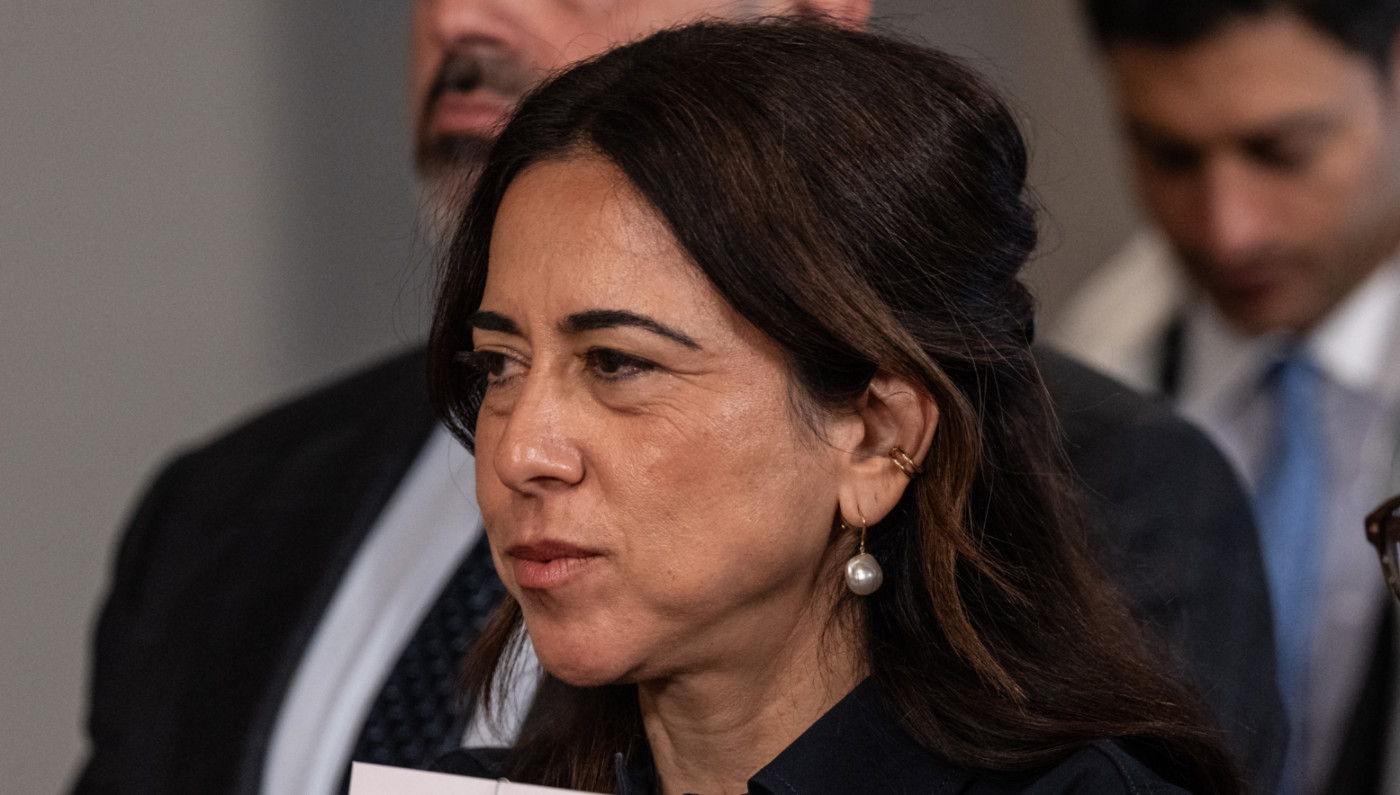
As the 10-year tenure of outgoing United Nations Secretary-General Antonio Guterres draws to a close on December 31, the long-stalled selection process for his successor has been thrown a major curveball with a last-minute candidacy announcement from the United Arab Emirates: Lana Nusseibeh, a veteran Emirati diplomat, former permanent UN representative, and current Assistant Minister for Political Affairs in the UAE’s foreign ministry. For months, the 15-member UN Security Council has been deadlocked after six rounds of anonymous straw polls, where every previously nominated candidate encountered pushback from at least one of the five veto-wielding permanent members: the US, UK, France, Russia, and China. Longstanding unwritten convention has held that the top UN post rotates across continental blocs, with widespread prior consensus that the next secretary-general should be a female diplomat from Latin America, making Nusseibeh’s eleventh-hour bid a significant disruption to established expectations.
While the Security Council holds the formal power to select a nominee that is subsequently rubber-stamped by the 193-member General Assembly, the UN secretary-general wields substantial soft power as the organization’s public face, overseeing global administrative operations, shaping international agendas, and mediating cross-border disputes. But Nusseibeh’s candidacy has sparked fierce pushback from critics, who point to her decades-long track record of defending UAE foreign policy moves that run counter to core UN principles, including allegations of complicity in war crimes across multiple conflict zones in the Middle East and North Africa.
Born in 1978 in Abu Dhabi to a prominent Jerusalem-origin aristocratic family with deep decades-long ties to regional politics, Nusseibeh’s lineage includes grandfather Anwar Nusseibeh, a Jordanian cabinet minister in the 1950s who lost a leg during the 1948 Nakba, and uncle Sari Nusseibeh, a leading Palestinian intellectual who served as a close aide to late Palestinian leader Yasser Arafat in the early 2000s. Her father Zaki Nusseibeh relocated to Abu Dhabi during the 1967 Middle East War, working as a personal interpreter for UAE founding father Sheikh Zayed before ascending to the role of foreign affairs minister between 2017 and 2021. Nusseibeh received her early education at Abu Dhabi’s British School al Khubairat, followed by elite private girls’ school Wycombe Abbey in the UK, before earning a history degree from Queen’s College Cambridge and a 2003 master’s in Israeli and Jewish Diaspora Studies from the University of London’s School of Oriental and African Studies. She is fluent in Arabic, English, French, and Hebrew.
After stints consulting for UNESCO and the Gulf Research Centre think tank, Nusseibeh joined the UAE foreign ministry in 2006, leading its policy planning department from 2010 until September 2013 – a period that coincided with the UAE’s widespread domestic crackdown on Arab Spring-era dissent, and its widely condemned support for the military overthrow of Egyptian elected president Mohamed Morsi earlier that same July. She served as the UAE’s permanent representative to the UN for 11 years, from 2013 until April 2024.
Her publicly stated campaign platform for the secretary-general role remains deliberately vague, a common strategic choice for candidates navigating the delicate cross-factional diplomacy required to win the top UN post. She has laid out broad pledges to “act earlier, bridge divides and pursue practical first agreements,” prioritize protection of humanitarian aid while supporting low-income nations to mobilize investment, resolve debt burdens, and pursue self-directed development, and uphold the UN Charter, international law, and universal human rights “consistently and without double standards.” Yet critics have raised alarm over the UAE’s well-documented domestic human rights record, including widespread allegations of arbitrary detention, torture, and systemic exploitation of migrant labor, as well as Nusseibeh’s own history of defending controversial Emirati foreign policy decisions that violate UN norms.
The sharpest criticism centers on the UAE’s role in Sudan’s ongoing civil war, where multiple UN investigators and human rights groups have documented extensive Emirati military backing for the Rapid Support Forces (RSF), a paramilitary group whose atrocities have been deemed to bear the “hallmarks of genocide” by UN experts. Nusseibeh has repeatedly and categorically rejected all such findings, dismissing Sudanese government concerns about Emirati interference as “spurious, unfounded, and lacking any credible evidence” in a 2024 Security Council address, framing them as a deliberate distraction campaign spread via disinformation. Even after stepping down from her UN ambassador post, she continued to defend UAE policy in the Sudan conflict, telling CNN in July 2024 that all allegations of Emirati support for the RSF were “absolutely” and “categorically untrue.” In November 2025, she traveled to Strasbourg to lobby the European Parliament to remove all references to the UAE’s role in Sudan’s atrocities from a draft EU resolution, a campaign that succeeded as the final published document contained no mention of Abu Dhabi’s involvement. Sudan’s official UN mission issued a scathing statement to Middle East Eye, accusing Nusseibeh of “defending and whitewashing her country’s record of troubling the peace of Sudan by enabling genocide, enslaving our women and girls and instigating sexual violence and other atrocities, in addition to destabilising our sovereignty,” and arguing that the UAE should face accountability for its actions rather than be rewarded with the UN’s top leadership post. Senior Sudanese UN diplomat Ammar Mahmoud warned that Nusseibeh’s blanket rejection of independent UN investigators’ findings on Sudan’s conflict makes it impossible for her to exercise the required impartiality for the secretary-general role, noting that she would never launch independent probes into Emirati actions in Sudan nor accurately represent the true nature of the conflict to global leaders.
Questions have also mounted over Nusseibeh’s stance on the Israel-Gaza conflict, where leading human rights organizations and a formal UN commission have labeled the death of at least 74,000 Palestinians in Gaza since October 2023 as a genocide. Nusseibeh was a leading architect of the 2020 US-brokered Abraham Accords that normalized diplomatic ties between the UAE and Israel, ending decades of Emirati boycott of the country. While the UAE publicly claims to support a two-state solution for Palestinian self-determination and Nusseibeh has described Israeli formal annexation of the West Bank as a “red line” for Abu Dhabi, multiple diplomatic insiders have alleged that the Emirati-Israeli partnership is far closer than official public statements suggest. A European official who attended a 2026 closed-door meeting between Nusseibeh and US diplomatic counterparts told Middle East Eye that “the UAE is totally aligned with Israel” and there appear to be “no limits” to the depth of their bilateral relationship. Recent developments including Israeli Prime Minister Benjamin Netanyahu’s public presentation of a proposed “Israel-UAE Hexagon Alliance” that explicitly named Sudan’s RSF as a “friendly” party have further fueled concerns that Nusseibeh would not hold Israeli leaders accountable for alleged war crimes in Gaza.
Nusseibeh’s track record of defending controversial Emirati foreign policy extends across multiple other regional conflict zones. In Libya, where the UAE has been widely accused of backing warlord Khalifa Haftar’s Libyan Arab Armed Forces in violation of a UN arms embargo, leaked 2015 internal Emirati emails directly addressed to Nusseibeh showed she had full explicit knowledge of secret UAE weapons shipments to allied factions on the ground. When UN investigators later formally confirmed that the UAE, alongside Turkey and Jordan, had systematically violated the Libyan arms embargo, Nusseibeh refused all comment on the findings. During the 2017 Gulf diplomatic crisis, when the UAE joined Saudi Arabia, Bahrain, and Egypt in severing all ties with Qatar and imposing a full land and sea blockade on the country over unsubstantiated allegations that Doha supported terrorism, Nusseibeh rallied UN member states to back the punitive measures, describing them as “entirely legal, justified and proportionate.”
In Yemen, the UAE’s longstanding support for the secessionist Southern Transitional Council (STC), which seeks to split southern Yemen away from Houthi-controlled northern territories, sparked a major diplomatic rift earlier this year between Abu Dhabi and Saudi Arabia, which opposes the breakup of Yemeni territorial integrity. Despite this dispute, the wider Gulf Cooperation Council has formally endorsed Nusseibeh’s UN secretary-general candidacy. Her bid has also received public backing from the breakaway Somaliland territory, which is only recognized as a sovereign state by Israel; the UAE has built extensive informal ties with Somaliland, constructing military bases and major port infrastructure across the region, and Nusseibeh has not yet publicly clarified her position on Somaliland’s long-running bid for formal UN membership, a process in which the secretary-general plays an influential advocacy role. Most recently, at the 2025 UN General Assembly, Nusseibeh announced full UAE support for Moroccan sovereignty over Western Sahara, a territory the UN still classifies as a non-self-governing region subject to competing claims from the indigenous Sahrawi Polisario Front, endorsing a limited Moroccan autonomy plan that is backed by the US, UK, and France but fiercely opposed by Algeria, which severed all diplomatic ties with the UAE in September 2025 over the position.