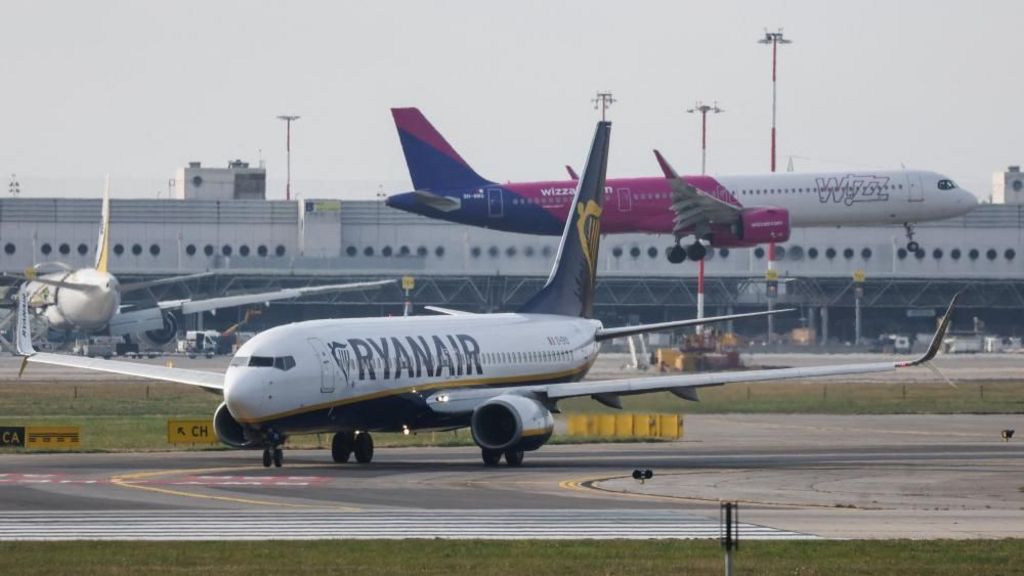
A recent synchronized spate of bomb threats targeting airports and commercial airlines across Europe has triggered widespread operational disruptions, with security forces taking most of the alerts seriously enough to reroute airborne flights, while Italian authorities even deployed fighter jets to escort a targeted aircraft mid-flight. London’s Heathrow Airport stood out as a rare exception, deeming the threat it received non-credible and opting not to divert any scheduled services. Every single one of the coordinated warnings ultimately proved to be a deliberate hoax, though aviation and law enforcement officials emphasize that the false nature of these recent alerts in no way reduces the urgency of screening future security notifications, as a genuine threat could emerge at any time.
The tightly coordinated timing of these aviation hoaxes, paired with a string of other malicious disruptive incidents across the European continent in recent months, has led many security analysts and public figures to point unsubstantiated suspicion toward the Russian government. The broader pattern of related disruptive activity spans multiple sectors: earlier this year, a wave of cyberattacks and unexplained drone sightings over high-security sensitive sites rattled national security teams; in recent days, threat actors remotely hacked supermarket refrigeration systems and a national blood bank in unspecified EU member states, while a suspicious security incident unfolded along Poland’s border with the Russian exclave of Kaliningrad. Back in August, Germany’s interior minister publicly blamed Moscow for a drone strike targeting Leipzig Halle Airport.
Against the backdrop of widespread Western support for Ukraine that has derailed the Kremlin’s stated objectives to fully absorb Ukrainian territory and eliminate the country’s sovereign independence, many analysts argue that the coordinated hoaxes fit the established pattern of so-called hybrid, grey-zone, or sub-threshold warfare: disruptive actions designed to erode public confidence in critical infrastructure and impose widespread societal inconvenience, while remaining deliberately anonymous and plausibly deniable to avoid crossing the threshold that would trigger NATO’s collective defense clause, Article 5, and prompt a unified large-scale Western military response. Pro-Kremlin Russian online bloggers have openly echoed this framing, arguing that since Ukrainian drone attacks have compromised safety at Russian airports and sweeping Western sanctions have barred Russian commercial carriers from European airspace, EU and NATO nations should face reciprocal disruptions to their own aviation networks.
As of Thursday evening, however, no tangible, verifiable forensic evidence has surfaced that directly ties the recent wave of aviation hoaxes to the Russian government, Iran, or any proxy militant groups under their operational control. One notable threat email sent to Rome airport authorities on Thursday morning claimed to originate from the “Fighters of the Male State,” a reference to Muzhskoi Legion, an ultra-right Russian extremist group banned by a Moscow court in 2021 that still commands tens of thousands of active followers on Telegram and has publicly celebrated Russia’s full-scale 2022 invasion of Ukraine. Even if the claim of responsibility is authentic, officials warn it provides little actionable investigative value, as unrelated malicious actors could easily adopt the group’s name as a false flag to divert law enforcement attention.
For national law enforcement agencies, airport security teams, and EU transport ministries grappling with the dual task of identifying the perpetrators behind the coordinated hoaxes and building robust mitigation frameworks to minimize disruption when future alerts inevitably occur, officials stress that investigative teams are strictly prioritizing verifiable, concrete digital and physical leads rather than acting on unconfirmed public assumptions about the most likely suspects. Security teams note that the resources dedicated to chasing down every fragment of potential evidence will be stretched thin as they work to close in on the culprits before the next wave of disruptive alerts is deployed.