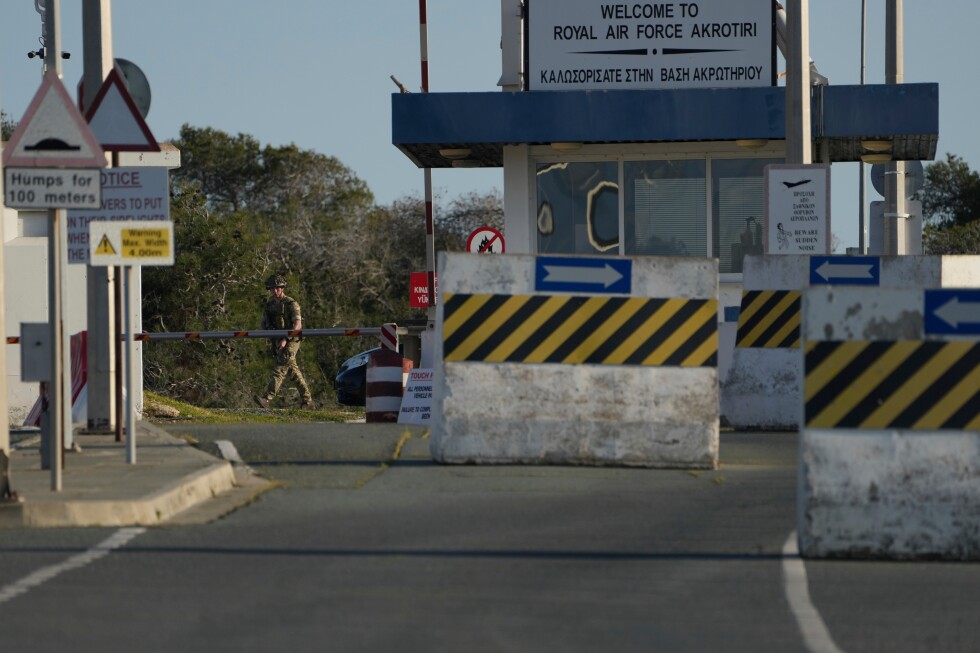
Cyprus has initiated calls for a comprehensive reassessment of Britain’s military presence on its territory following a significant security breach that exposed diplomatic tensions. The incident occurred on March 2 when an Iranian-manufactured Shahed drone struck a hangar at the RAF Akrotiri base, located along Cyprus’s southern coastline. British authorities had activated internal sirens to alert personnel but notably failed to notify Cypriot government officials about the imminent threat, leaving both the base and nearby civilian populations vulnerable.
This security lapse has prompted Cypriot President Nikos Christodoulides to demand “frank and open discussions” regarding the future of Britain’s two sovereign base areas at Akrotiri and Dhekelia. These installations, spanning 99 square miles, remain vestiges of colonial-era agreements established after Cyprus gained independence in 1960. President Christodoulides characterized the bases as “colonial consequences” during remarks at the European Union leaders’ summit in Brussels on March 20.
The diplomatic friction intensified following British Prime Minister Keir Starmer’s March 1 announcement that the United States would be permitted to use British bases for defensive operations against Iranian missile sites. Although British officials later clarified that these operations would not involve Cypriot territories, the statement generated considerable concern among Cypriot authorities. According to senior Cypriot officials speaking anonymously, British authorities provided no warning about the approaching drone or potential danger to adjacent villages housing approximately 1,000 residents.
The British government has responded with reassurances, with Starmer’s office emphasizing that “Cyprus’ security was of utmost importance to the U.K.” and confirming that RAF Akrotiri would not be utilized for U.S. strikes against Iran. Meanwhile, the UK Ministry of Defence has enhanced regional security measures, deploying the warship HMS Dragon to waters near Cyprus.
Historically, these bases have evolved beyond their original purpose of monitoring Suez Canal traffic. RAF Akrotiri now hosts U2 spy planes conducting Middle Eastern surveillance and has served as a critical logistical hub for operations in Iraq and against the Islamic State. While successive Cypriot governments have operated under gentlemen’s agreements regarding notification of military actions, the recent incident has exposed the limitations of these informal arrangements.
Cyprus has explicitly stated that base abolition is not currently under consideration. Instead, negotiations will likely focus on increasing operational transparency, intelligence sharing, and potentially renegotiating the bases’ status following the model of the UK’s recent agreement with Mauritius regarding the Chagos Islands. That arrangement returned sovereignty while maintaining military leasing agreements, demonstrating a potential pathway for updated bilateral arrangements between Cyprus and the United Kingdom.