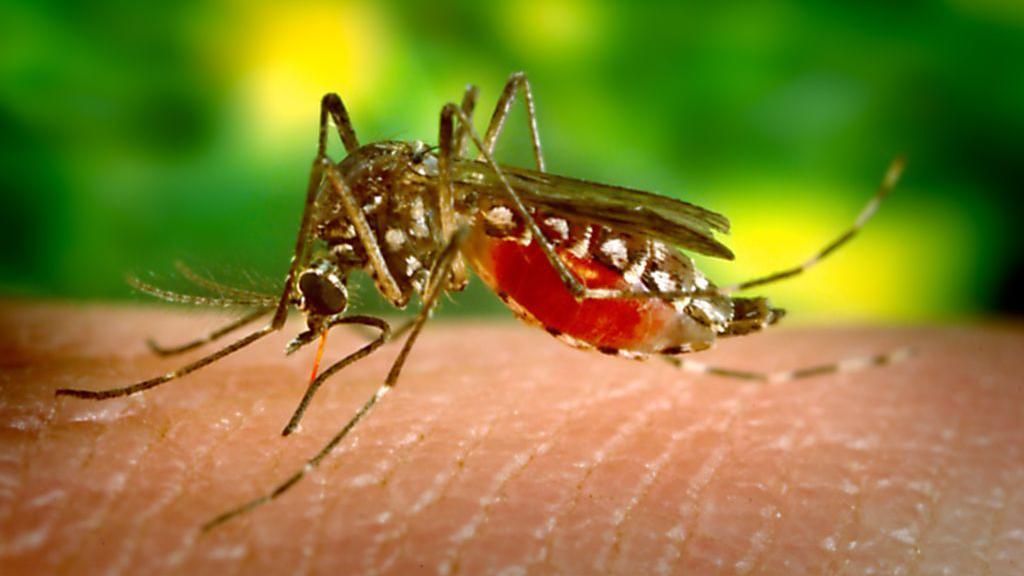
Sri Lanka is currently facing its most severe dengue outbreak in 10 years, prompting authorities to bring in military drones to locate mosquito breeding grounds as the virus continues to claim lives and overwhelm healthcare systems across the island nation. As of mid-2026, the mosquito-borne viral infection has killed 56 people and infected more than 77,000 Sri Lankans, with more than 25 percent of this year’s new cases recorded in July alone.
Dengue fever, caused by the dengue virus and transmitted to humans through bites from infected female Aedes mosquitoes, is a longstanding endemic threat in tropical and subtropical regions. These mosquitoes lay their eggs in stagnant water, including common domestic spaces such as rooftop puddles, discarded containers, flowerpot saucers and water-filled vases. Most dengue infections are mild, with symptoms including high fever, intense headaches, muscle and joint pain, nausea and skin rashes that clear within one to two weeks; many infected people develop no noticeable symptoms at all. However, severe cases can progress to life-threatening complications including internal bleeding and organ damage. People infected a second time by a different strain of the virus face significantly higher risk of developing severe dengue, because immunity from one strain does not protect against the other three known viral variants.
“That immunity does not extend to other strains of the virus. That means someone infected by one strain of the virus could still get dengue again if infected by a mosquito carrying another strain. This could mean that they get an even more serious infection,” explained Kapila Kannangara, director of Sri Lanka’s National Dengue Control Unit, in an interview with BBC Sinhala.
Currently, no universal vaccine exists to protect against all four dengue strains, and treatment focuses on symptom management: over-the-counter pain relievers such as paracetamol for mild cases, and close inpatient monitoring for patients with severe symptoms, who may develop fatal complications. Sri Lankan health authorities trace the 2026 outbreak surge to December 2025’s destructive cyclone, which left widespread scattered debris across the island that quickly became new stagnant-water breeding grounds for Aedes mosquitoes.
To reverse the outbreak’s growth, the Sri Lankan government has partnered with military forces to deploy drones that survey rooftops, construction sites and school grounds for hidden stagnant water pools, while police officers conduct door-to-door physical inspections of residential properties. As of the third week of July, health and security teams have cleared nearly 11,000 confirmed mosquito breeding sites and issued fines to more than 4,000 property owners found to be harboring unaddressed breeding grounds.
While infections have been recorded across every region of Sri Lanka, the vast majority of cases are concentrated in dense urban centers, particularly the capital city of Colombo. Local hospitals have expanded capacity by adding extra beds and extending operating hours, but the influx of patients has pushed public health workforces to breaking point. “The number of patients is high, and the severity of the cases is high,” Kannangara told Reuters, noting that roughly 75 percent of 2026 infections are linked to a more virulent strain of the virus. With hospital capacity stretched thin, doctors have advised patients with mild symptoms to recover at home to free up beds for severe cases. Authorities are exploring potential rollout of existing limited dengue vaccines, though experts note the four distinct viral strains make widespread universal vaccination challenging.
This is not the first major dengue epidemic to hit Sri Lanka: in 2017, heavy monsoon rains fueled an outbreak that killed 450 people across the country. But the threat of dengue is growing far beyond South Asia, driven by rising global temperatures that expand the habitable range of Aedes mosquitoes. Once confined almost exclusively to tropical and subtropical zones, disease-carrying mosquitoes are now spreading into new regions including Southern Europe and the Mediterranean Basin. Longer, wetter monsoon seasons in the tropics also extend the window for mosquito reproduction, accelerating transmission rates.
Data from the World Health Organization (WHO) underlines this dramatic global growth: the number of reported dengue cases worldwide jumped from roughly 500,000 in 2000 to 14.4 million in 2024, representing a 30-fold increase in incidence over the past 50 years. The WHO now classifies dengue as one of the top 10 most pressing public health threats facing the world, with nearly half of the global population now living in areas at risk of infection. High-burden regions currently include South and Southeast Asia, Latin America and the Caribbean.
Public health officials emphasize that the most effective community-level defense against dengue is breaking the mosquito breeding cycle by eliminating stagnant water sources: emptying flowerpot saucers, overturning unused containers, and clearing debris that can trap rainwater. Some countries have also successfully deployed Wolbachia, a naturally occurring bacterium common to many insect species, to reduce transmission: the bacteria inhibits mosquitoes’ ability to spread the dengue virus to humans, rather than killing mosquito populations outright.