The fragile diplomatic balance between the United Kingdom and Israel has been thrown into sharp relief this week, as senior UK officials publicly praised the longstanding bilateral relationship at an event marking Israel’s 76th independence anniversary, just days after viral footage of a far-right Israeli minister’s confrontation with Gaza-bound peace activists triggered a formal diplomatic summons and shocking allegations of detainee abuse.
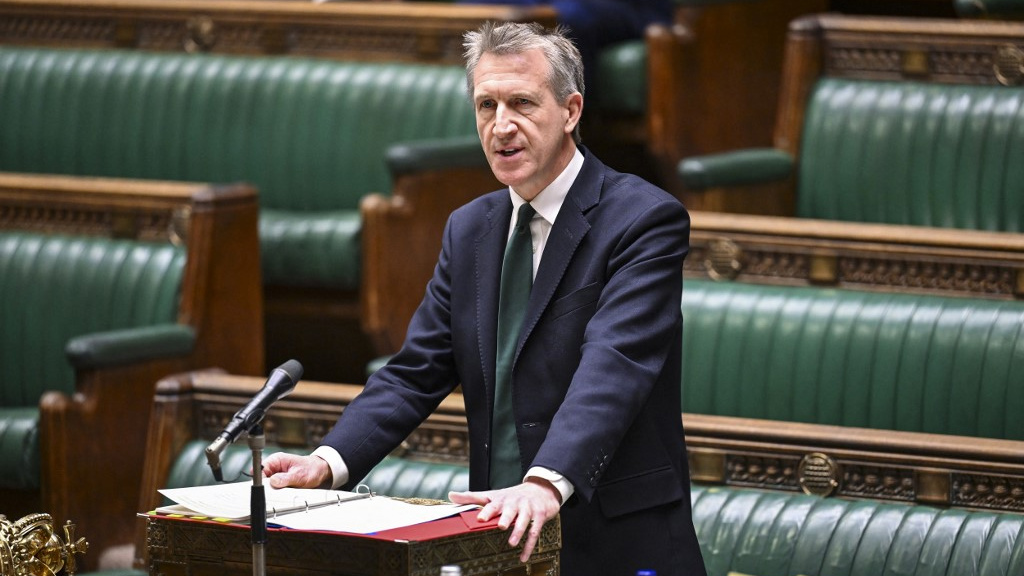
On Wednesday, UK Security Minister Dan Jarvis delivered a pre-recorded video address to the London-based independence celebration, emphasizing the deep, historically rooted partnership between the two nations. Jarvis, a member of the newly elected Labour government, noted that the Labour Party has long stood as a formal backer of the Israeli state, highlighting shared values he said underpin the bilateral relationship. “Together we share a commitment to robust democratic governance, rule of law, and judicial independence … and an unwavering dedication to defending our open societies against security threats,” Jarvis said, according to reporting from Jewish News.
Also in attendance at the event was Jon Pearce, a Labour lawmaker and parliamentary private secretary to Prime Minister Keir Starmer, and former chair of the pro-Israel lobbying group Labour Friends of Israel. Other high-profile British attendees included former Conservative Prime Minister Liz Truss, Chief Rabbi Ephraim Mirvis, and senior leadership from the Board of Deputies of British Jews.
The celebration went ahead just hours after graphic footage of Israeli National Security Minister Itamar Ben Gvir taunting activists from the Global Sumud Flotilla spread rapidly across social media platforms. The civilian-led flotilla had been attempting to break Israel’s long-running blockade of the Gaza Strip to deliver humanitarian aid when Israeli forces intercepted the vessels and detained all 430 activists on board.
The following day, the UK Foreign Office formally summoned Daniela Grudsky Ekstein, Israel’s acting top diplomat in London—Israel has not had a permanent ambassador in the UK since Tzipi Hotovely completed her term last September—to protest Ben Gvir’s conduct. In a formal statement following the meeting, the Foreign Office condemned the confrontation. “This behaviour violates the most basic standards of respect and dignity for people,” the statement read. “We are also deeply concerned by the detention conditions depicted and have demanded an explanation from the Israeli authorities. We made clear their obligations to protect the rights of all those involved.”
In remarks to event attendees earlier Wednesday, Grudsky Ekstein echoed Israeli Prime Minister Benjamin Netanyahu’s public rebuke of Ben Gvir’s actions, distancing the Israeli government from the incident. “The unacceptable, harmful conduct of one of our ministers is not representative of our government’s policy. It is not the face of Israel,” she said. She also framed rising global antisemitism, a growing concern for Jewish communities worldwide, as a moral rather than purely political crisis requiring coordinated action.
Following their detention, all 430 activists were deported by Israeli authorities to Istanbul, Turkey, on Thursday evening. Multiple activists have since come forward with detailed, graphic allegations of systematic abuse in Israeli custody, including claims of rubber bullet fire, physical beatings, and sexual assault. Miriam Azem, a legal representative with the Israeli human rights group Adalah, documented one account of a detainee being “forced to strip naked and run while guards were laughing.” Australian activist Juliet Lamont also gave a harrowing account of her treatment, saying she was “tied with cables, water-tortured and sexually assaulted,” adding that other detainees “had broken ribs, were tased in the face, and injected with unknown sedatives.”
The post of Israeli ambassador to the UK has remained vacant for months amid a domestic political scandal in Israel surrounding the nominee, Tzachi Braverman, Netanyahu’s former chief of staff. Braverman has been accused of obstructing an official investigation into leaks of classified information related to Israel’s military campaign in Gaza, charges he and the prime minister’s office have repeatedly denied. In February, Israel’s civil service disciplinary board recommended a six-month suspension for Braverman, and opposition leader Yair Lapid has publicly called on Netanyahu to withdraw the ambassadorial nomination entirely.
This week’s diplomatic friction is the latest in a growing string of strains on UK-Israel relations, which remain complicated by competing political priorities and international legal obligations. Netanyahu has not visited the UK since the 2023 outbreak of the Gaza war, and a visit is unlikely in the near future: the International Criminal Court has issued arrest warrants for Netanyahu and Israeli Defense Minister Yoav Gallant on charges of war crimes and crimes against humanity related to the military campaign.
Last June, the UK imposed formal economic sanctions on Ben Gvir and Finance Minister Bezalel Smotrich over their repeated public incitement to violence against Palestinian communities in the occupied West Bank and Gaza. In October 2023, Israeli Diaspora Minister Amichai Chikli sparked a diplomatic row when he made a derogatory comment referring to Starmer as “Palestinian” after the UK prime minister criticized Chikli’s decision to invite far-right British extremist and convicted criminal Tommy Robinson to visit Israel.
Despite these public tensions, the UK has maintained extensive military and political cooperation with Israel throughout its 19-month campaign in Gaza. Declassified UK and independent investigative outlets have confirmed that Royal Air Force aircraft have carried out hundreds of surveillance flights over Gaza since the war began, a mission the UK Ministry of Defence has repeatedly claimed is solely focused on supporting efforts to rescue Israeli hostages held by Hamas. Critics have questioned this framing, however, noting that the program has been kept entirely secret from public scrutiny, and that UK intelligence has been shared with Israel on days when Israeli airstrikes killed British citizens in Gaza.
The backbone of bilateral defense cooperation is a 2020 bilateral military agreement between the two states, which was designed to formalize and expand defense partnership and joint activities. The full text of the agreement has never been released to the public; in 2024, Labour junior defense minister Luke Pollard confirmed that the accord remains classified and cannot be released under freedom of information rules, with the Ministry of Defence confirming last October that the agreement is still in force.