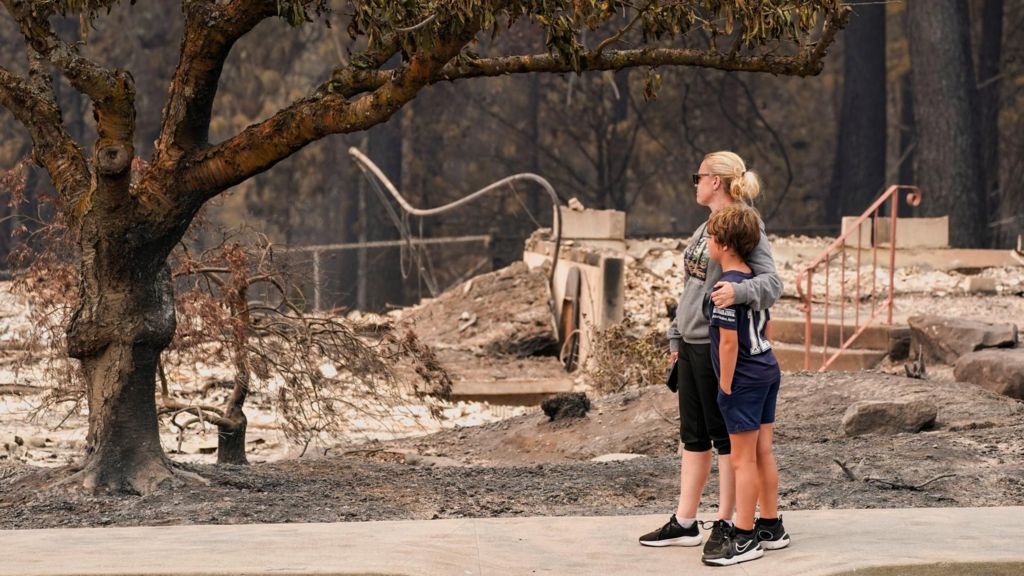
A devastating outbreak of wildfires across Washington state has triggered the largest evacuation in the region’s recent history, forcing more than 60,000 residents to flee their homes as flames destroy hundreds of structures and cripple local infrastructure. As of Monday, three large uncontrolled blazes were still raging on the outskirts of Spokane, Washington’s second-most populous city, with emergency officials warning that containment remains far out of reach.
Spokane Mayor Lisa Brown labeled the event “the worst natural disaster our region has ever faced”, noting that assessment teams are still working to map the full scale of destruction and have not ruled out potential fatalities. To date, no official deaths or injuries have been confirmed by authorities. Across the entire state, the Washington State Department of Natural Resources reports a total of 16 active wildfires burning across more than 250,000 acres of land. The destruction extends far beyond charred wilderness: an estimated 600 buildings, including residential homes and local commercial properties, have been reduced to ash, and local utility provider Avista Utilities confirms more than 10,000 customers remain cut off from electrical power.
Footage captured from Spokane shows towering plumes of black smoke billowing over residential neighborhoods, with fire crews operating helicopter water dumps to slow flames advancing toward occupied homes. The conditions that allowed the fires to spread so rapidly were predicted days in advance: the U.S. National Weather Service issued an “extremely critical” fire weather warning ahead of the weekend, noting that high gusty winds paired with record-dry vegetation would create ideal conditions for fast-moving wildfires. Meteorologists and climate scientists warn that these extreme conditions are becoming increasingly common, pointing to human-caused climate change as a key driver of warmer, drier summers, more frequent intense heatwaves, and longer, more severe droughts that set the stage for catastrophic wildfire seasons.
Washington Governor Bob Ferguson has already signed a declaration of statewide emergency to free up additional state resources, and confirmed Sunday that he has formally requested federal disaster assistance following a conversation with U.S. President Donald Trump. Speaking to media, Mayor Brown emphasized that public compliance remains critical to avoiding loss of life, urging at-risk residents to remain alert, follow evacuation orders promptly, and stay patient as first responders work to get the blazes under control. She also highlighted the enormous strain the disaster has placed on local support systems: “While local communities have stepped up with incredible generosity, and our first responders are working 24 hours a day, we need outside support to address the scale of mass displacement, the shortage of emergency housing, and the growing need for basic essential supplies for displaced residents.”
While forecasters predict calmer, lighter winds for Monday, they have also warned that temperatures are set to climb again later this week, which could reignite active flames and speed new spread across dry unburned areas.