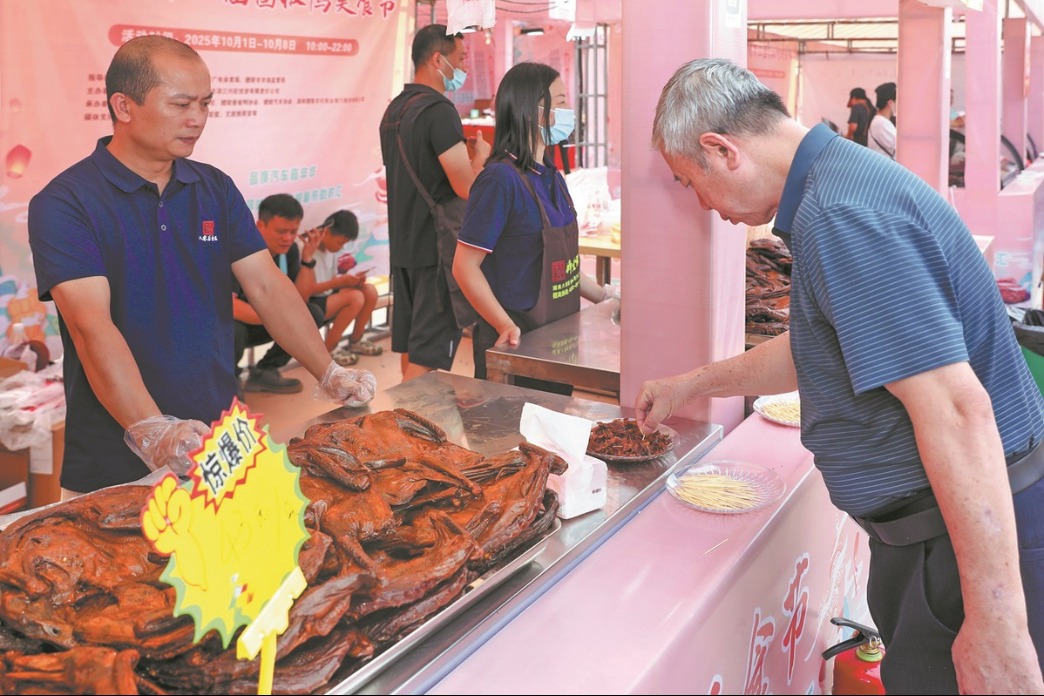
A surprise plot twist from a viral AI-generated short film has unexpectedly turned a centuries-old Hunan traditional delicacy into a cross-Strait cultural sensation, bridging food lovers across the Taiwan Strait through shared culinary curiosity.
The meme-worthy line “Have you ever saved a fox in the snow?” comes from *Saving the Fox in the Snow*, the AI-produced short film that took Chinese internet by storm earlier this year. In the film, a woodcutter rescues a trapped fox and leaves a serving of sauce-braised duck, or jiangbanya, for the animal to eat. When a mysterious woman arrives at his door years later, viewers expect the classic trope of a grateful fox repaying the woodcutter’s kindness—instead, the woman drops a jaw-dropping punchline: “I am not the fox. I am the duck. I am here for revenge.”
The absurd, unpredictable twist quickly spread across short video platforms on both sides of the Taiwan Strait, sparking a wave of user-generated remakes and parodies that drew millions of views. Even well-known public figures in Taiwan joined the viral trend, sharing their own versions of the meme. As the trend gained momentum, Taiwanese netizens shifted their conversation from laughing at the plot twist to a single burning question: where can they get their hands on this famous sauce-braised duck?
That question did not go unanswered. During a regular press briefing on April 8, Zhu Fenglian, spokesperson for the State Council Taiwan Affairs Office, issued a warm invitation to Taiwan residents to travel to Hunan, the iconic birthplace of the dish. “We welcome Taiwan compatriots to Hunan to taste sauce-braised duck from cities such as Changde, Chenzhou and Zhuzhou, each with its own distinctive flavor,” Zhu stated. The warm invitation marked a lighthearted, people-centered moment in cross-Strait exchanges, turning a viral food trend into an open invitation for cultural connection.
Just days after the invitation, the 2026 Cross-Strait Youth Exchange and Development Conference kicked off in Changsha, Hunan’s capital, bringing nearly 400 young guests from Taiwan to the province. Organizers highlighted the newly viral delicacy by serving sauce-braised duck as a special welcome gift for attending guests, letting visitors experience the famous flavor firsthand.
Beyond its new viral fame, sauce-braised duck boasts a centuries-long history in Hunan, with a deep cultural legacy and a fast-growing modern industry. The dish is produced through a rigorous multi-step process: ducks are first marinated in a blend of spices, air-dried, and slow-roasted, resulting in its signature rich, savory flavor. Different regions across Hunan have developed their own unique takes on the recipe, turning the delicacy into a symbol of local culinary diversity.
Changde, the city with the longest recorded history of sauce-braised duck production, traces the dish’s origins back to the Spring and Autumn Period (770-476 BC). In 2013, Changde sauce-braised duck earned official recognition as a national geographical indication product, honoring its unique local heritage. The traditional preparation method passed down through generations requires 15 distinct steps and more than 30 different spices to achieve its iconic depth of flavor. To keep up with shifting modern consumer preferences, local producers have adapted the classic recipe, introducing new formats and customizable options to appeal to younger palates. One Changde-based food enterprise, which operates roughly 200 stores across China, now offers DIY sauce-braised duck kits that let consumers customize their flavor with separate seasoning packets for cumin, rattan pepper, and chili oil. Changde has even built a whole cultural ecosystem around the delicacy, with duck-themed dining routes and a dedicated museum open to visitors curious about the dish’s history.
In Liling, a county under Zhuzhou city, sauce-braised duck features a bold, deep-red color and intense spicy flavor that has made it a beloved street food staple. Local producer Zhang Chongci, secretary-general of the Liling Sauce-Braised Duck Association, explains that each duck requires more than 20 hours of careful preparation to achieve its signature dry, firm texture and concentrated flavor. Since launching the first annual Sauce-braised Duck Festival in 2023, the local industry has grown rapidly: Liling produced roughly 10 million ducks in 2025, generating 390 million yuan ($57.2 million) in total revenue. The city is now moving forward with plans for a national-level sauce-braised duck industrial park, which will offer shared facilities including cold storage, roasting rooms, and cold-chain logistics to cut production costs and enable standardized, large-scale manufacturing. In response to the delicacy’s growing popularity across the Strait, the association has also launched a special initiative: Taiwan compatriots can claim a free full duck at all participating Liling stores when they present valid identification.
For many Taiwanese businesspeople already based in Hunan, sauce-braised duck has long been a beloved staple. Lin Zhongxiang, a Taipei native who runs a business in Chenzhou, says he fell in love with the dish decades ago. “In Taiwan, duck is mostly used in hotpot or soup. Dry, spiced duck like this is rare,” he explained. Today, Lin regularly brings sauce-braised duck from Chenzhou’s Linwu district back to Taiwan as gifts for family and friends, and says every recipient loves the unique flavor.
What began as a surreal plot twist in an AI short film has evolved into an unexpected moment of connection across the Taiwan Strait, proving that culinary culture can create shared joy and curiosity that transcends boundaries.