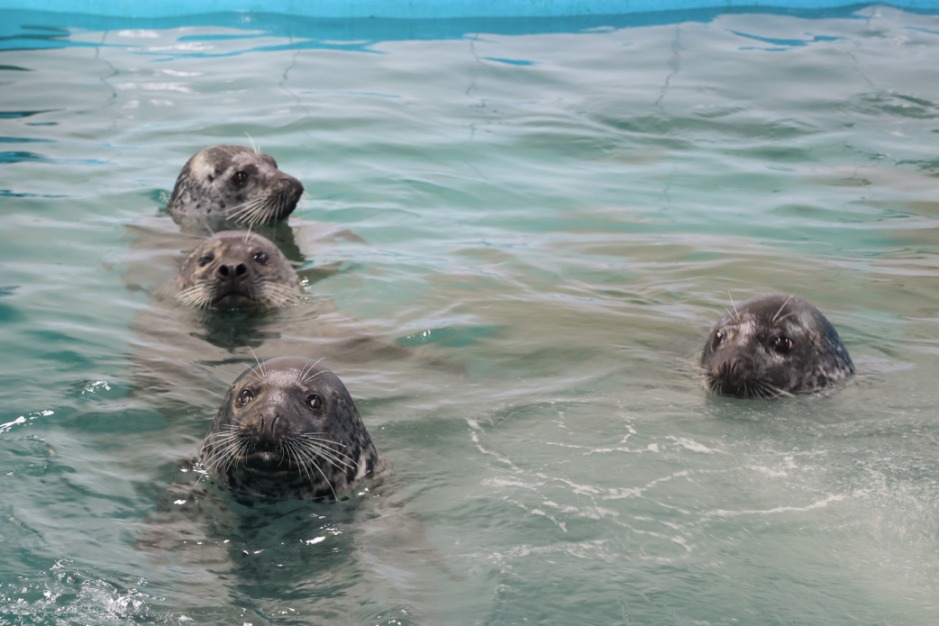
Decades of targeted habitat protection and enforcement efforts have yielded a remarkable win for wildlife conservation in Northeast China, as official data confirms the spotted seal population in Liaodong Bay has bounced back from the brink of steep decline to exceed 2,000 individuals.
The rebound marks a dramatic reversal from the 1980s, when unregulated human activity and habitat degradation pushed the population down to fewer than 1,000 seals, according to Chinese authorities who announced the milestone on Thursday.
Native to the waters of the North Pacific, spotted seals hold unique ecological significance for China: they are the only pinniped species that naturally breeds in Chinese territorial waters, and have been listed as a Class 1 protected wild animal under China’s national wildlife conservation legislation, granting them the highest level of legal protection.
In recent years, regional and national conservation authorities have rolled out a comprehensive suite of measures to reverse the species’ decline. These include the adoption of a dedicated, long-term action plan focused specifically on spotted seal conservation, expanded monitoring of breeding habitats, and regular targeted law enforcement operations to crack down on illegal poaching, habitat destruction, and other activities that threaten the species’ survival. Conservation teams have also carried out sustained work to reduce water pollution and restore critical coastal breeding grounds that had been damaged by industrial and coastal development.
The population milestone, announced alongside a spotted seal release event off the coast of Dalian, Liaoning Province on April 16, 2026, is widely seen as a major success story for China’s community-based wildlife conservation efforts, offering a model for reversing declines in vulnerable marine mammal populations across the region.