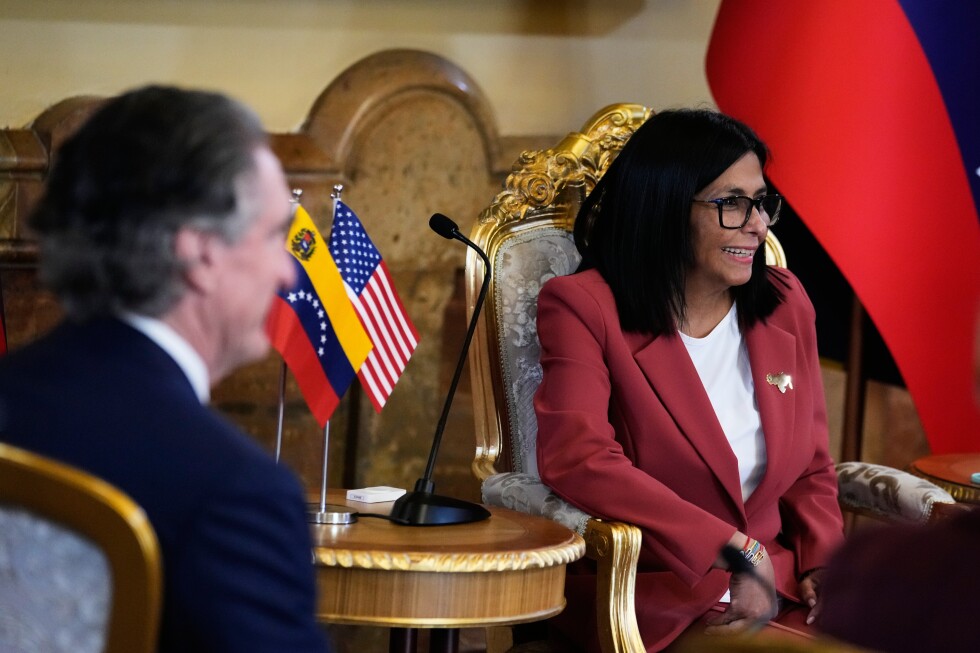
Venezuela’s acting President Delcy Rodríguez presented a compelling case for foreign investment in the nation’s oil sector during a Saudi-sponsored investment conference in Miami on Wednesday. Addressing international stakeholders remotely from Caracas, Rodríguez outlined transformative changes to Venezuela’s energy policies designed to attract private capital following the dramatic political shift that saw former leader Nicolás Maduro extradited to the United States.
Rodríguez projected an optimistic economic forecast, anticipating double-digit growth through 2026, while emphasizing newly established legal protections for international investors. “We are implementing crucial reforms to create a productive environment that will diversify Venezuela’s economic engines,” she stated in her Spanish-language presentation.
The acting president detailed specific incentives, including negotiable royalty reductions, income tax benefits, and enhanced profit-sharing arrangements. She highlighted that 64% of oil production costs now present negotiable terms for potential partners, creating substantial profit opportunities for major investors.
Venezuela’s outreach marks a significant departure from previous policies under Maduro, whose administration faced crippling U.S. sanctions that limited oil production to approximately 400,000 barrels daily in 2020—a drastic decline from the 3.5 million barrels produced in 1999. The 2019 sanctions against state-owned PDVSA forced Venezuela to sell its oil at approximately 40% below market value, primarily to Chinese buyers while accepting alternative payment methods including Russian rubles and cryptocurrency.
The current production stands near one million barrels daily, with Rodríguez emphasizing Venezuela’s competitive low extraction costs and new regulatory framework. Sweeping reforms enacted since January include ending PDVSA’s monopoly, permitting private control over production and sales, and implementing independent arbitration mechanisms for dispute resolution—addressing longstanding concerns about judicial impartiality in Venezuela.
These changes have already prompted policy adjustments from the U.S. Treasury Department, which recently authorized PDVSA to directly sell Venezuelan oil to American companies and global markets, signaling a potential normalization of energy trade relations after years of restrictions.