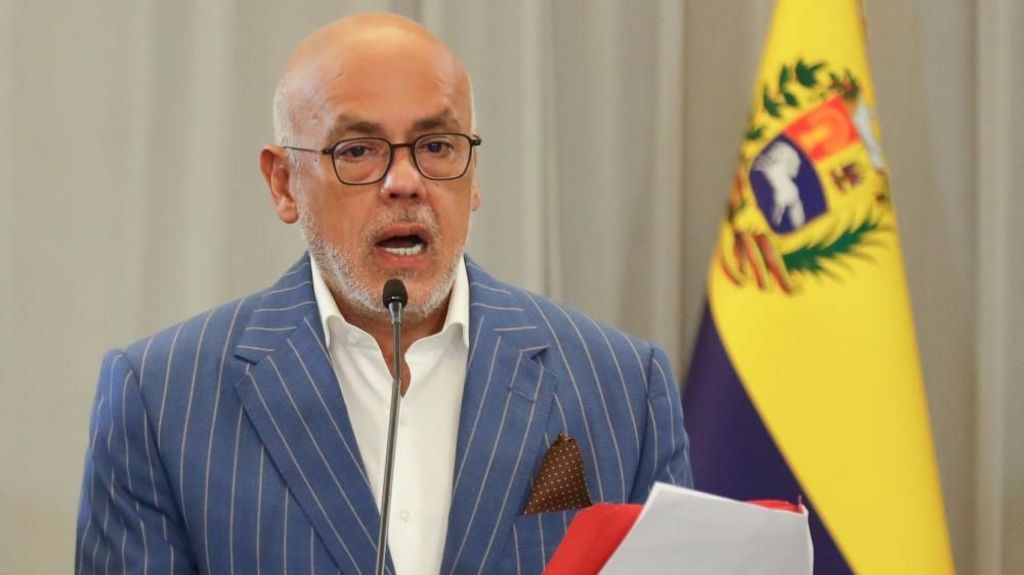
Venezuelan National Assembly Speaker Jorge Rodríguez has formally unveiled plans to fully revoke the Simón Bolívar Law, a contentious piece of legislation enacted two years ago that critics across the political spectrum have long condemned as a tool for targeted political persecution. The announcement marks a major concession in ongoing dialogue between the interim administration led by Delcy Rodríguez and factions of the country’s opposition movement. Rodríguez, who is the older brother of interim President Delcy Rodríguez, confirmed that the legislative body is on track to fast-track the repeal for final approval during the coming week, framing the move as a pragmatic adjustment to shifting national circumstances. “Legislative processes are inherently dynamic,” he stated during a public address. “This law was crafted to address a very specific, high-stakes moment that Venezuela faced, and it no longer serves the purpose of advancing our collective path forward.” Notably, Rodríguez pushed back against widespread public accounts of the law’s implementation, asserting that no Venezuelan politician had ever been formally subjected to its punitive provisions. The Simón Bolívar Law was rushed through parliament in the immediate aftermath of the July 2024 general election, a vote that remains mired in global controversy. Former long-time leader Nicolás Maduro was declared the winner by the government-aligned national electoral authority, which refused to release full, precinct-level vote tallies to verify the result. The opposition coalition, which fielded candidate Edmundo González as a stand-in for leading figure María Corina Machado after she was barred from running by Maduro’s administration, released thousands of scanned voting records to prove their claim that González had secured an overwhelming electoral victory. The political crisis escalated dramatically in early 2025, when Maduro was taken into custody by United States authorities, clearing the way for Delcy Rodríguez to assume the role of interim president. Since taking office, her administration has launched a series of formal negotiation rounds with opposition blocs, kicking off structured talks in August 2024 that produced a mutually agreed “route map towards democracy” that included a commitment to review a suite of contentious pieces of legislation passed during Maduro’s tenure. Interim President Delcy Rodríguez has repeatedly pledged to organize fully free, transparent and competitive national elections, though her administration has not yet released a concrete timeline for the vote. One of the most anticipated potential candidates for the upcoming election is María Corina Machado, the hugely popular opposition leader who returned to Venezuela in October 2024 after spending more than 10 months in exile abroad. Though Machado was initially excluded from the official transition negotiation delegations, the repeal of the Simón Bolívar Law removes one of the most significant legal barriers that would have prevented her from registering as a presidential contender. The Simón Bolívar Law, at its core, imposed permanent bans on holding any public political office, alongside full asset confiscation, for any individual found to have requested or supported the imposition of international sanctions against the Venezuelan state. Opposition groups had spent months decrying the law as a draconian measure designed to eliminate political competition and silence critics of Maduro’s authoritarian rule.