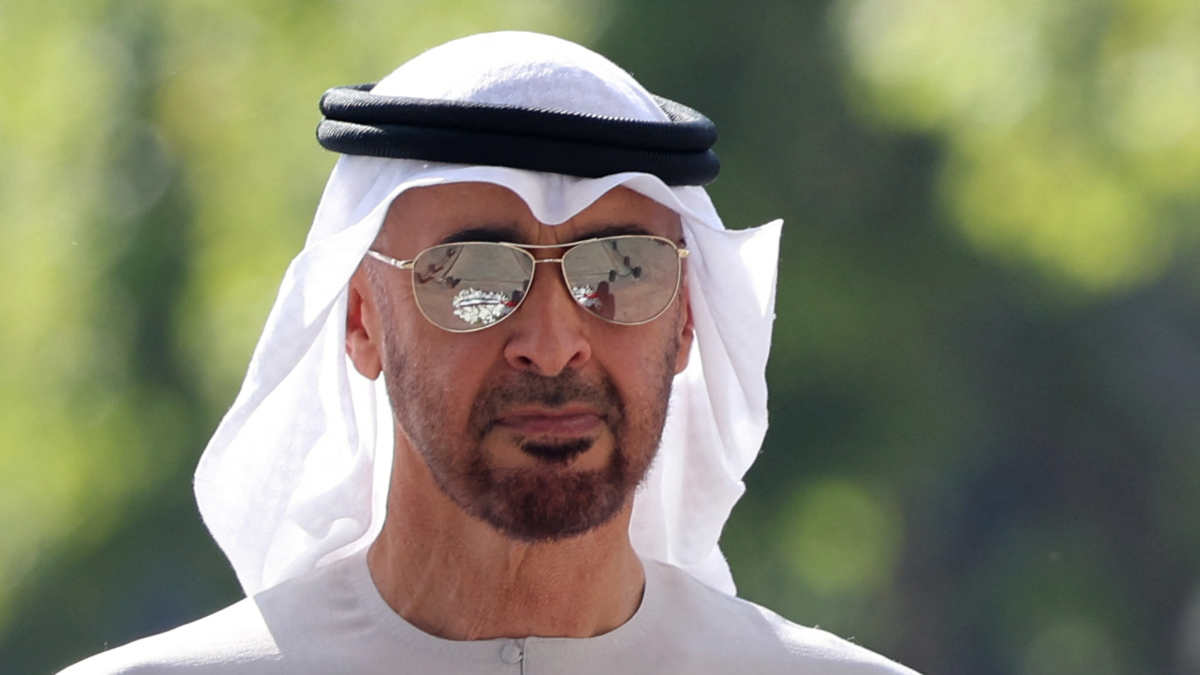
A newly released investigative book by veteran journalist Matthew Cole, titled *Princes and Thieves: Jared Kushner and Mohamed bin Zayed’s Secret Plot to Remake the Middle East*, has laid out a series of unvetted, high-stakes allegations that pull back the curtain on opaque power dynamics within Gulf ruling circles and backdoor dealings between key figures of the first Trump administration and Saudi and Emirati leadership. At the core of the most explosive claims is the assertion that Jared Kushner, former President Donald Trump’s son-in-law and then-special Middle East envoy, received roughly $2 billion in undisclosed funds from Saudi Arabia and the United Arab Emirates during his tenure in the White House. Cole alleges that $750 million of that sum was routed through Emirati financial institutions at First Abu Dhabi Bank under the auspices of the Emirati civic charity Watani Al Emarat Foundation, a mechanism that was publicly framed as support for local community initiatives but was in reality diverted to fund unreported Emirati weapons acquisitions and covert cross-border military operations. Kushner, who currently serves as Trump’s special representative for Ukraine and Middle East affairs, has forcefully rejected all of these allegations, while the New York Times has publicly called for formal congressional investigations into the claims once Democratic lawmakers take control of the chamber in the upcoming legislative session. Neither the Saudi royal family nor the UAE’s ruling Al Nahyan household has issued any public statement responding to the book’s contents, and the independent news outlet Middle East Eye (MEE), which curated highlights from the anonymously sourced text, notes that it has not been able to independently verify every claim laid out in Cole’s reporting. Beyond the Kushner financial allegations, the book details decades-long hidden power maneuvers within the UAE ruling family, including a 1990s plot in which current UAE President Mohammed bin Zayed Al Nahyan (widely referred to as MBZ) allegedly hired two Syrian operatives to film his older brother, then-heir apparent and later UAE President Khalifa bin Zayed, in compromising private intimate footage during a trip to southern Europe. Cole claims MBZ arranged for Russian intermediaries to deliver the recorded tape to their father, UAE founding ruler Zayed bin Sultan Al Nahyan, in a deliberate bid to discredit Khalifa and undermine his claim to the throne. Rather than punishing MBZ for the blackmail attempt, the book states, the founding ruler recognized his son’s ruthless cunning and was even amused by the gambit, which would later be viewed inside the Al Nahyan family as an early signal of MBZ’s unyielding ambition to seize full control of the country. The account further challenges widely circulated public narratives that Khalifa’s decision to cede almost all governing authority to MBZ after ascending to the presidency in 2004 stemmed from a voluntary power-sharing agreement, exacerbated by a 2014 stroke. Cole asserts that Khalifa struggled with chronic alcoholism and undiagnosed mental illness years before the stroke, and that after MBZ was appointed deputy crown prince of Abu Dhabi in 2003, he arranged for a network of caretakers including an American nurse with family ties to his household to administer sedating treatments that left Khalifa in a persistent stupor, eventually causing permanent nerve damage and rendering him functionally unable to govern. The book also claims MBZ maintained a long-term intimate relationship with the nurse’s niece, Lisa, with whom he fathered an illegitimate child who was raised in secret in Southern California. Additional reporting in the book outlines how MBZ weaponized unsubstantiated rumors about the sexual orientation of former Saudi Crown Prince Mohammed bin Nayef to lobby U.S. officials against him, paving the way for Mohammed bin Salman’s eventual rise to the Saudi throne, a detail corroborated by two previously published well-sourced nonfiction accounts of Saudi royal politics. Cole also traces MBZ’s decades-long secret affinity for Israel, dating back to the 1990s when he pushed his reluctant father, who held deep sympathies for the Palestinian cause, to approve the purchase of 80 U.S.-manufactured F-16 warplanes fitted with Israeli proprietary software, a deal negotiated under the secret auspices of the Clinton administration to address Israeli concerns about preserving its longstanding Qualitative Military Edge over regional adversaries. The book alleges that as MBZ pushed to formalize the UAE’s long-secret security and intelligence partnership with Israel under the U.S.-brokered 2020 Abraham Accords, he ordered the brutal 2019 torture and killing of prominent Emirati poet and state-backed cultural luminary Habib Al Sayegh, who had previously publicly defended the Saudi and Emirati blockade of Qatar but published a scathing op-ed denouncing Israeli normalization as a dangerous threat to the region. Cole writes that Sayegh was abducted directly from his home by Emirati security forces, subjected to three days of extreme physical abuse including having his teeth pulled out with pliers and being beaten with a studded leather strap, and died in custody, with his aides describing his body as nearly unrecognizable after the torture. The book further reveals the outline of a secret regional deal negotiated by Kushner, MBZ, and Saudi Crown Prince Mohammed bin Salman that sought to sideline Palestinian statehood aspirations by relocating 90% of the 3 million Palestinian residents of the occupied West Bank to Jordan, leaving only a small, demilitarized rump state with small parcels of additional land from the Israeli Negev desert and Jordanian territory to be recognized formally by Israeli Prime Minister Benjamin Netanyahu. Cole also details fierce internal turf wars within the first Trump administration over Middle East policy, including tensions between Kushner and Lebanese-American private equity investor Tom Barrack — now serving as U.S. ambassador to Turkey and special envoy for Iraq and Syria — who initially sought to launch a multi-billion dollar, Gulf-funded Marshall Plan-style reconstruction initiative for the entire Middle East, only to be sidelined by Kushner who restricted his portfolio to Egyptian affairs. Barrack later aligned with then-Secretary of State Rex Tillerson to lobby former President Trump against endorsing the 2017 Saudi-UAE blockade of Qatar, even as he maintained close personal and business ties to both Saudi and Emirati leadership. MEE emphasizes that many of the book’s claims rely on anonymous on-background sources, and that full independent verification of all allegations remains pending at the time of publication.
Sex, drugs, Israeli tech and Trump rivalries: Five explosive claims from Kushner-UAE book