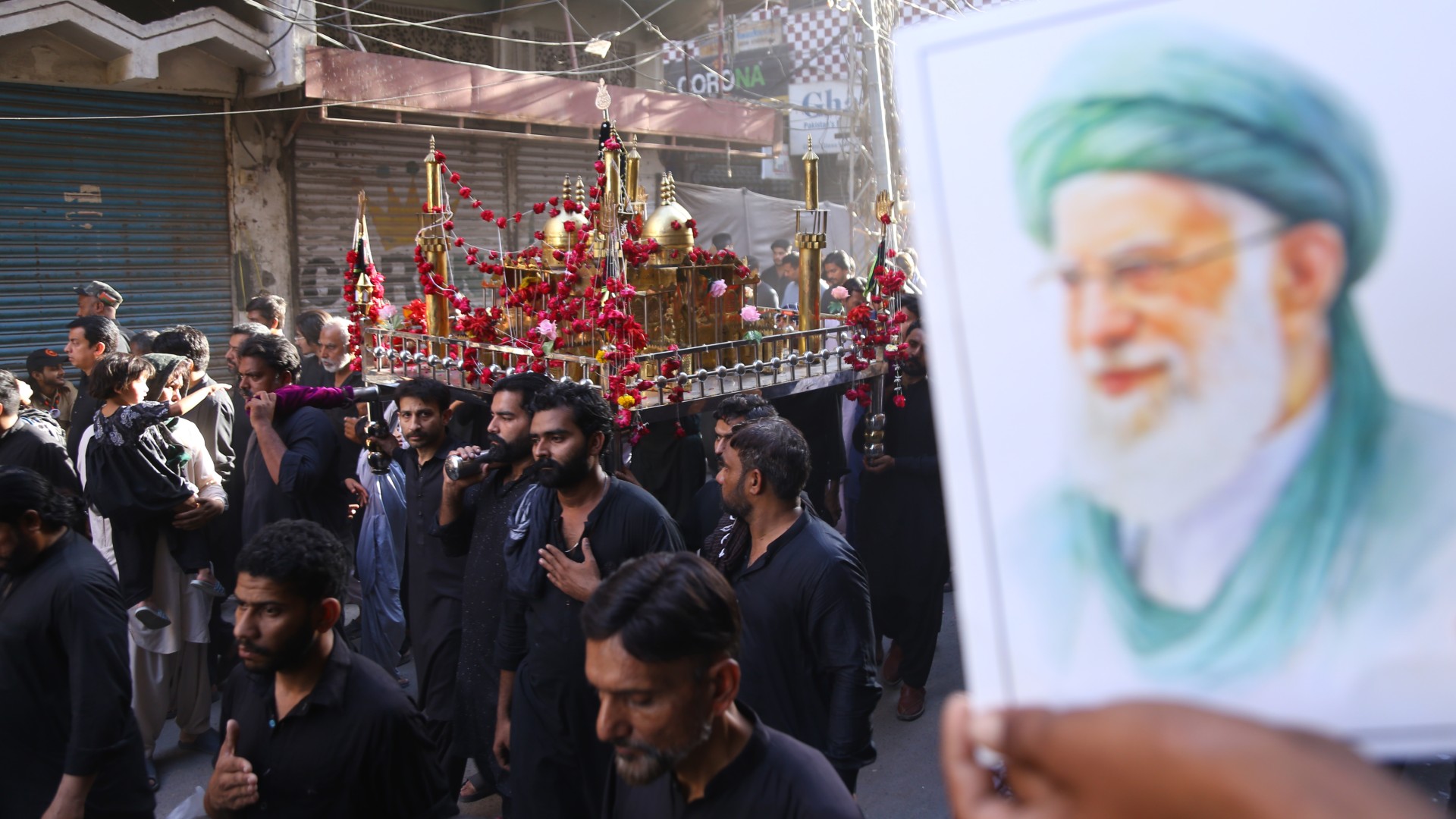
In early spring, the first wave of involuntary returns of Pakistani laborers from the United Arab Emirates slipped quietly across border checkpoints and into rural communities across Pakistan, with little fanfare and no advance warning. Men arrived back to their hometowns empty-handed, catching their families completely off guard. Within weeks, however, similar cases began to emerge from every corner of the country, forming a pattern that has sparked outrage and sectarian concern across South Asia and the Gulf.
According to interviews with multiple Shia community leaders conducted by Middle East Eye, thousands of Pakistani workers – the vast majority of whom identify as Shia Muslim and had lived and worked in the UAE for decades – have been expelled from the Gulf state since mid-April in a campaign shrouded in official secrecy. None of the deportees interviewed received formal charges, advanced explanation, or access to legal appeal before being detained and placed on repatriation flights. For many of the men affected, the message is clear: their religious identity is the only explanation for their expulsion.
“They did not tell us any reason,” explained Hussain Turi, a 45-year-old former taxi driver whose home district of Khurram, located along Pakistan’s border with Afghanistan, has received nearly 200 deported residents from the UAE in just a few months. “But we understood. Our only crime is being Shia.”
Deportees describe a sudden, opaque process that leaves no room for pushback or clarification. Workers report being summoned to local police stations with no stated reason, held for days in overcrowded detention facilities and jails, and flown directly to Pakistan without ever being permitted to consult a lawyer, hear a formal accusation, or challenge their expulsion. Many had spent decades working low-wage jobs in construction, transportation, and service roles across the UAE, sending consistent remittances that supported entire extended families back in Pakistan.
Similar patterns of targeted deportation of Pakistani Shia workers have been reported in Qatar earlier this year, drawing broader international attention to the issue after accounts spread across social media and international news outlets. Indian Shia organizations, including the All India Shia Personal Law Board, have also raised alarms over rising detentions and mistreatment of Indian Shia workers in multiple Gulf states, most notably the UAE and Saudi Arabia.
Pakistan’s federal government has pushed back hard against these claims, dismissing all reporting of sect-based targeting as bad-faith propaganda. In a May 8 statement, the country’s interior ministry said that “all such reporting is malafide and part of vicious propaganda by vested interests,” adding that no country or sect-specific deportation campaign is underway, including in the UAE.
But despite official denials, on-the-ground interviews with community leaders, deportees, and activists across multiple Pakistani provinces confirm that Shia workers have been disproportionately affected by the recent wave of expulsions. Prominent Shia cleric Allama Amin Shaheedi estimates that as many as 15,000 Pakistani Shia have either been deported or denied re-entry to the UAE in recent months, though the lack of official data and the secrecy surrounding the campaign make independent verification of the total scale impossible.
Many deportees have requested anonymity or only agreed to speak on condition of being identified by their surname, fearing that public criticism will permanently bar them from returning to the Gulf to recover left-behind savings, businesses, vehicles, or unpaid wages. Even so, accounts collected across Pakistan are nearly identical in their description of how detentions and expulsions unfolded.
“They approached me directly and asked for my ID. They already knew exactly who I was,” said Qaisar, a Shia man deported to Pakistan’s Chakwal District in Punjab, who described being intercepted by security officials at Dubai’s flagship Dubai Mall after being flagged via closed-circuit surveillance.
Multiple deportees and community advocates say the campaign is rooted in a years-long systematic surveillance and profiling program targeted explicitly at Shia religious identity. The most commonly cited practice is mandatory biometric scanning of Emirates ID cards for all worshippers entering imambargahs – Shia congregation halls – a security requirement that interviewees say is almost never enforced at Sunni mosques across the UAE.
Deportees and advocates argue that biometric data, identity records, and attendance logs collected at Shia religious sites over years have been used by UAE security agencies to map Shia religious networks and flag individuals for deportation. While no independent official evidence has confirmed this data collection practice, first-hand accounts consistently point to a coordinated system of religious tracking.
“At the imambargahs, they ask us to scan our Emirates ID cards before entering,” said Abbas, a former employee of an architectural firm in Dubai who was deported to Lahore in late April. “People became afraid of attending because they believed their names were being recorded.”
The dragnet has even accidentally swept up non-Shia workers who associated with Shia communities. Raziq, a Sunni laborer from Sargodha in Punjab, told MEE he was deported after being misidentified as Shia, because he regularly visited a local imambargah to access free meals he could not otherwise afford. “Despite being Sunni, I was deported for being Shia,” he said.
Community members also allege that in recent years, UAE visa and employment permit officials have increasingly delayed, rejected, or suspended applications from Pakistanis who carry surnames traditionally associated with Shia communities, including Zaidi, Askari, Jafri, Hussain, Hasan, Turi, and Bangash. Applicants from Pakistani districts with large Shia populations, such as Khurram, Kohat, Quetta, Hunza, and Skardu, also report facing heightened, unexplained scrutiny during immigration and employment screening. Some applicants report being subjected to months-long unexplained “security checks,” while others say employers now quietly avoid hiring workers from perceived Shia backgrounds to avoid drawing scrutiny from security officials. MEE was unable to independently verify the full scale of these alleged restrictions, and UAE authorities have not issued any public comment on claims of surname-based profiling.
Many deportees also say UAE security officials confiscated their bank cards, cash, and mobile phones before they were deported, leaving them stranded upon arrival in Pakistan with no access to their life savings or personal belongings. Others report being denied the opportunity to contact their employers, collect unpaid months of wages, or retrieve personal property before being forced onto repatriation flights.
“Nobody accused us of a crime. Nobody showed us evidence,” said Haider Kazmi, an IT professional who had lived and worked in Dubai for a decade before his expulsion. “They looked at our faith and decided we no longer belonged there.” Kazmi added that the abrupt, unaccountable process left many deportees feeling deeply humiliated and dehumanized. “It was painful,” he said. “But as Shias, we are taught that hardship and persecution have always been part of our history.”
Since the 2020 Abraham Accords that normalized relations between the UAE and Israel, Shia expatriates across the Gulf report a sharp deterioration in the security environment for public Shia religious practice. While Ashura commemorations and private majalis (religious council gatherings) are still permitted in some private locations, public Shia mourning rituals and religious events have come under steadily increasing surveillance, with worshippers facing detention and deportation. Human Rights Watch documented a clear rise in restrictions on Shia religious expression in the UAE as early as late 2020.
Security analysts and community leaders agree that the recent wave of deportations is directly tied to escalating regional geopolitical tensions reshaping the Gulf, specifically the sharpened confrontation between Iran, the United States, and Israel that began on February 28. Gulf states including the UAE and Saudi Arabia have long viewed Shia communities and religious networks through the lens of potential Iranian influence, a perspective that hardened after the 1979 Iranian Revolution and intensified following the 2011 Arab uprisings. During periods of heightened regional conflict, these suspicions translate into increased scrutiny of Shia expatriate communities from Pakistan, Lebanon, Iraq, and Afghanistan.
At the center of Gulf security concerns is the doctrine of Wilayat al-Faqih, or “Guardianship of the Islamic Jurist,” the ideological foundation of the Islamic Republic of Iran developed by Ayatollah Ruhollah Khomeini after the 1979 revolution. The doctrine grants Iran’s supreme leader sweeping religious and political authority, which adherents recognize as extending beyond Iran’s borders to Shia communities globally. While many Shia Muslims and senior Shia clerics around the world reject this claim of transnational authority, Gulf security establishments argue that it fosters divided loyalties that threaten the legitimacy of ruling monarchies.
These longstanding anxieties were amplified on April 20, when the UAE’s State Security Department announced it had dismantled a clandestine network allegedly tied to Iran, claiming the investigation uncovered links to Wilayat al-Faqih ideology, reinforcing existing fears of Iranian influence among expatriate Shia communities. Regional tensions deteriorated even further after the killing of Iranian Supreme Leader Ayatollah Ali Khamenei in a joint US-Israeli strike on Tehran on February 28, an event that sparked widespread unrest across Muslim-majority nations, including violent Shia-led protests in Pakistan that left more than 35 people dead. The subsequent succession of Khamenei’s son Mojtaba Khamenei as Iran’s new supreme leader has deepened Gulf fears that Iran’s ideological project will continue unchanged.
For Shia communities across the Gulf, the convergence of the Abraham Accords and the post-February war on Iran has supercharged official paranoia about perceived Shia loyalties, leaving tens of thousands of working-class Pakistanis displaced, stripped of their livelihoods, and with little legal recourse to reclaim their lives in the Gulf.