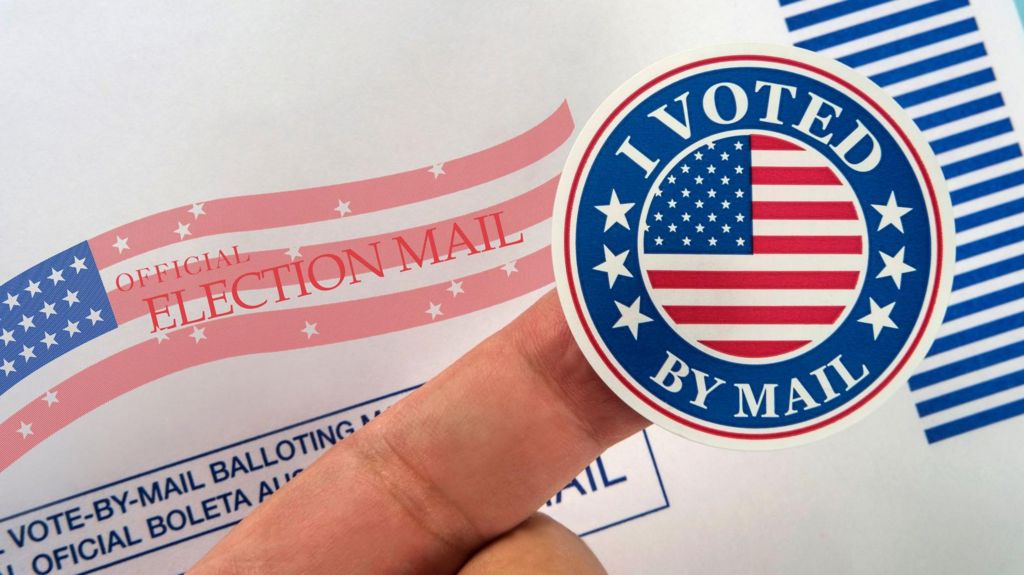
In a high-stakes decision with far-reaching implications for November’s congressional midterm elections, the U.S. Supreme Court has delivered a major defeat to the Trump administration and Republican efforts to restrict mail-in voting, upholding a state law that allows counting postal ballots received after Election Day. The narrow 5-4 ruling maintains the legality of Mississippi’s policy, which permits mail-in ballots postmarked by Election Day but arriving up to five days later to be included in final vote totals. The outcome of the case had been widely watched because it could have forced changes to voting deadlines in more than a dozen key swing states that could ultimately determine which party takes control of the U.S. Congress after the 2022 midterms. While most of the states that offer this post-Election Day grace period for mail-in ballots lean Democratic, a small number of Republican-led jurisdictions also allow the practice, underscoring the broad policy implications of the court’s decision. Writing for the court’s majority, Justice Amy Coney Barrett—who was appointed by former President Donald Trump—was joined by Chief Justice John Roberts and the court’s three liberal justices in the decision. In her majority opinion, Barrett emphasized that the ruling does not contradict existing federal law, which sets the “Tuesday next after the 1st Monday in November” as the official national election day. “The election-day statutes say nothing about ballot receipt, and we cannot add to the words Congress chose,” Barrett wrote in the opinion. The legal challenge brought by Republican allies, backed by the Trump administration, centered on an 1845 congressional law that formally defines federal Election Day. Republicans argued that the statute requires all mail-in ballots to be both postmarked and received by Election Day, claiming that late-arriving ballots open the door to widespread voting irregularities and erode public trust in election outcomes. In a legal brief submitted to the court, the Trump administration argued that “Election-day receipt promotes election integrity and voter confidence as much today as it did when Congress passed that law.” The ruling marks one of the most significant political setbacks for Trump, who has spent years repeating unsubstantiated claims that widespread mail-in voting is rife with fraud and falsely insists that systemic voter fraud cost him victory in the 2020 presidential election against Joe Biden. In March, the former president’s personal attorney appeared before the Supreme Court to argue in favor of the Republican National Committee-led lawsuit targeting Mississippi’s mail ballot deadline rule. Election analysts note that the decision preserves current voting rules for upcoming competitive elections, leaving intact grace periods that millions of voters could rely on to cast their ballots in November’s high-stakes midterm contests.
US Supreme Court allows late-arriving mail-in ballots in defeat for Trump