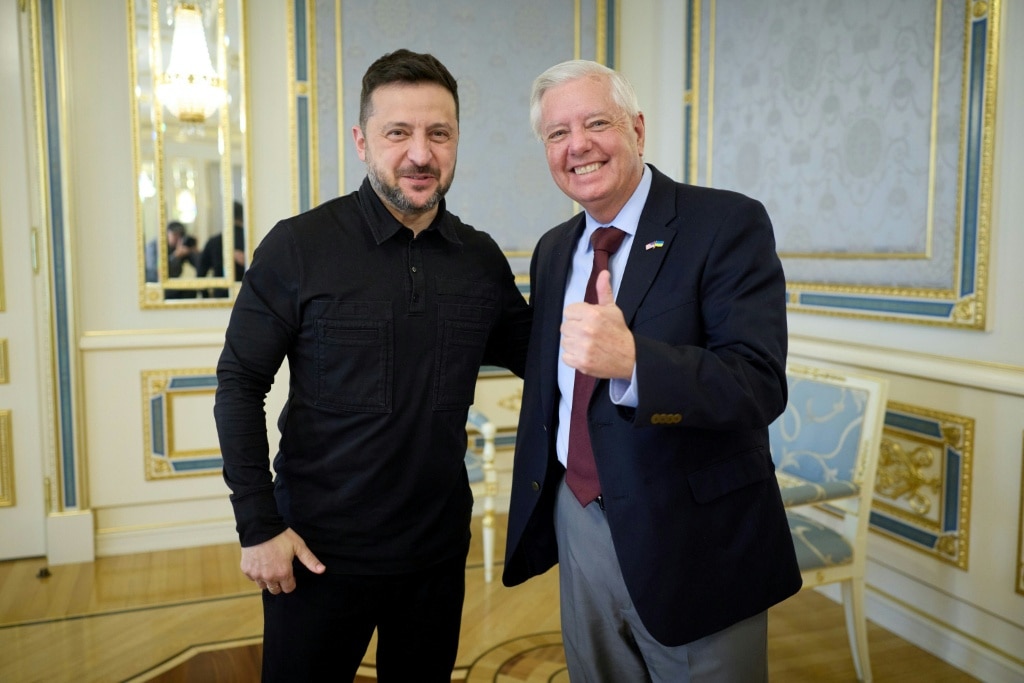
Veteran Republican Senator Lindsey Graham of South Carolina, a polarizing but deeply influential figure in American politics whose career shifted from fierce critic to close ally of former President and current President-elect Donald Trump, has died suddenly at the age of 71 following a brief unanticipated illness, his office confirmed. Emergency response records obtained by major U.S. media outlets including NBC News indicate first responders were called to Graham’s Capitol Hill residence Saturday night for a reported cardiac arrest.
Graham’s four-decade political career began with his election to the U.S. House of Representatives in the 1994 Republican wave, before he moved to the Senate in 2002. A lifelong foreign policy hawk shaped by his service as an Air Force military lawyer (where he retired with the rank of colonel), Graham built his reputation as an unapologetic interventionist. He backed the 2002 invasion of Iraq, supported a long-term U.S. military presence in Afghanistan, and was a leading voice pushing for robust U.S. military backing for Ukraine following Russia’s 2022 full-scale invasion, a cause he championed through both the Trump and Biden administrations. He was also one of the most vocal proponents of a hardline stance against Iran and a staunch lifelong ally of Israel, repeatedly pushing for expanded U.S. military and diplomatic support for the Jewish state.
Graham’s political trajectory with Donald Trump remains one of the most notable chapters of his later career. A decade ago, Graham emerged as one of Trump’s most outspoken Republican critics during the 2016 presidential primary, where he launched his own unsuccessful bid for the Republican nomination and infamously labeled Trump a “race-baiting, xenophobic, religious bigot.” Following Trump’s election, however, Graham gradually aligned with the former president, ultimately becoming one of his most reliable and high-profile allies in Congress. Even after the January 6, 2021 Capitol riot – where a pro-Trump mob stormed the Capitol, forcing lawmakers to evacuate for their safety – Graham initially condemned the violence, saying “enough is enough” and saying he would break with Trump. But he ultimately reversed course, voting against convicting Trump in his second impeachment trial, reconciling with the former president, and endorsing his 2024 re-election bid. Just months before his death, Graham won the Republican primary to seek a fourth Senate term in the upcoming November general election.
World leaders have been quick to pay tribute to the senator following the news of his passing. President Trump honored Graham in a post on his Truth Social platform, calling him “one of the greatest people” and “a true American Patriot.” Israeli Prime Minister Benjamin Netanyahu described Graham as “a great friend of Israel and a cherished friend of mine,” adding that the senator “understood that the security of Israel and America are inseparable. He devoted his life to defending America, strengthening our alliance and standing up for the free world.” Ukrainian President Volodymyr Zelenskyy, who met Graham in Kyiv just this past Friday, expressed deep sorrow over the loss, noting that Graham had visited Ukraine 10 times since Russia launched its full-scale invasion, always arriving when Ukraine needed international support most. “America and the world have lost a determined leader,” Zelenskyy said in a statement.
Graham’s sudden death comes at a tense moment for Senate Republicans, who already hold a narrow 53-47 majority in the chamber and have been without long-time leader Mitch McConnell, who has been hospitalized for weeks and has not cast a vote since June 11. To fill Graham’s seat for the remainder of his current term, South Carolina Governor Henry McMaster will appoint an interim successor, and a new primary will be held to determine the Republican nominee for the open seat in November.
Raised in a working-class family in Central, South Carolina, where his parents owned and operated a local restaurant and pool hall, Graham was the first member of his family to attend college, according to his official Senate biography. At the time of his death, he was serving as chairman of the Senate Budget Committee, and had previously held a number of key committee assignments throughout his Senate tenure.