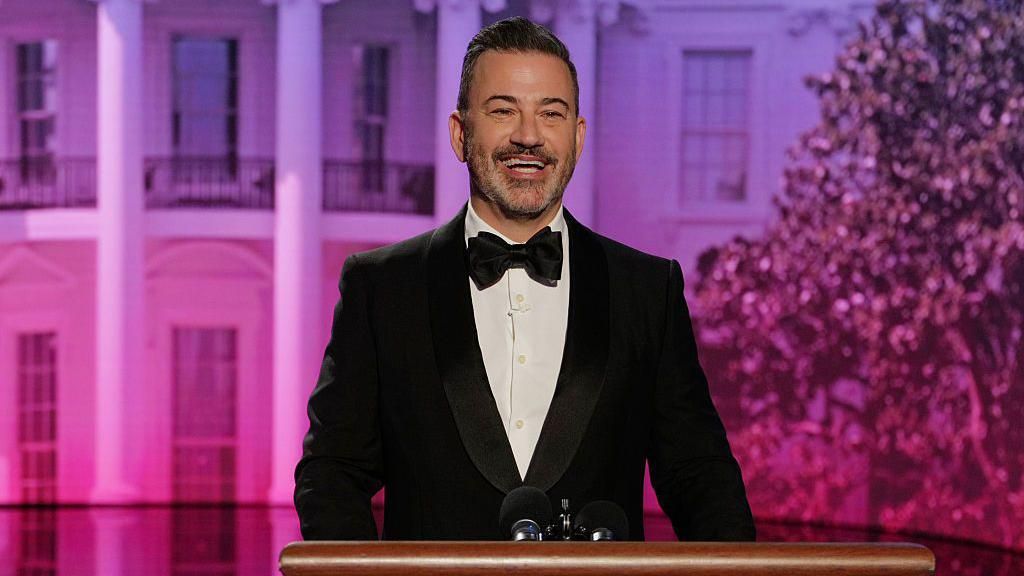
A major clash over press freedom and political influence has erupted in the United States after the U.S. Federal Communications Commission (FCC) announced an urgent, accelerated review of broadcast licenses for all Disney-owned ABC television stations, just days after former President Donald Trump demanded the network fire late-night host Jimmy Kimmel over a controversial joke. The chain of events stretches back to a poorly received comedy monologue where Kimmel joked that Melania Trump had the “glow of an expectant widow” — comments made just 48 hours before a would-be assassin opened fire at a Washington D.C. gala attended by the Trumps. That joke quickly drew fierce backlash from the former president and his allies, who framed the quip as an implicit incitement to violence. The 31-year-old suspect, Cole Tomas Allen, was tackled by law enforcement before he could reach the ballroom holding the White House Correspondents’ Dinner, where hundreds of journalists, political figures and public officials had gathered. Allen now faces federal charges for attempted assassination of the former president, and the Trumps escaped the incident unharmed. In the aftermath of the shooting, the Trump administration has doubled down on its demand for Kimmel’s removal. White House Communications Director Steven Cheung went so far as to declare publicly Tuesday that Kimmel should be “shunned for the rest of his life.” Donald Trump himself labeled the joke a “call to violence,” while Melania Trump issued a statement accusing the comedian of exacerbating “the political sickness within America.” Kimmel pushed back against these accusations during the opening monologue of his show Monday night, clarifying that his comment was nothing more than a light-hearted jab at the age gap between the 79-year-old former president and his younger wife. “It was not by any stretch of the definition a call to assassination,” Kimmel said, adding that he has spent years speaking out publicly against gun violence. This is not the first time Kimmel has drawn conservative backlash and been pulled off air: Last September, he was temporarily suspended for a week after suggesting Trump’s Make America Great Again (MAGA) movement was seeking political gain from the fatal shooting of conservative influencer Charlie Kirk. In its official order released Tuesday, the FCC stated that it has opened an investigation into ABC’s owned-and-operated stations over alleged potential rule violations, including claims of unlawful discrimination. The commission has ordered Disney to submit full license renewal applications for all its TV stations within 30 days, a major shift from the original 2028 renewal schedule. As part of the review process, the FCC can require Disney to demonstrate that it meets the agency’s strict public-interest standards to hold a broadcast license. In the most extreme scenario, the review could end with the revocation of ABC’s broadcast licenses — a step the FCC has not taken in more than 40 years, according to reporting from Reuters. Disney has pushed back forcefully against the regulator’s action. A company spokesperson told the BBC that ABC and its local stations have a decades-long track record of operating in full compliance with FCC rules, and deliver vital services including trusted local news, emergency alerts and public interest programming to the communities they serve. “Our focus remains, as always, on serving viewers in the local communities where our stations operate,” the spokesperson added. The move has already sparked sharp criticism from Democratic officials at the FCC. Democratic Commissioner Anna M. Gomez issued a public statement on social media platform X labeling the accelerated review a transparent “political stunt.” “This is unprecedented, unlawful, and going nowhere,” Gomez wrote. “Companies should challenge it head-on. The First Amendment is on their side.” The incident marks the latest escalation in a long-running effort by Trump to penalize media outlets that he claims cover him unfairly. Trump has repeatedly suggested in the past that networks that run what he calls “bad publicity” should have their broadcast licenses revoked, a threat that has drawn widespread concerns about attacks on First Amendment press protections. The current tension is not the first regulatory action the FCC has taken against Disney under the Trump administration: Last year, FCC Chair Brendan Carr sent a formal letter to the company notifying it that the commission had opened an investigation into Disney’s diversity and inclusion practices, over claims that the programs violated federal regulation. Founded in 1934, the FCC was originally created to allocate scarce radio and later television broadcast frequencies, and today oversees rules ranging from sponsor disclosure requirements to emergency broadcast protocols and obscenity standards.
US regulator to review Disney broadcast licenses after Jimmy Kimmel joke about Melania Trump