A landmark legal showdown between two of Silicon Valley’s most influential tech leaders has begun in a California courtroom, bringing long-simmering tensions over the founding and direction of artificial intelligence powerhouse OpenAI into the public eye. The trial, which pits former OpenAI co-founder Elon Musk against current CEO and fellow co-founder Sam Altman, has seen the two sides present starkly conflicting accounts of the company’s origins and core founding commitments.
When called to the witness stand, Musk — dressed in a formal dark suit and tie — framed the dispute in clear, uncompromising terms. “It’s actually very simple,” he said. “It’s not okay to steal a charity… If it’s okay to loot a charity, the entire foundation of charitable giving will be destroyed.” Musk, who contributed $38 million to OpenAI during its early years as a non-profit research entity, argues that Altman and co-founder Greg Brockman abandoned the organization’s original charitable mission when they launched a commercial division in 2018, years before ChatGPT ignited the global generative AI boom.
Musk’s lead attorney Steven Molo emphasized to the nine Oakland-based jurors that their client’s involvement was foundational to OpenAI’s existence, telling the court: “Without Elon Musk, there would be no OpenAI. Pure and simple.” Molo explained that Musk’s longstanding position on AI has always centered on responsible, public-benefit development rather than private profit, a stance that solidified after a 2015 meeting with then-President Barack Obama, where Musk grew increasingly concerned about the lack of government oversight for the rapidly advancing technology. Through the lawsuit, Musk is seeking the return of billions of dollars in what his legal team calls “wrongful gains” to be redirected to OpenAI’s non-profit arm, alongside leadership changes that include removing Altman from his role as CEO. His legal claims center on charges of breach of charitable trust and unjust enrichment.
Counsel for OpenAI, however, has painted a far different picture of the dispute, arguing that the entire lawsuit is a cynical attempt by Musk to sabotage a leading business competitor. OpenAI attorney William Savitt told the court: “We’re here because Mr Musk didn’t get his way at OpenAI. Because he’s a competitor, Mr Musk will do anything to attack OpenAI.” Savitt claimed that Musk attempted to pressure other early OpenAI founders into merging the startup with his electric vehicle and tech company Tesla, and left the organization in a huff only when his bid for full control was rejected. “When they refused to turn the keys of artificial intelligence over to one person,” Savitt said, “When they refused to let OpenAI be absorbed, Musk took his marbles and went home. He left it, he thought, for dead.” OpenAI further argues that Musk never actually prioritized the non-profit model and is motivated by jealousy and regret over walking away from the company before its massive commercial success. The company notes that Musk now runs his own AI firm, xAI, which launched its chatbot Grok in 2023 — a full year after ChatGPT’s debut — and has lagged behind OpenAI in the race to develop advanced artificial general intelligence (AGI). OpenAI also claims that Musk was fully aware of and agreed to the 2018 decision to launch a commercial division, and that he only left after failing to secure the CEO position for himself. Altman is expected to take the witness stand later in the proceedings.
Judge Yvonne Gonzalez Rogers, who is presiding over the case, has already warned both parties against using their massive social media platforms to sway public opinion or influence the jury. On the first day of jury selection, Musk sparked controversy by referring to Altman as “Scam Altman” in a post on X, the social network he owns. While the judge ultimately declined to issue a full gag order that would bar trial participants from commenting on the case outside court, she urged Musk to curb his social media activity. “Try to control your propensity to use social media to make things worse outside this courtroom,” she said, asking both sides to maintain a “clean slate” moving forward. Both Altman and Brockman agreed to adhere to the same standard of conduct.
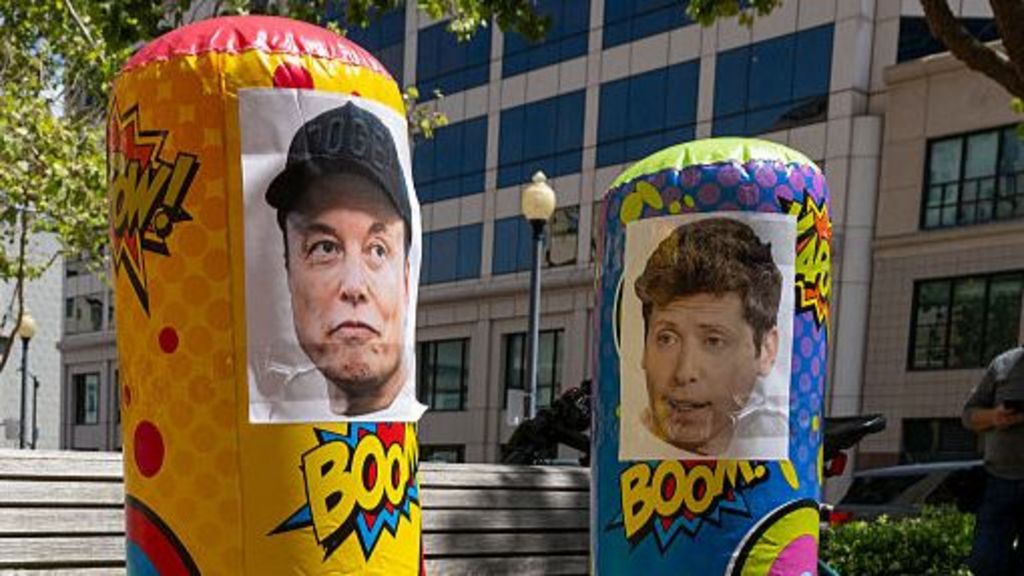
Outside the courthouse, circulating photos show punching bags printed with the faces of both Musk and Altman, a striking visual indicator of the high public interest in the clash between two of the tech industry’s biggest names. A verdict in the trial is expected to be delivered in late May, with the outcome set to shape the future direction of one of the world’s most valuable AI companies and set a precedent for disputes over founding commitments in the rapidly growing tech sector.