Months after rolling back a slate of international initiatives amid sweeping budget and personnel cuts, the Trump administration is moving to dramatically expand funding for programs targeted at countering China’s expanding global footprint, multiple U.S. government sources and official documents confirm.
In a formal notification sent to Capitol Hill late last week, the White House outlined plans to allocate $175.8 million to replace aging, obsolete undersea telecommunications cables across the Caribbean and Central America. The explicit goal of the project, dubbed the “Countering CCP Control of Caribbean and Central America Undersea Cables project,” is to block Chinese firms from gaining a strategic foothold in the region’s digital infrastructure, according to the notification, a copy of which was obtained by the Associated Press on Monday.
The Trump administration has repeatedly raised alarms over China’s growing economic and diplomatic activity in the Americas, pushing back against Chinese ownership of port facilities at both entrances of the Panama Canal, opposing infrastructure projects developed under China’s Belt and Road Initiative, and scrutinizing Chinese investment in the region’s telecommunications sector.
A senior State Department official, speaking on condition of anonymity due to restrictions on discussing the policy publicly, argued that China’s infrastructure and investment offerings across the Western Hemisphere pose tangible risks to U.S. national security and long-term economic prosperity. The official noted that while Chinese projects often appear more affordable upfront, they frequently end up costing host nations far more over time due to unanticipated cost overruns, hidden long-term maintenance fees, and substandard construction and performance.
The undersea cable initiative is just the first visible component of a far broader administration push to revive counter-influence programs that were cut last year. Internal State Department planning documents reviewed by AP show the White House is considering allocating an additional $340 million to fund more than 50 separate counter-China projects across the Western Hemisphere, Africa, and Asia, bringing total new proposed spending to hundreds of millions of dollars.
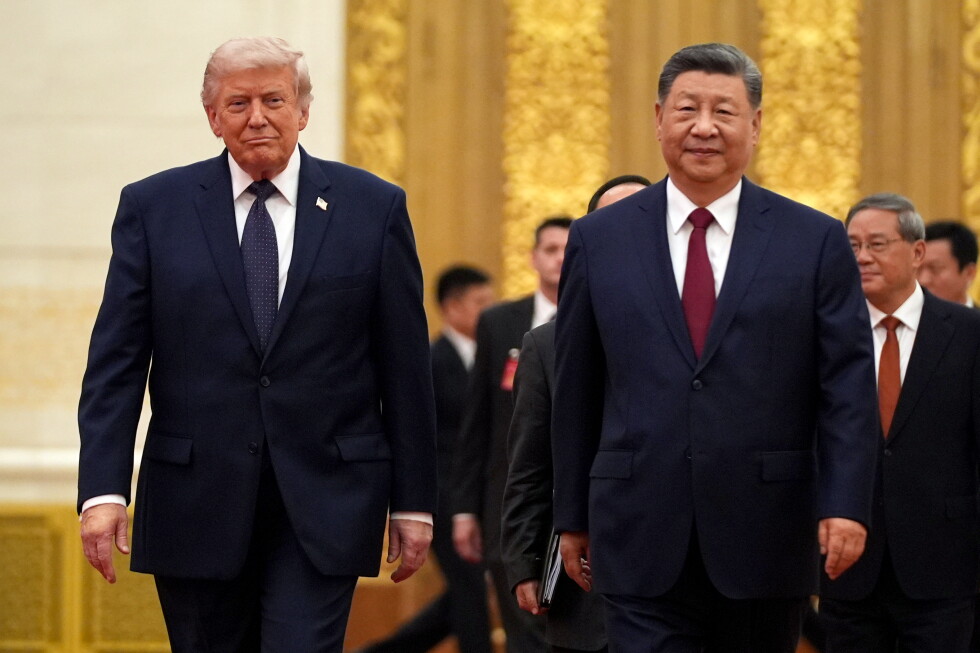
The renewed push comes even as the Trump administration prepares for a high-profile meeting between President Donald Trump and Chinese President Xi Jinping on the sidelines of the United Nations General Assembly in New York this coming September, with top diplomats already holding pre-summit talks. Last week, Secretary of State Marco Rubio met with Chinese Foreign Minister Wang Yi at a regional security conference in the Philippines to lay groundwork for the leaders’ meeting. President Trump has long taken an inconsistent approach to his relationship with Xi, vacillating between public criticism and expressions of amity even as Beijing advances global priorities that run counter to the Trump administration’s strategic goals.
Last year, the Elon Musk-led Department of Government Efficiency (DOGE) implemented deep cuts to federal government spending and staffing that dismantled the U.S. Agency for International Development and eliminated hundreds of diplomatic positions worldwide. Those cuts also put on hold dozens of previously approved projects, many of which were explicitly designed to counter Chinese influence across the globe. The new proposal would resurrect many of these paused initiatives.
A senior U.S. official, granted anonymity to discuss internal administration planning, confirmed the White House’s intent to boost funding for counter-China programs but declined to share specific details, noting that most projects remain in the proposal and discussion phase.
Beyond the Caribbean and Central American undersea cable project, the proposed new spending covers a wide range of activities, documents show. Funding is set to benefit projects in El Salvador, Guatemala, Honduras, Nicaragua, and Haiti, though the U.S. will not work directly with the Nicaraguan government due to strained bilateral relations.
Other proposed initiatives include building new cyber security operations centers in Argentina and Belize to monitor what the U.S. frames as Chinese threats to regional critical infrastructure and digital networks. Additional programs would work to protect Ecuador, Jamaica, Mexico, Paraguay, Peru, and Uruguay from alleged Chinese attempts to infiltrate national port operations, gain unauthorized access to critical mineral reserves, and conduct unregulated offshore fishing.
The planning documents also outline more globally focused efforts, including developing specialized secure communications and intelligence collection technology to counter Chinese influence over the selection of a successor to the Dalai Lama. Other proposed projects aim to reduce international support for China’s space program and block Chinese technology firms from exporting surveillance and censorship tools to governments worldwide. Details of most of these initiatives remain undisclosed in the document.
The Trump administration has prioritized countering Chinese influence in the Western Hemisphere alongside its other foreign policy priorities, which currently include ongoing conflict with Iran and diplomatic efforts to de-escalate tensions in Gaza and Lebanon. In recent months, the administration has captured Venezuelan leader Nicolás Maduro, ramped up pressure on Cuba’s socialist government, and imposed sweeping sanctions on the Nicaraguan government.
China’s embassy in Washington, D.C. has not yet issued a response to requests for comment on the proposed new funding initiative. The full impact of the proposed programs, if approved, will not be clear for many months or even years, as projects are rolled out and implemented across multiple regions.