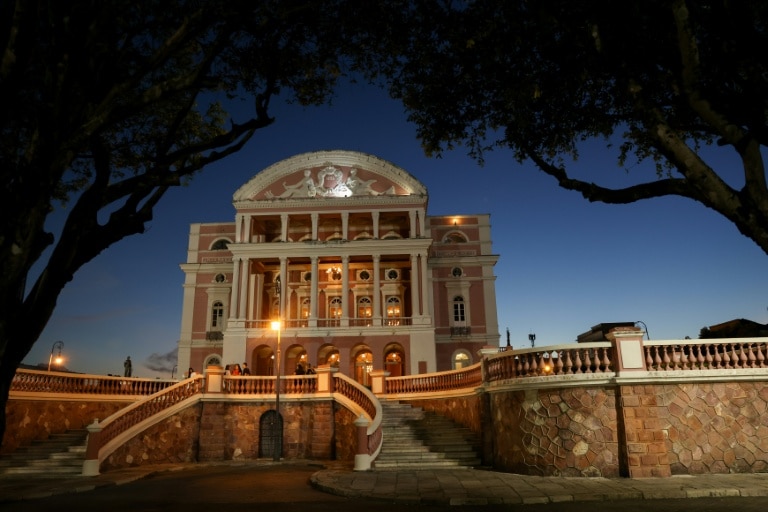
In a landmark announcement made Monday, the United Nations Educational, Scientific and Cultural Organization (UNESCO) has officially inscribed two historic Brazilian performance venues — Theatro da Paz in Belém and Teatro Amazonas in Manaus — onto its coveted World Heritage List. The pair of French-inspired architectural landmarks stand as enduring cultural and physical legacies of the Amazon region’s so-called “Golden Age,” the era of the massive rubber boom that reshaped the area between 1879 and 1912.
Both theaters occupied central roles in the rapid economic and social transformation of the Amazon during this period, when the global demand for rubber flooded the world’s largest tropical rainforest with unprecedented levels of economic growth and capital. UNESCO notes that the theater complexes, which also include their adjacent public squares — Praça da República in Belém and Largo de São Sebastião in Manaus — were purpose-built to embody the political and urban development ambitions of regional leaders at the height of the boom.
Per UNESCO’s official designation, Theatro da Paz and its surrounding public square cemented Belém’s strategic importance as a key commercial port and the capital of the Brazilian state of Pará. For Manaus, Teatro Amazonas was a core component of the city’s large-scale urban expansion that accompanied the rubber trade’s expansion. While the designation celebrates the architectural and historical significance of the two sites, historical context surrounding the rubber boom remains complex. Historians widely note that the economic expansion of the period was fueled in large part by forced labor practices that caused catastrophic population decline among the Amazon’s Indigenous communities.
The UNESCO recognition not only preserves these iconic cultural landmarks for future generations but also highlights the layered history of the Amazon region, balancing celebration of its architectural heritage with acknowledgment of the human cost of the rubber boom that made the construction of these grand theaters possible.