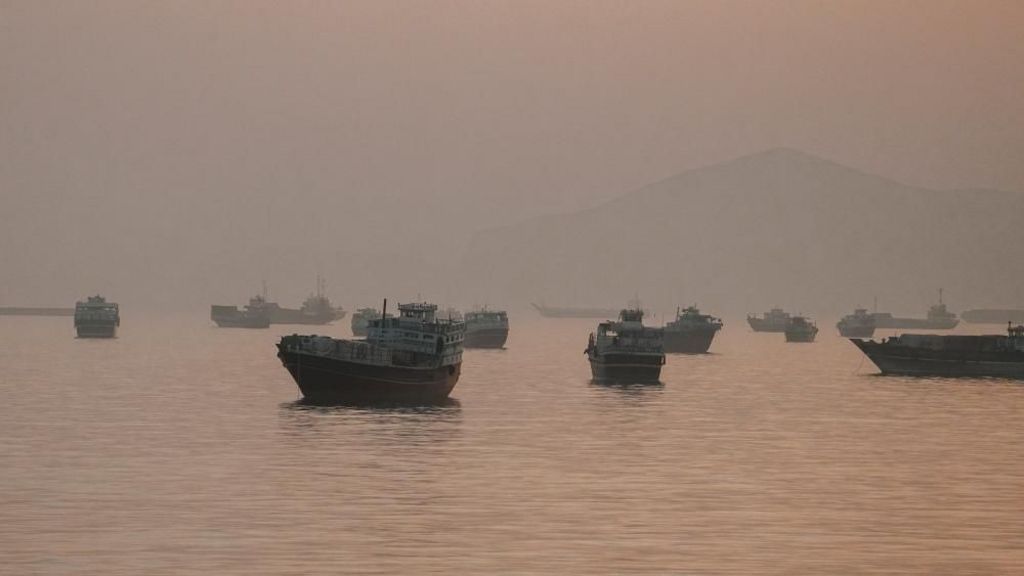
The fragile, weeks-long ceasefire between the United States and Iran has been pushed to the breaking point by a new cycle of tit-for-tat military strikes that have raised fears of a wider regional conflict across the Middle East. The latest escalation began when U.S. forces intercepted and destroyed four Iranian one-way attack drones that were heading toward the Strait of Hormuz, a critical global energy chokepoint. U.S. Central Command (Centcom) confirmed the interception, stating the drones posed an unambiguous immediate threat to commercial maritime traffic moving through the strategically vital waterway.
Following the drone interception, U.S. forces launched retaliatory strikes against Iranian coastal surveillance radar sites located in southern Iran. A Centcom statement clarified the operation was carried out to disrupt Iran’s ability to launch future attacks against regional and international assets. Tehran quickly responded to the U.S. action, according to Iran’s state-run Irib news agency, by firing a volley of seven ballistic missiles at two U.S. air bases in Kuwait and U.S. Navy facilities stationed in Bahrain. Initial U.S. military assessments found that six of the seven incoming missiles were successfully intercepted by defensive systems, while the seventh failed to reach its intended target.
This new round of violence comes just days after an earlier exchange of strikes that already eroded the truce brokered in April. In one of the most high-profile recent attacks, a Wednesday drone strike on Kuwait International Airport left one person dead and more than 60 others injured, according to local Kuwaiti officials. Iran’s Islamic Revolution Guard Corps (IRGC) has outright denied responsibility for the airport attack, claiming the damage and casualties were actually caused by a misfired U.S. missile interceptor. Centcom has rejected this claim entirely, characterizing the airport strike as a deliberate, calculated and completely unjustified act of aggression against a U.S. partner.
The IRGC has framed its recent attacks on U.S. positions in the Gulf as retaliation for earlier U.S. strikes that hit an Iranian oil tanker and targets on Qeshm Island. Even amid this sharp military escalation, the U.S. has made an unprecedented diplomatic gesture: it has approved and issued visas for Iran’s national men’s football team ahead of their opening World Cup match scheduled for June 15 in Los Angeles. This marks the first time in the history of the competition that a host nation has formally hosted the national team of a country with which it is actively engaged in armed conflict.
The latest outbreak of violence comes as ceasefire negotiations between the two sides remain stalled, with efforts to reach a permanent peace deal making no tangible progress. U.S. media reports have indicated that former President Donald Trump has requested last-minute changes to the draft terms of a potential agreement, a move that has drawn sharp criticism from Iranian officials. On Monday, Iran’s foreign ministry spokesman accused Washington of constantly shifting its negotiating positions and putting forward new, contradictory demands that make a deal impossible to finalize.
The current cycle of conflict between the two nations dates back to February 28, when the U.S. and Israel launched a wide-ranging series of airstrikes against targets across Iran. Iran responded with attacks on Israeli territory and U.S. allied states across the Gulf, and took the drastic step of effectively closing the Strait of Hormuz — the waterway through which roughly 20% of the world’s daily oil and liquefied natural gas supplies are transported. The closure of the strait immediately sent global energy prices soaring, with ripple effects felt across every major economy worldwide.
After a ceasefire was reached in early April, the U.S. implemented a full naval blockade of Iranian ports. Trump reaffirmed that the blockade would remain in full force and effect until a final comprehensive agreement is reached, formally certified, and signed by both parties.