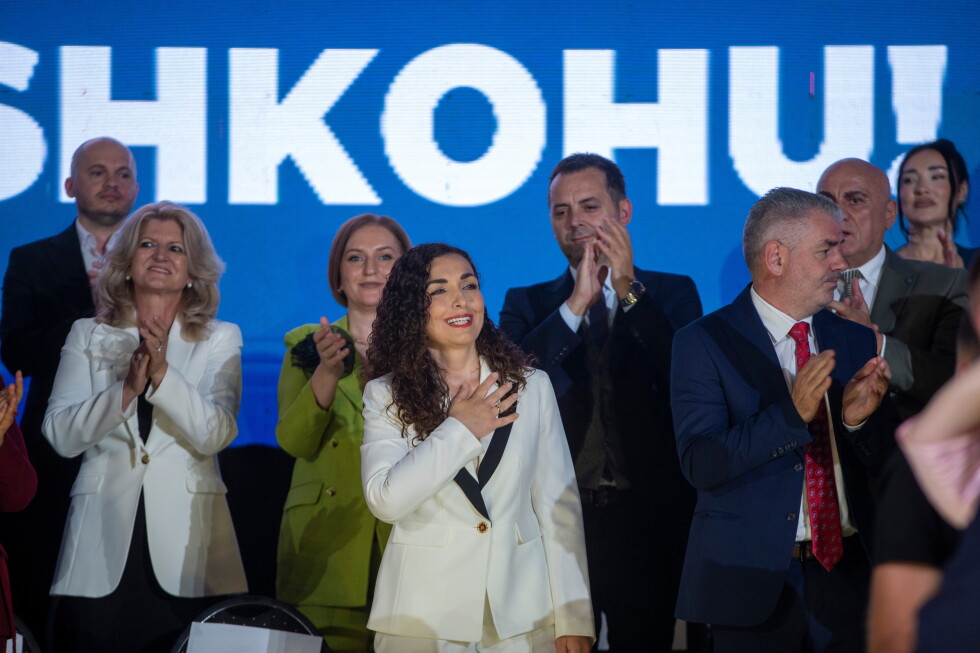
The small Balkan nation of Kosovo is heading back to the polls this weekend, marking its third parliamentary election in just 18 months, as widespread public frustration builds over a seemingly intractable political crisis that threatens the country’s long-held goals of deeper integration with the European Union and NATO.
This latest early vote, scheduled for Sunday, was triggered when Kosovo’s major political blocs failed to reach a consensus on a successor to former President Vjosa Osmani, whose term of office expired at the end of March. Prime Minister Albin Kurti’s center-left Vetevendosje party already holds a solid majority in parliament following the last early election held in December. However, Kosovo’s constitution requires a presidential appointment to be approved by at least 80 of the 120 sitting lawmakers – a supermajority that neither Kurti’s governing faction nor the united opposition has been able to secure.
As key political players trade blame for the ongoing gridlock, their repeated failure to broker a compromise has sparked deep disappointment among Kosovo’s roughly 2 million eligible voters, who overwhelmingly prioritize economic growth and improved living standards over endless partisan infighting.
Vlora Kryeziu, a 52-year-old business owner based in the capital Pristina, summed up the widespread public cynicism, noting that the same political standoff is playing out on repeat. “We will for sure have the same result,” she said. “As a citizen, I have a lot of dissatisfaction, and I think that we as a society are not doing enough to change these things.”
This cycle of inconclusive elections stretches back to a first vote in February 2024, which left Kosovo without a fully functioning government for most of the year and forced a second snap election in December 2024.
As one of Europe’s youngest and poorest countries, Kosovo carries a complex geopolitical backdrop: the majority ethnic Albanian state declared independence from Serbia in 2008, following a 1998-1999 armed conflict that ended with a NATO bombing campaign that forced Serbia to withdraw its forces from the territory. While the United States and most European Union member states recognize Kosovo’s sovereignty, Serbia refuses to acknowledge the declaration, backed by its key allies Russia and China. Both Belgrade and Pristina have made clear that normalizing bilateral relations is a non-negotiable requirement for advancing their respective EU membership bids.
European Council President Antonio Costa traveled to Pristina this week to issue a clear call for Kosovar political leaders to resolve the stalemate and unify around the shared national goal of EU integration. “The European Union can support Kosovo, but it cannot do Kosovo’s own homework,” Costa stated. “Kosovo needs strong, stable and functioning institutions capable of delivering reforms and seizing the opportunities the European Union offers.”
On the campaign trail, Kurti has urged voters to grant him a new mandate, arguing that opposition parties manufactured an artificial crisis to force repeated elections despite what he calls the “strong and clear will of the people.” In response, Kosovo’s two main opposition parties – the Democratic Party of Kosovo and the Democratic League of Kosovo (LDK) – have accused Kurti of pushing to consolidate absolute control over all of the country’s governing institutions. Notably, former President Osmani, once Kurti’s political ally, is now running on the LDK’s party list against the prime minister after he refused to support her nomination for a second presidential term.
Political analyst Artan Muhaxhiri predicts little substantive change will come out of Sunday’s vote, pointing to Vetevendosje’s capture of more than 50% of the vote in the last election. He expects the political deadlock to reemerge after ballots are counted, noting “there are no indications that political leaders are willing to change their actual stances and narrow the existing gap.”
The prolonged political crisis has already left tangible damage on Kosovo’s already fragile economy, which has been battered by the global energy crisis and soaring fuel prices in recent years. The recurring institutional vacuum has also delayed the country’s access to critical EU and international development funds earmarked for Kosovo, putting key infrastructure and reform projects on hold.