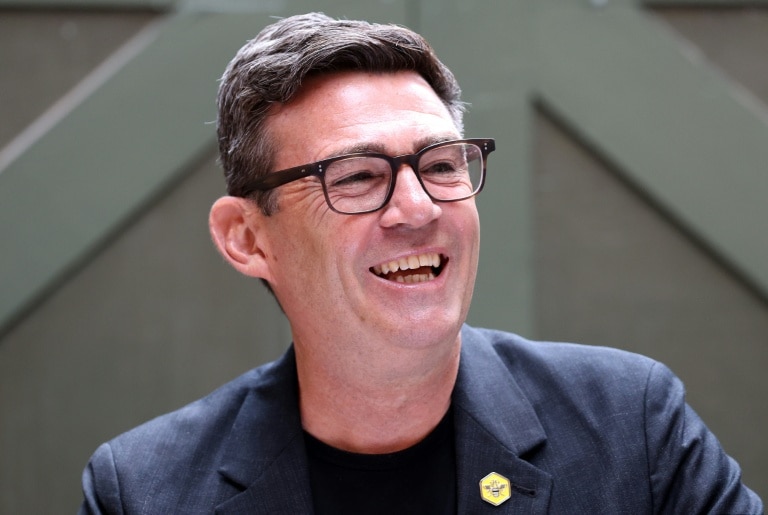
Britain’s ruling Labour Party is preparing to formally name veteran centre-left politician Andy Burnham as its new leader and the United Kingdom’s next prime minister during a special party conference scheduled for Friday. With Labour holding an overwhelming parliamentary majority, the 56-year-old politician will officially move into 10 Downing Street this coming Monday, marking an extraordinary political comeback just four weeks after he won a parliamentary by-election and returned to the House of Commons following a nine-year absence. Once in office, Burnham will become the UK’s seventh prime minister in just 10 years, a statistic that highlights growing parliamentary volatility in British politics, as sitting MPs increasingly withdraw support from their own party leaders when governments face political turbulence. Widely known by his nickname the “King of the North” for three consecutive victories in the Greater Manchester mayoral election, Burnham faced no opponents in the Labour leadership contest. This marks his third bid for the party’s top job, following failed runs in 2010 and 2015 when he lost to Ed Miliband and Jeremy Corbyn respectively. A former Labour MP between 2001 and 2017 and one-time government minister, Burnham has rebranded his public image over the past years, emerging as a populist, relatable figure who blends an approachable, down-to-earth demeanor with polished, engaging social media content. Labour parliamentarians are pinning their hopes on Burnham to outperform his predecessor Keir Starmer in public communication, and to implement a more ambitious agenda to repair Britain’s struggling public services and reignite sluggish economic growth. “We’ve got to give people a lift, haven’t we? We’ve got to give people a stronger sense of hope and a feeling that the country’s on the way back,” Burnham stated in a recent podcast interview with former professional footballer Gary Lineker on Wednesday. The party is gambling that Burnham is its strongest candidate to counter the rise of Nigel Farage’s anti-immigration Reform UK, which current polling predicts is on track to win the next general election scheduled for 2029. Starmer led Labour out of 14 years of opposition to secure a landslide general election victory over the Conservative Party in July 2024, ending a period of Conservative rule that saw four different prime ministers rotate through office in just five years. However, Starmer’s short premiership was quickly marred by a string of domestic policy missteps and damaging controversies, most notably his decision to appoint Peter Mandelson, a former associate of disgraced financier Jeffrey Epstein, as British ambassador to the United States. Disappointing results for Labour in May’s local and regional elections piled overwhelming pressure on Starmer, which became untenable after Burnham won the June 18 by-election that cleared his path to launch a leadership bid. The vast majority of Labour MPs quickly pulled their support for Starmer, forcing him to announce his resignation on June 22. Later that same day, dozens of Labour lawmakers welcomed Burnham during his parliamentary swearing-in ceremony, a clear public signal that the party elite was ready to anoint him as Starmer’s replacement. A member of the party’s soft left faction, Burnham has secured the public backing of 379 out of Labour’s 403 sitting MPs. No other candidate managed to collect the 81 parliamentary nominations required to launch a leadership challenge. Speaking after securing the leadership, Burnham said he was “deeply grateful” for the cross-factional support and trust extended to him by his parliamentary colleagues. “That is the circuit breaker I am offering: power out of Westminster, an economy rewired for ordinary people, and good growth in every postcode,” he said. Burnham’s signature policy proposal is widespread devolution of government power to regional cities, including the creation of a “No. 10 North” headquarters based in Manchester to address longstanding neglect of regions outside of London. Despite the high hopes within Labour for his premiership, Burnham inherits the same daunting set of challenges that brought down Starmer: a stagnant national economy, elevated government borrowing costs, and ongoing small-boat irregular migration that has boosted support for the right-wing Reform UK. External shocks, including volatile energy prices driven by the ongoing US-Iran conflict and the unpredictable trade and foreign policy approach of US President Donald Trump, also pose major risks to his premiership. Before taking office, Burnham will meet with King Charles III, the UK’s head of state, to formalize his appointment. He has pledged to honor Labour’s 2024 general election manifesto commitment not to raise the country’s core taxes. This pledge leaves him needing to find alternative funding sources to fill a £4.7 billion ($6.3 billion) four-year gap in the national defence investment plan, while also navigating the deeply contentious political issue of welfare reform.