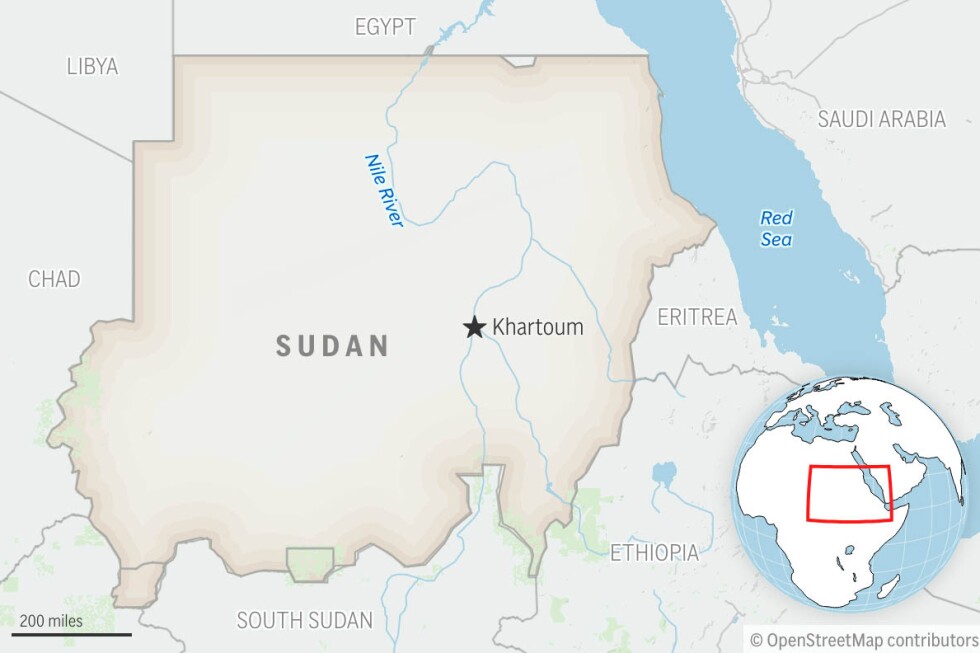
Two weeks of brutal, concentrated armed clashes in Sudan’s southern South Kordofan region have claimed the lives of more than 61 people — nine of them children — a Sudanese medical monitoring organization confirmed Wednesday, in the latest outbreak of violence tied to the full-scale civil war that has torn the East African nation apart since early 2023.
According to the Sudan Doctors Network, a group that tracks civilian and combatant casualties across Sudan’s active conflict zones, the fighting flared earlier this month between fighters aligned with the rebel Sudan People’s Liberation Movement-North (SPLM-N) and militias from the local Otoro tribe in the town of Kauda. SPLM-N, a breakaway faction of the ruling party of neighboring South Sudan, has long operated in South Kordofan’s Nuba Mountains, where the Otoro are an indigenous minority community.
SPLM-N leader Abdel Aziz al-Hilu has openly aligned his faction with the Rapid Support Forces (RSF), the powerful paramilitary group that has been locked in a war for control of Sudan against the country’s official national military since April 2023. Al-Hilu’s group has even joined a local governing administration established by the RSF in territories the paramilitary controls along Sudan’s border with South Sudan.
As Sudan’s civil war enters its fourth year, the two main warring factions hold control over distinct swathes of the country. Sudan’s regular military governs most of the north, east, and central regions, including strategic Red Sea shipping ports and the country’s critical oil processing and pipeline infrastructure. The RSF and its allied armed groups, by contrast, hold the western region of Darfur as well as large sections of Kordofan along the South Sudan border — both territories rich in untapped oil reserves and gold deposits.
The casualty breakdown compiled by the Sudan Doctors Network, drawn from firsthand survivor testimonies collected by the group’s on-the-ground teams in South Kordofan, shows that five women and nine children are among those killed in the recent Kauda clashes. Mohamed Elsheikh, spokesperson for the medical network, told the Associated Press that severely limited communication infrastructure in the conflict zone makes full casualty verification nearly impossible, and the actual death toll is almost certainly higher than the current confirmed count as fighting continues.
Beyond the human toll, the medical group documented widespread property destruction: SPLM-N fighters are accused of burning down residential homes and local commercial shops, as well as looting civilian property across the Kauda area. Multiple survivors told the organization that civilians were deliberately and indiscriminately targeted in the attacks. The network added that systematic arson attacks on civilian communities have become commonplace around Kauda, with no established safe corridors to evacuate wounded civilians or bring life-saving humanitarian aid into the besieged area. The SPLM-N has not yet issued a public response to requests for comment on these allegations.
In a separate outbreak of violence Tuesday, artillery shelling carried out by the RSF in Dilling, another major South Kordofan town, killed seven people and wounded 17 more, according to local hospital officials. Omran Teia, director of Umm Bakhita Hospital in Dilling, confirmed to the AP that civilians were the main targets of the shelling, carried out jointly by RSF fighters and their SPLM-N allies.
Sudan’s ongoing civil war has already resulted in catastrophic humanitarian consequences across the country. The conflict erupted after years of escalating tensions between the military and the RSF boiled over into open combat. To date, the conflict has officially killed at least 59,000 people, displaced roughly 13 million Sudanese from their homes, pushed multiple entire regions into full-scale famine, and left more than 30 million people — nearly two-thirds of the country’s population — in need of urgent humanitarian aid.
Both the Sudanese military and the RSF and its allied factions, including the SPLM-N, have been repeatedly accused by the United Nations and international human rights organizations of committing widespread atrocities against civilian populations. These accusations include mass ethnic cleansing, extrajudicial executions of non-combatants, and widespread sexual violence as a weapon of war. International aid organizations have repeatedly warned that the true overall casualty toll of the conflict is far higher than confirmed counts, because independent monitors are blocked from accessing most active fighting zones across Sudan’s large territory.