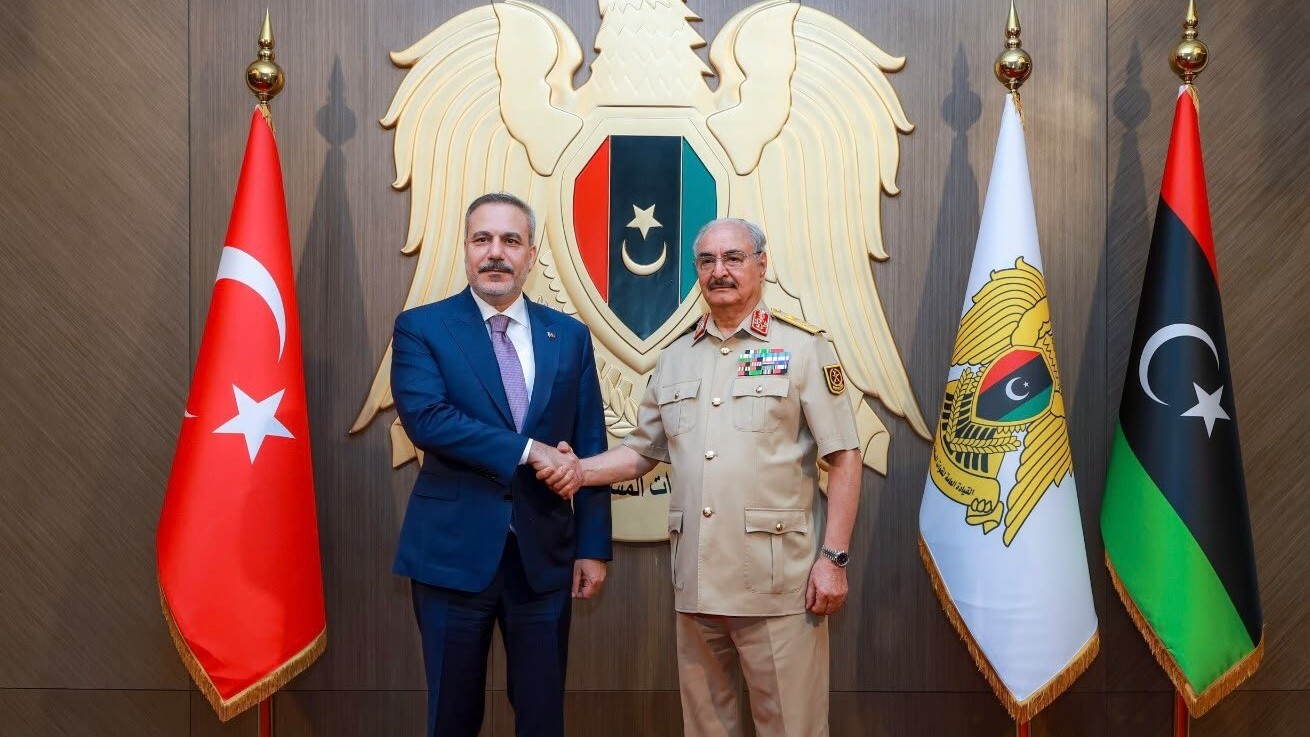
A pivotal development has reshaped geopolitical dynamics in the Eastern Mediterranean this week, as Libya’s Benghazi-based House of Representatives formally approved a long-stalled maritime boundary agreement with Turkey on Tuesday. In an official announcement posted to its website, the eastern legislative body also announced the revocation of a 2019 boycott targeting Ankara, a concrete signal of warming relations between Turkey and the eastern Libyan administration.
The original agreement was first signed in 2019 between Ankara and Libya’s UN-backed Government of National Accord based in Tripoli, crafted explicitly to push back against competing maritime claims advanced by Greece and Cyprus in the energy-rich Eastern Mediterranean. For years, the deal remained trapped in political limbo, held up by Libya’s decade-long division into two competing governing blocs: the internationally recognized administration in Tripoli, and the self-declared government in eastern Libya led by Libyan Arab Armed Forces commander Khalifa Haftar.
Over the past 18 months, however, Turkey has deliberately rebuilt diplomatic and economic ties with Haftar and his inner circle, particularly his son Saddam Haftar, a rising political figure in eastern Libya. Multiple sources familiar with the negotiations confirmed to Middle East Eye that the timing of the ratification—coinciding with a reported visit to Tripoli by Turkey’s intelligence chief Ibrahim Kalin—was no accident. Kalin has cultivated deep personal connections with Haftar’s camp and drove the diplomatic push to finalize the agreement, the sources said.
For years, regional diplomatic observers have noted that Greece exerted relentless pressure on Haftar to block the deal, a move that would severely undermine Athens’ own expansive maritime claims in the region. But analysts note that Haftar’s calculus shifted as he sought to diversify his regional partnerships, and Turkey offered tangible benefits that Greece could not match.
“Turkey is a major regional power that can deliver significant support in the defense industry, open up new investment avenues, and help Haftar secure broader international legitimacy,” explained Bilgehan Ozturk, a non-resident fellow at the Doha-based Global Institute for Strategic Research. “Greece simply does not have those tools to offer.”
The ratification also comes on the heels of a major political shakeup in eastern Libya earlier this month, when Haftar forced out long-time House speaker Aguila Saleh and installed his ally Al-Salhin Abdelnabi al-Obeidi in the role. Diplomatic sources say the approval of the deal is the first major signal of the new legislative leadership’s alignment with Haftar’s shifted regional approach.
Tuesday’s vote builds on months of incremental diplomatic progress. Turkey has spearheaded diplomatic efforts alongside other regional powers to reconcile Libya’s rival political factions, culminating in a US-backed confidence-building agreement signed by both blocs in Tripoli this past August. That deal paves the way for national presidential and legislative elections to be held within the next two years, a major step toward ending years of political deadlock.
According to a Libya-based source involved in the negotiations, the ratification served as a critical confidence-building gesture from Haftar’s camp to prove its commitment to improved ties with Ankara. “This is just the beginning,” the source told MEE. “We will see major restructuring of Libya’s governing system in the coming months.”
The source added that a final unification deal, backed by the U.S. and its envoy Massad Boulos, would likely see current Tripoli-based prime minister Abdul Hamid Dbeibeh retain his post, while Haftar or one of his sons assume the presidency, merging the two rival administrations into a single national unity government.
Ozturk added that Turkey’s own recent diplomatic overtures to Egypt and Saudi Arabia — key backers of Haftar for years — have also created the space for Haftar to deepen ties with Ankara. “All regional actors are looking to keep their options open right now,” he noted.
The ratification follows a landmark visit by Turkish Foreign Minister Hakan Fidan in early August, which saw Fidan travel to Tripoli and make the first ever visit by a senior Turkish diplomat to Benghazi, where he met with Haftar, his two sons Saddam and Belkacem, and then-speaker Aguila Saleh. Ankara framed the visit as a core part of its “One Libya” policy, which prioritizes the unification of the country’s competing institutions.
Regional analysts have described Tuesday’s vote as a transformative moment for both Libyan politics and Eastern Mediterranean geopolitics. “You cannot overstate how important this decision is. It is deeply strategic, and it will change the entire trajectory of the region,” said Jalel Harchaoui, a leading Libya expert at the UK-based Royal United Services Institute. He called the ratification a watershed moment in Libyan politics, creating an irreversible shift toward political reconciliation after more than a decade of division and intermittent conflict.
The deal also marks a major political win for Saddam Haftar, who Harchaoui confirmed is a rapidly rising power broker in eastern Libya. Harchaoui cautioned that the agreement will almost certainly trigger backlash from Greece, Cyprus, Israel, and the United Arab Emirates — all of which have long benefited from a frozen, divided conflict in Libya to advance their own strategic goals, including efforts to contain Turkish influence in the region.
The analyst also offered a cautiously optimistic outlook for neighboring Sudan, where the ongoing civil war has been partially funded by backers in eastern Libya. Harchaoui predicted that if the new political trajectory holds, Saddam Haftar will likely end his support for the Rapid Support Forces, the paramilitary group leading the ongoing offensive against Sudan’s civilian government.