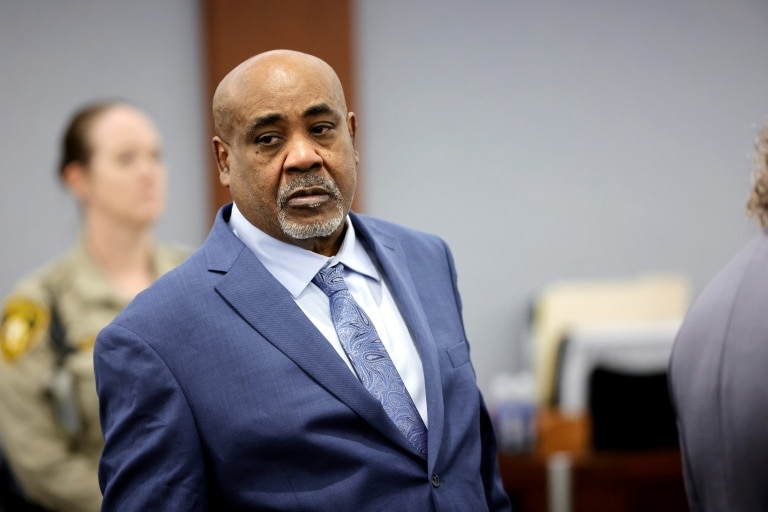
Thirty years after the iconic rapper Tupac Shakur was gunned down in a Las Vegas drive-by shooting, one of the most high-profile cold cases in American entertainment history finally moved into a courtroom on Monday. Prosecutors opened the trial of 63-year-old Duane “Keffe D” Davis, a former leader of Los Angeles’ South Side Compton Crips gang, by laying out a narrative of planned gang retaliation that ended the life of one of hip-hop’s most influential figures at just 25 years old.
Lead prosecutor Binu Pilal told the Las Vegas jury that the fatal attack was a direct act of revenge for a public, on-camera beating of Davis’ nephew, Orlando Anderson, earlier the same night. On September 7, 1996, Shakur and Death Row Records founder Marion “Suge” Knight were in Las Vegas to attend a boxing match featuring Mike Tyson. The pair confronted Anderson, a Crips member, after he was accused of assaulting a Death Row Records employee, resulting in a humiliating public beating that left Davis enraged, Pilal said. Just two and a half hours after the altercation, Shakur was shot dead when a white Cadillac pulled alongside his vehicle and opened fire.
According to prosecutors, Davis did not fire the fatal shots himself. Instead, he provided the weapon to a passenger in the back seat of the Cadillac and explicitly ordered the attack on Shakur. Over the decades following the murder, Pilal noted, Davis repeatedly confessed to his role in the killing — to law enforcement, to media outlets, and even in his own 2019 autobiography. “Over the years, in private interviews, in public statements, and even in private calls, Duane Davis has repeatedly told us over and over again about the anger he felt, and his own role in the revenge drive-by shooting of Tupac Shakur,” Pilal told the jury. “And now, nearly 30 years later, we’re going to ask you to finally hold Duane Davis accountable.”
The killing of Tupac Shakur has long been tied to the infamous 1990s hip-hop rivalry between the U.S. East Coast and West Coast. Born to a Black Panther activist and raised in Harlem and Baltimore, Shakur rose to fame as the face of West Coast hip-hop after signing with Los Angeles-based Death Row Records, delivering career-defining hits including *California Love* and *All Eyez on Me*. Death Row was affiliated with the Mob Piru Bloods gang, while East Coast label Bad Boy Records — founded by Sean “Diddy” Combs and home to rival rapper The Notorious B.I.G. — hired the South Side Compton Crips as personal security, setting the stage for escalating gang tensions that preceded the shooting. The Notorious B.I.G. was himself murdered in a drive-by shooting just six months after Shakur’s killing, deepening the legacy of violence tied to the rivalry.
For nearly 25 years, the Shakur murder case stalled due to a lack of actionable evidence. The investigation was reignited only after Davis published his memoir in 2019, in which he confirmed he was in the front seat of the Cadillac the night of the shooting and handed the gun to the back-seat shooter, though he never named who pulled the trigger. All other occupants of the vehicle have since died. Davis has since walked back his memoir’s claims, arguing they were overstated bluster crafted by a ghostwriter to boost book sales. He has entered a full plea of not guilty to all charges against him.
If convicted on the murder charge, Davis faces a mandatory sentence of life in prison without the possibility of parole. The trial is expected to run for more than a month, revisiting decades-old gang ties, hip-hop industry rivalries, and one of the most enduring mysteries in modern American popular culture.