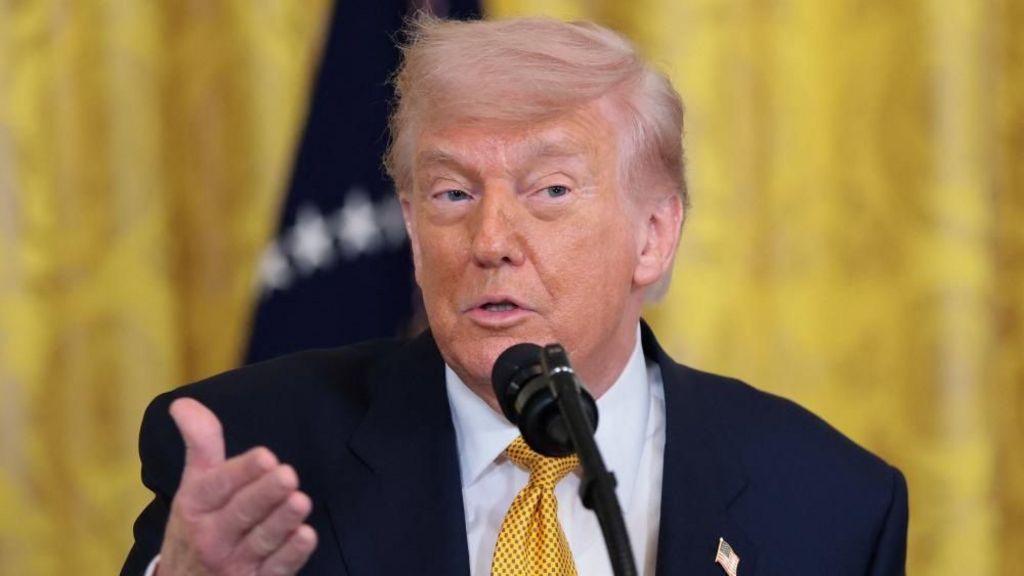
In a sudden shift that sent ripples through global energy markets, former president Donald Trump announced a last-minute pause to his newly launched “Project Freedom” – an initiative designed to escort commercial vessels through the blockaded Strait of Hormuz – citing tentative progress toward a historic “Complete and Final Agreement” with Iran. The initial announcement eased fears of prolonged disruption to global oil supplies, which rely heavily on the strategic waterway for 20% of the world’s daily crude trade, and sparked fleeting hopes of a breakthrough ending months of open conflict in the Gulf.
Yet that optimism was rapidly dampened by Trump himself just 24 hours later, in a series of contradictory statements that have left policymakers, markets, and regional observers scrambling to parse the state of negotiations. After his Tuesday evening Truth Social post announcing the suspension to test whether a deal could be finalized, Trump struck a far more combative tone Wednesday morning, warning that a final agreement was still a “big assumption” and threatening to resume bombing campaigns against Iran at “a much higher level and intensity than it was before” if no deal materialized.
This backtracking came only hours after US Secretary of State Marco Rubio had publicly announced that Operation Epic Fury, the American-led military campaign against Iran, had concluded. By Wednesday afternoon, Trump again shifted, telling PBS in a brief phone interview that he remained optimistic about the prospects of a deal while acknowledging past breakthrough attempts with Iran had failed repeatedly. “I felt that way before with them,” he said. “So we’ll see what happens.” He also added that it was “unlikely” he would deploy US negotiators for a second round of peace talks in Islamabad, Pakistan, which has served as a key mediating power for the discussions.
Multiple US outlets including Axios and Reuters have reported that negotiators from Washington and Tehran are edging closer to a short, 14-point one-page memorandum of understanding that would formally end Gulf hostilities. The broad framework, according to sources familiar with the draft, would first end active military clashes, then open the way for subsequent negotiations on unblocking the Strait of Hormuz, lifting crippling US sanctions on Iran, and implementing curbs on Iran’s nuclear program. A source close to Pakistani mediators even told Reuters Wednesday: “We will close this very soon. We are getting close.” But Tehran’s response has been far from supportive, with senior Iranian officials dismissing the reported draft as nothing more than an American wish list.
Ebrahim Rezaei, spokesperson for Iran’s National Security and Foreign Policy Commission, wrote on X that the 14-point plan leaked to Axios amounted to nothing more than Washington’s “wish list”, adding that Iran “has its finger on the trigger and is ready” if the US fails to make “the necessary concessions”. Iran’s government already rejected an earlier, similar claim from Trump in April, when he told CBS that Tehran had “agreed to everything” including allowing US officials to remove Iran’s stockpiles of enriched uranium – a statement officials in Tehran denied outright.
Even among US foreign policy circles, there is widespread skepticism that a final, binding deal is imminent. Speaking to the BBC, Grant Rumley, a former Middle East policy advisor for both the Biden and second Trump administrations and current fellow at the Washington Institute for Near East Policy, noted that the Trump administration’s sudden rollout and equally sudden pause of Project Freedom signals they believe a deal is within reach, but past experience shows negotiations are far from guaranteed. “Clearly, the administration thinks a deal is possible, given the way they publicly rolled out Project Freedom only to suddenly pause it hours later,” Rumley said. “But we have been here before, and we’ve seen negotiations collapse at the last minute for a variety of reasons.”
Rumley added that even if the broadly worded one-page memorandum is agreed, it is highly unlikely to resolve the full scope of longstanding disputes between the two nations, particularly the technically complex details of any agreement governing Iran’s nuclear program. During the Obama administration, negotiating the full terms of the 2015 Iran Nuclear Deal took more than 20 months of intensive technical and diplomatic talks, a timeline that underscores how difficult it will be to finalize a comprehensive deal in the current climate.
Shipping analysts have also noted that Project Freedom, which launched just on Sunday, achieved minimal results in its short operational window, with only a small handful of commercial vessels daring to transit the strait while the operation was active. Ali Vaez, Iran project director at the International Crisis Group think tank, told the BBC that Iran’s aggressive response to the operation – including shooting at commercial vessels and launching retaliatory strikes on targets in the United Arab Emirates – likely convinced Trump that the military initiative would not resolve the blockade. “There is no real policy process in this administration,” Vaez noted. “The president makes decisions based on impulse more than process, therefore there are inconsistencies that happen all the time.”
Mick Mulroy, a former Pentagon assistant undersecretary for Middle East policy, added that the motivation behind Trump’s sudden pause of Project Freedom remains far from clear. “It’s unclear if the pause in Project Freedom was because of this one-page memorandum or because the 1,500 ships currently stuck behind the Strait of Hormuz wouldn’t transit even with the US security umbrella,” Mulroy said. “Iran is likely trying to determine that as well.” That uncertainty has left global oil markets on edge, as traders wait for clearer signals on whether the 4-week old ceasefire in the Gulf will hold or escalate into open conflict once again.