As the ongoing crisis in the Strait of Hormuz—sparked by the United States’ conflict with Iran—shows no sign of de-escalation, top energy and economic officials are sounding the alarm over imminent threats to global energy security, spiraling inflation, and a potential worldwide recession.
Speaking to reporters on the sidelines of this week’s G7 summit in Paris on Monday, International Energy Agency (IEA) Executive Director Fatih Birol warned that global oil reserves are dwindling at a dangerous pace, with only weeks of strategic and commercial inventories remaining to offset the current supply disruption. Birol noted that oil stockpiles are “declining rapidly,” and highlighted a critical misalignment between physical and financial energy markets: futures prices have not yet adjusted to reflect the impending supply crunch, leaving markets underprepared for sudden volatility.
The supply disruption extends far beyond oil, Birol added, with fertilizer shortages—also rooted in the conflict—set to drive a fresh wave of food price hikes that will push global inflation even higher. “That might give a big push to inflation numbers,” he warned.
His warnings echo a recent analysis from the *Financial Times*, which reported Sunday that global energy markets are nearing a critical “tipping point” that could trigger another sudden price surge, tipping the already fragile global economy into recession. Paul Diggle, chief economist at asset management firm Aberdeen, told the outlet his team is modeling the economic fallout of oil prices spiking to $180 per barrel—a scenario that would ignite a full-blown global inflation crisis. “We are taking that outcome very seriously,” Diggle said. “We are living on borrowed time.”
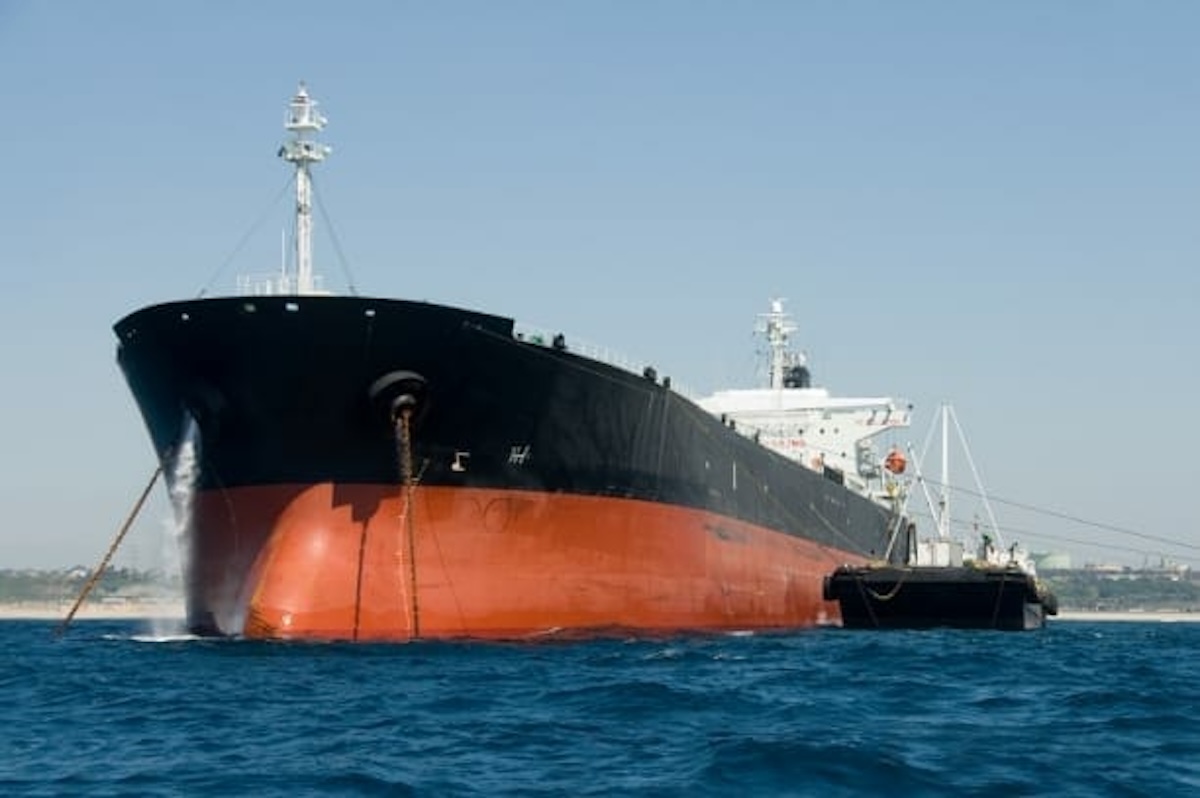
The current standoff stems from Iran’s closure of the Strait of Hormuz, a critical chokepoint through which roughly 20% of global oil supplies pass, implemented in retaliation for US-Israeli military strikes on the country. A temporary ceasefire announced between Washington and Tehran last month briefly pulled oil prices lower, but the strait has remained closed throughout the truce, and tensions are now rapidly escalating as President Donald Trump has threatened to resume offensive operations if no deal to reopen the waterway is reached quickly.
In a Sunday post on his Truth Social platform, Trump issued a stark new threat to Iran, promising the country would be completely destroyed if it did not meet his demands. “For Iran, the Clock is Ticking, and they better get moving, FAST, or there won’t be anything left of them,” Trump wrote. “TIME IS OF THE ESSENCE!”
Last week, Trump rejected Iran’s latest peace proposal. Tehran has offered major concessions on uranium enrichment, but has demanded that broader nuclear negotiations be delayed until after a peace deal is reached and the Strait of Hormuz is reopened. Since the start of the conflict, Trump has demanded Iran fully dismantle both its missile program and its nuclear activities— which Iran insists are entirely peaceful—and cut all diplomatic and military ties to its regional allies. In a report Sunday, Iran’s state-owned Mehr News Agency argued that Washington has offered “no tangible concessions” in return for Iran’s proposed compromises, leaving negotiations deadlocked. “The United States wants to obtain concessions that it failed to obtain during the war, which will lead to an impasse in the negotiations,” the outlet noted.
Speaking to Fox News during a visit to Beijing over the weekend, Trump defended his rejection of the proposal, claiming “the Iranians are crazy, and you know what? Because of that, they cannot have a nuclear weapon.” He added that he finds it unacceptable to delay nuclear talks until after a peace deal is finalized.
Multiple reports confirm Trump spoke with Israeli Prime Minister Benjamin Netanyahu on Sunday about resuming offensive strikes on Iran, a move that would end the month-long ceasefire. Security analysts say the only path to a diplomatic breakthrough requires Washington to compromise on Tehran’s core priorities. “Iran’s priorities remain consistent: ending what it views as economic siege conditions, reopening maritime access and reducing pressure in the Gulf, negotiating an end to the broader conflict, and only afterward addressing the nuclear issue,” explained Danny Citrinowicz, a senior researcher at Israel’s Institute for National Security Studies. “At the present moment, it is difficult to see the Iranian leadership agreeing to any framework that does not meaningfully engage with those core demands.”
Iranian officials have pushed back hard against Trump’s latest threats, which come after he previously declared in April that he would destroy Iran’s entire entire civilization “never to be brought back again,” and recently posted an image of himself on a military ship with the caption “It was the calm before the storm.” Abolfazl Shakarchi, a spokesperson for Iran’s armed forces, told Mehr that any new aggression to compensate for the US’s failure in the conflict will only result in harsher retaliation. “Repeating any folly to compensate for America’s disgrace in the Third Imposed War against Iran will result in nothing but receiving more crushing and severe blows,” he said.
Almigdad Alruhaid, a correspondent for Al Jazeera reporting from Tehran, noted that Trump’s inflammatory rhetoric has only galvanized Iranian public defiance, even as observers acknowledge the window for diplomatic resolution is rapidly closing. “The kind of language displayed by Trump on Sunday is not acceptable here in Tehran. They are projecting defiance rather than [giving] an immediate response to this kind of rhetoric,” Alruhaid said. “Behind all of this rhetoric, there is awareness that the diplomatic window right now is narrowing.”
Not all US voices are pushing for escalation. Senior Republican Senator Lindsey Graham of South Carolina has publicly urged Trump to follow through on his threats to bomb Iran’s energy infrastructure, but foreign policy experts warn such a move would trigger catastrophic global consequences. Trita Parsi, executive vice president of the Quincy Institute for Responsible Statecraft, explained why Trump has so far refrained from launching such strikes: “Tehran would retaliate and take out the energy infrastructure in the [Gulf Cooperation Council] states. This would lead to a far worse oil crisis—one rooted in production problems, not just a bottleneck in the Persian Gulf. The global economy would be thrown into a deep recession. Fuel shortages would lead to food shortages worldwide. Trump’s presidency would be destroyed,” Parsi said. “None of this matters to Lindsey. He’ll burn the entire planet as long as he gets his war. Trump’s biggest mistake has been to listen to Lindsey and his allies.”