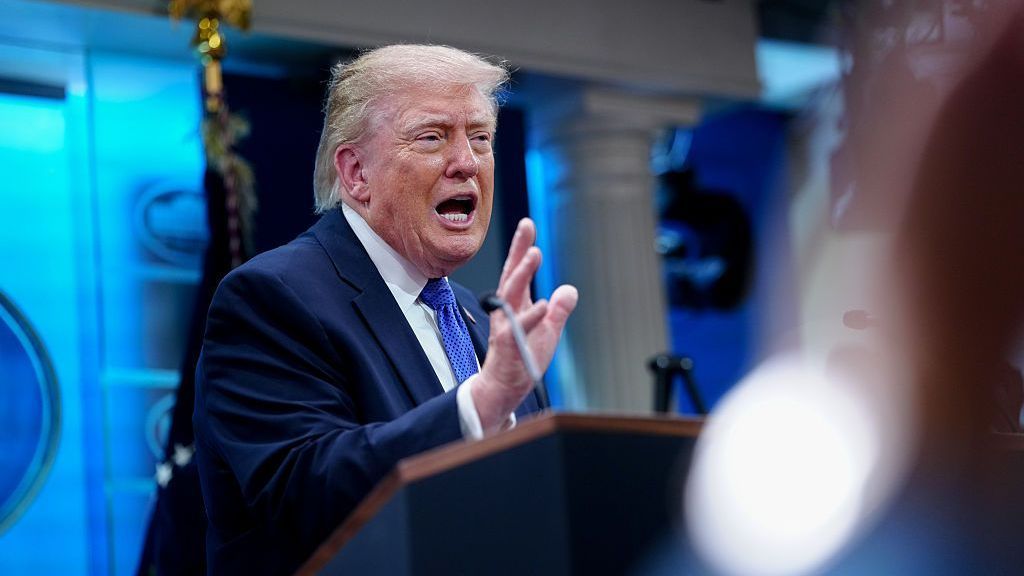
During an impromptu press briefing shortly after returning from his Asia diplomatic trip, US President Donald Trump laid out a bold, unvetted new proposal that would bar all American technology companies from constructing AI-focused data centres outside US borders, with a punitive “tremendous tax” set to be levied against any firm that violates the proposed rule.
Notably, Trump acknowledged that most members of his cabinet had not been informed of the policy framework before he announced it publicly, leaving critical details around enforcement mechanisms, eligibility carve-outs, and legislative pathways entirely undefined. The proposal arrives as data centre regulation emerged as a high-stakes campaign issue during the early November midterm elections, where a wave of Democratic candidates secured electoral victories after running on platforms promising stricter local oversight of domestic data centre development, responding to widespread community concerns over excessive energy consumption, persistent noise pollution, and environmental disruption from the sprawling warehouse-style facilities.
These data centres form the unshakable backbone of the current global artificial intelligence boom: they house the high-performance graphics processing units and clustered server infrastructure required to power generative AI tools ranging from OpenAI’s ChatGPT to Anthropic’s Claude, and Trump repeatedly framed the proposed ban as a defensive measure to prevent strategic leadership in what he dubs “super intelligence (SI)” from shifting to rival nations, most notably China. Citing data from the Pew Research Centre, as of April this year, the US was home to roughly 3,000 operational data centres, with an additional 1,500 projects in varying stages of planning, approval, and active construction across the country. Trump pushed back against local policymakers advocating for restrictive domestic bans on new data centre builds, framing the facilities as high-value economic assets: “We have dozens of rural communities that are begging to host these centres, they have abundant energy supplies and all the supporting infrastructure needed. Instead of blocking them, local governments should negotiate fair contributions from these operators to benefit their residents.”
The unanticipated policy announcement has sent ripples through the global AI infrastructure sector, where major hyperscaler firms including Google and Meta have already signed multi-billion dollar agreements to build new data centres in international markets. Canada has already positioned itself as a welcoming alternative hub for such projects, with far less local community pushback against large-scale data centre development to date. Trump specifically called out Google’s recently announced €13 billion AI infrastructure investment in Finland, which earmarked funding for three new data centre sites – two of which saw construction halted last month over public outcry related to the clearing of over 300 hectares of old-growth forest. The US president explicitly stated his administration would not permit that Finnish project to move forward, though he provided no legal or regulatory justification for that stance. As of press time, Google has not issued an official public comment on the proposed US restrictions, and it remains unclear whether the unannounced policy will ever advance to formal legislative or regulatory review.
Trump threatens ban on US firms building AI data centres overseas