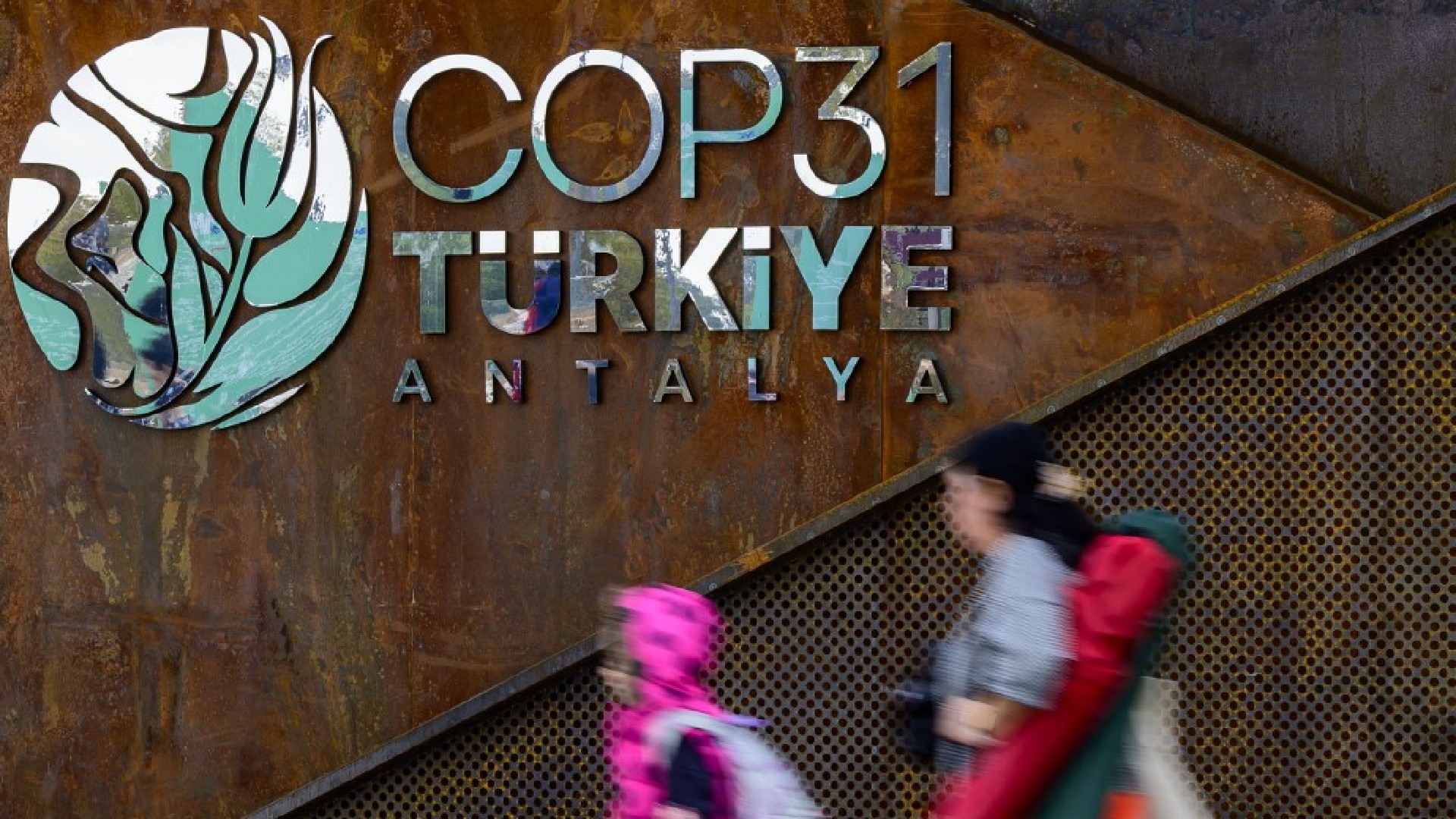
As high-stakes global climate negotiations in Turkey enter their final stretch, civil society and climate justice advocates have issued scathing condemnations of the latest overarching draft outcome document for COP31, branding it the most regressive text in the 30-year history of the UN climate conference.
The sweeping cover decision, designed to unify all negotiation outcomes and align global action with the Paris Agreement’s 1.5°C warming targets, has been gutted of all explicit references to a fossil fuel phase-out that had been a core priority of previous summits. In its place, negotiators inserted a vague, non-binding pledge to pursue an “irreversible global transition towards low greenhouse gas emissions and climate resilience”, with no concrete benchmarks tied to cutting coal, oil and gas production. Instead of curbing fossil fuel output, the draft doubles down on heavily criticized carbon capture, utilization and storage (CCUS) technologies, calling for a 20 to 40-fold expansion of the unproven, costly systems by 2035.
Critics note that the vast majority of CCUS projects launched over the past three decades have failed to deliver promised emission reductions, with roughly 80% of active facilities linked directly to new fossil fuel drilling operations rather than cutting existing pollution. Campaigners argue the technology functions as little more than a public relations fig leaf for the fossil fuel industry, allowing corporations to justify continued expansion of drilling and extraction while making only trivial cuts to overall emissions.
Harjeet Singh, strategic adviser to the Fossil Fuel Treaty Initiative, emphasized that the weakened text delivers no tangible support to vulnerable developing nations, and instead prioritizes the profit interests of private sector fossil fuel conglomerates. “Every section of this draft has been watered down to the point of being meaningless, and in many cases it actively backtracks on commitments countries already agreed to,” Singh told Middle East Eye.
The draft also eliminates nearly all key climate finance pledges that had been included in earlier iterations circulated earlier this week. Gone is the proposed $120 billion annual funding target to support developing nation adaptation to climate impacts, as well as explicit references to Paris Agreement Article 9.1, which legally requires wealthy developed nations to deliver dedicated financial resources for mitigation and adaptation work in the Global South. Also struck from the text is the commitment to triple global adaptation finance by 2035, a target formally agreed at last year’s COP30 summit in Belém, Brazil, alongside all language acknowledging the historical responsibility of wealthy nations for the vast majority of cumulative historical greenhouse gas emissions.
Saudi Arabia has emerged as one of the most aggressive actors pushing to weaken the fossil fuel-related clauses, according to multiple sources familiar with closed-door negotiations cited by The Guardian, with the kingdom holding repeated private meetings with the COP31 presidency to demand removal of phase-out language and insertion of the CCUS expansion targets. On climate finance, however, campaigners point to a bloc of wealthy nations including the European Union, Australia and Norway as the primary roadblocks, with EU negotiators publicly ruling out any new finance pledges ahead of the summit and dismissing new funding commitments as “dead in the water”.
Henan Keskes from Greenpeace MENA noted that insufficient adaptation finance is a matter of literal survival for communities across the Middle East and North Africa, where populations already face accelerating sea level rise, catastrophic wildfires, prolonged droughts and record-breaking heatwaves. The region currently receives only a tiny fraction of the estimated funding required to adapt to worsening climate impacts, she added.
The draft also completely fails to operationalize the Just Transition Mechanism, a framework agreed at COP30 to deliver targeted support to workers and marginalized communities as nations move away from fossil fuel-dependent economies. Wealthy nations pushed back against all concrete proposals to turn the agreed framework into a functional support system for Global South nations, campaigners confirmed.
Advocates uniformly argue that the final draft offers no meaningful progress to advance global climate action, justifying their framing of COP31 as the most disappointing and counterproductive summit in the UNFCCC’s history.
Cop31 draft agreement ‘the worst ever’, campaigners warn