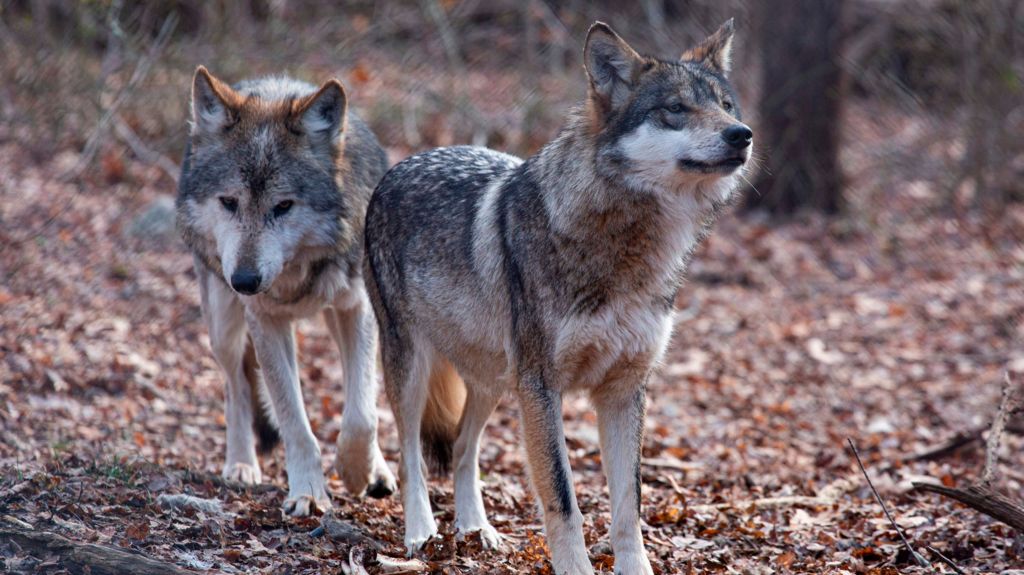
A controversial new executive order from former President Donald Trump has set off intense debate over the future of endangered wolf populations across the United States, pitting agricultural interests against decades of hard-won conservation progress. The order targets both the broader gray wolf population and its distinct subspecies, the Mexican wolf, directing the U.S. Department of the Interior to reevaluate their protected status under the Endangered Species Act within a 90-day window. If Interior Secretary Doug Burgum rules that populations have sufficiently recovered, the two groups would lose federal endangered species protections, opening the door for ranchers to lethally control wolves that prey on their livestock.
In justifying the order, the Trump administration emphasizes the central role of ranchers in the U.S. food supply chain and American cultural heritage, arguing that additional support is needed for the struggling cattle industry. The order notes that U.S. livestock herds are at a 75-year low even as domestic beef demand has climbed 10% over the past decade, framing the rollback of protections as a common-sense measure to support the critical agricultural sector. The policy comes as the administration faces pressure to bring down record-high retail beef prices, which have been driven by widespread drought and a recent parasite outbreak in national cattle stocks. Tensions have already been high between the administration and ranching groups, after Trump moved to loosen beef import restrictions to lower costs — a change that squeezed already thin profit margins for domestic producers.
New population data from the U.S. Fish and Wildlife Service offers context for the recovery work that has been done over the past 27 years: after Mexican wolves were on the brink of total eradication, with just four individuals remaining in the U.S. wild when reintroduction efforts launched in 1998, the population has grown to 319 wild individuals as of 2025. For gray wolves more broadly, current estimates place the total wild population at roughly 18,000 across the country, though conservationists stress that most of the species’ historic natural habitat has been destroyed by human development, leaving the species still ecologically vulnerable. A previous 2022 federal attempt to remove gray wolves from the endangered species list became tied up in lengthy court litigation, and conservation leaders have already signaled they will pursue similar legal action if the Department of the Interior moves forward with implementing Trump’s order.
Critics across the conservation movement have roundly condemned the order, warning that rolling back federal protections could derail more than a generation of recovery work that pulled the species back from the edge of extinction. Environmental groups point to peer-reviewed research showing that wolf attacks on livestock are relatively rare, and that such incidents have a negligible impact on overall ranching revenues. Under current policy, ranchers are already eligible for 100% financial compensation for any confirmed livestock losses caused by wolves, and many states operate dedicated funded programs to help ranchers deploy non-lethal deterrence measures to prevent conflicts in the first place.
“This is a huge distraction to placate a handful of ranchers and make them believe that wolves are a greater threat than President Trump’s own policies,” said Greta Anderson, deputy director of Western Watersheds Project, a nonprofit focused on wildlife conservation across the American West. Claire Musser, executive director of the Grand Canyon Wolf Recovery Project, echoed that concern, noting that population growth alone does not equate to full species recovery. “Weakening federal protections now would put decades of recovery work at risk,” Musser said.
The history of wolf management in the U.S. stretches back more than a century: starting in the late 1800s, the U.S. federal government launched a systematic extermination campaign to eliminate wolf populations, paired with widespread trapping and killing by farmers and private landowners that pushed the species to the brink of total eradication. For decades after, lethal control of wolves remained a widely accepted practice, until endangered species protections were put in place to enable recovery. Today, killing a protected wolf remains a federal criminal offense, a status that would change if protections are stripped under the new executive order.