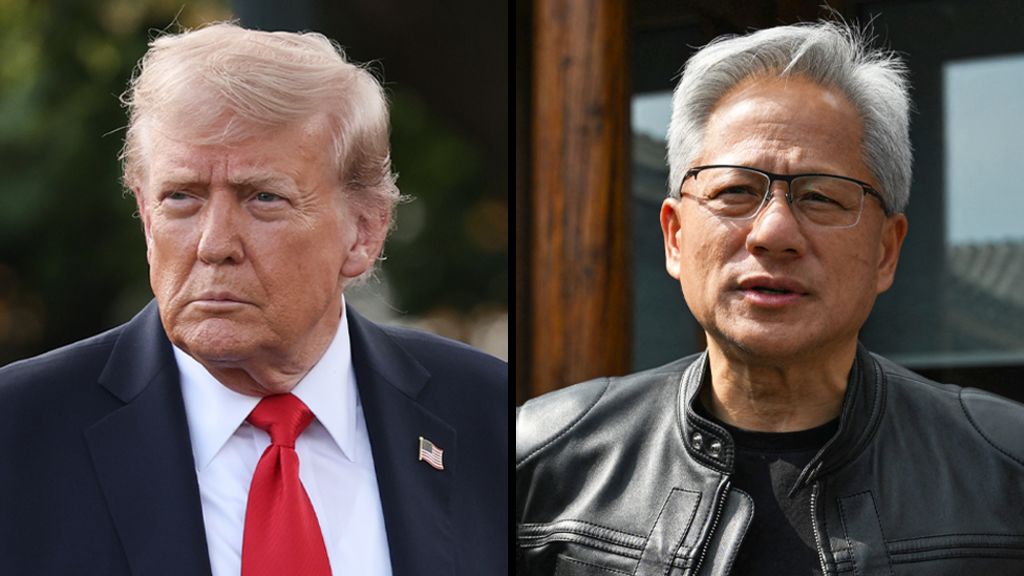
In unprecedented public remarks that thrust a top global tech leader into the crosshairs of US national security debates, US President Donald Trump confirmed to reporters this week that the FBI is conducting an active investigation into interactions between Nvidia CEO Jensen Huang and Alice Huang, a Singapore-based executive alleged by US intelligence to be a Chinese intelligence asset. Trump revealed that he held a direct phone call with Huang earlier this Monday, in which he pressed the semiconductor magnate directly on whether he had any prior awareness of the woman’s purported espionage links. “He told me he had no idea she was a spy, and I truly believe him,” Trump stated during a White House press briefing, adding that he considers Huang an honourable person and is confident the Nvidia leader will emerge from the probe unharmed, noting that the executive “is suffering greatly” amid the cascading public scrutiny. No further details on the FBI investigation’s launch timeline or scope have been released, and the FBI has declined all requests for comment from the BBC. The allegations, first reported by the New York Times, stem from a spring 2024 memo sent by Secretary of State Marco Rubio to senior Washington officials, flagging that Huang had formed a close personal relationship with Alice Huang – who is not a blood relative of the Nvidia CEO. Alice Huang serves as managing director of Singaporean firm Megaspeed, a longstanding Nvidia business partner. Staff at Megaspeed’s central Singapore CBD office confirmed the firm remains operational this week, but declined all media inquiries, directing all queries to their external public relations team, after BBC reporters were denied physical access to the firm’s office floor. Chinese foreign ministry officials have categorically rejected all US espionage claims, dismissing the allegations as “entirely groundless, speculative and intended to smear and malign China.” Nvidia, currently the world’s second most valuable public company trailing only Apple, has launched its own independent internal review of the matter, stating it has found no evidence to date that sensitive company intellectual property or US national security interests have been compromised. The scandal triggered immediate, seismic market repercussions on Monday, wiping more than $250 billion off Nvidia’s market capitalisation as its share price plummeted over 4%. Adding to the company’s legal woes, a proposed class-action shareholder lawsuit was filed in California the same day, accusing Huang and Nvidia’s leadership of defrauding investors by intentionally concealing his personal ties to the alleged intelligence operative, and lying to media outlets about the relationship that the suit claims could have facilitated unauthorised smuggling of restricted Nvidia products into China. The lawsuit is currently pending, and Nvidia has not issued a formal response to the legal complaint. The high-profile scandal unfolds against the backdrop of the ferocious ongoing US-China global AI supremacy race, where Nvidia’s industry-leading semiconductors are viewed as a core national security asset by Washington policymakers. For years, US export restrictions have blocked the sale of Nvidia’s top-tier chips, including the GB200 Blackwell super chip, to Chinese buyers, though the Trump administration earlier this year relaxed rules to allow conditional exports of the company’s second-tier H200 AI semiconductor to the Chinese market – a policy shift Huang has long publicly advocated for, arguing that allowing US-designed chips to reach Chinese customers would cement American leadership in global AI development rather than ceding ground to competing Chinese domestic chip makers. Huang, who co-founded Nvidia in 1993 as a gaming-focused semiconductor startup before pivoting the firm to become the dominant global supplier of AI training chips, has publicly acknowledged that his personal relationship with Alice Huang constituted infidelity to his wife, issuing a public apology to his family on Monday while reaffirming his commitment to protecting Nvidia’s intellectual property and upholding US national security priorities. He has pledged full cooperation with both the company’s internal investigation and all federal law enforcement inquiries. Congressional committees have also summoned Huang to attend a closed-door joint briefing next week, where lawmakers are set to grill him on Nvidia’s internal anti-espionage security protocols and the full scope of his interactions with the alleged Chinese intelligence operative, though it remains unconfirmed whether Huang will appear as requested. Despite the global media firestorm surrounding the company, employees at Nvidia’s Santa Clara, California headquarters told BBC reporters that daily operations have remained largely uninterrupted, with staff proceeding with standard workflow as usual. Trump also noted during his press briefing that he expects Chinese President Xi Jinping to raise the high-profile case for discussion during their next scheduled bilateral meeting, as the controversy threatens to add new friction to already strained US-China trade and technology relations.
Trump says FBI investigating Nvidia boss’s affair with alleged Chinese spy