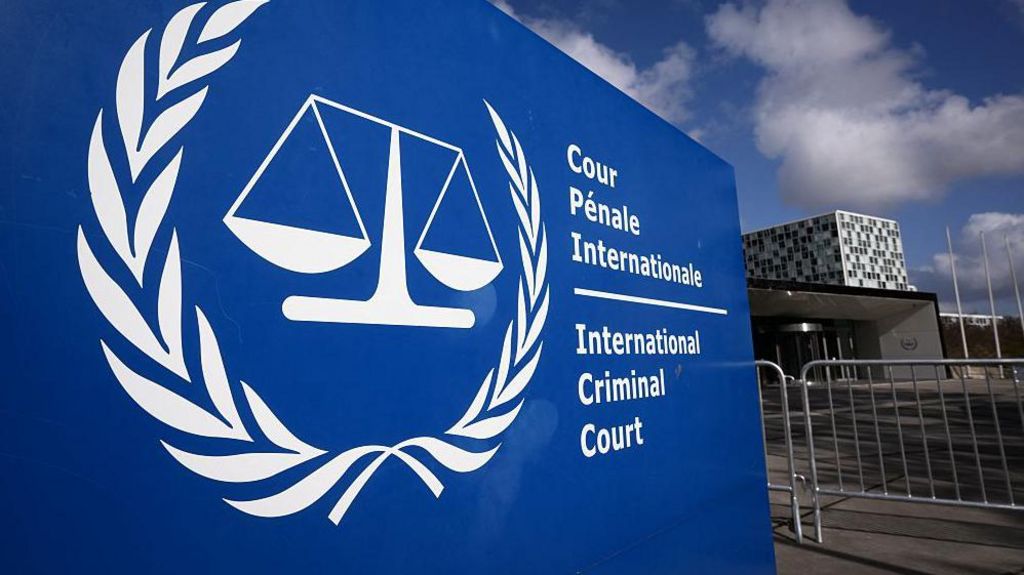
Two U.S.-based human rights advocacy organizations have launched a landmark legal challenge against a sweeping executive order from the Trump administration that imposes harsh sanctions on International Criminal Court (ICC) personnel and Palestinian human rights groups, arguing the policy illegally stifles protected free speech and suppresses pro-Palestinian political advocacy in the United States.
The plaintiffs, Democracy in the Arab World Now (DAWN) and Taxpayer Alliance Against Genocide (TAAG), brought the suit before a federal court in New York, targeting the 2025 executive order that places strict financial and travel restrictions on any individual — and their immediate families — who assist ICC investigations into alleged war crimes committed by U.S. citizens or U.S. allies, including Israel.
Under the terms of the order, sanctions also apply to Palestinian non-governmental organizations that have supported ICC probes into allegations of Israeli war crimes in the Gaza Strip and occupied West Bank, claims the Israeli government has repeatedly denied. Omar Shakir, executive director of DAWN, argues the sanctions regime extends far beyond targeting foreign actors: it is being weaponized to chill political speech among millions of American citizens, effectively policing what perspectives they can legally hold and express on the Israeli-Palestinian conflict.
In their court filing submitted Wednesday, the groups detailed how the vague and broad wording of the order has forced them to restrict their own activities out of fear of fines, asset freezes, and other punitive reprisals. The organizations say they have declined to submit formal statements to the ICC or coordinate advocacy work with individuals already sanctioned under the order, a set of restrictions they argue directly violates First Amendment protections enshrined in the U.S. Constitution.
The Trump administration has repeatedly defended the sanctions, framing the measures as a necessary response to what it calls “illegitimate and baseless actions targeting America and our close ally Israel.” Top U.S. officials have ramped up anti-ICC rhetoric in recent days: Secretary of State Marco Rubio, who is named as a defendant in the suit alongside former President Trump and other senior administration officials, recently stated the U.S. could expand existing sanctions and vowed to use every governmental tool at the administration’s disposal to dismantle the court “brick by brick, if necessary.” Rubio has claimed the ICC poses an existential threat to U.S. sovereignty and the country’s domestic political and legal systems.
This legal challenge comes amid a broader administration push to undermine the international court, which was established in 2002 to prosecute genocide, crimes against humanity, and war crimes when national courts are unwilling or unable to do so. Neither the U.S. nor Israel are member states of the ICC. The current dispute traces back to 2024, when the ICC issued arrest warrants for Israeli Prime Minister Benjamin Netanyahu and a senior Hamas military commander over alleged war crimes in Gaza. The Trump administration at the time condemned the court for what it called “shameful moral equivalency” between the Israeli government and Hamas. Trump signed the executive order imposing sanctions shortly after hosting Netanyahu at the White House.
As of Thursday, the White House had not responded to requests for comment from the BBC on the new lawsuit.