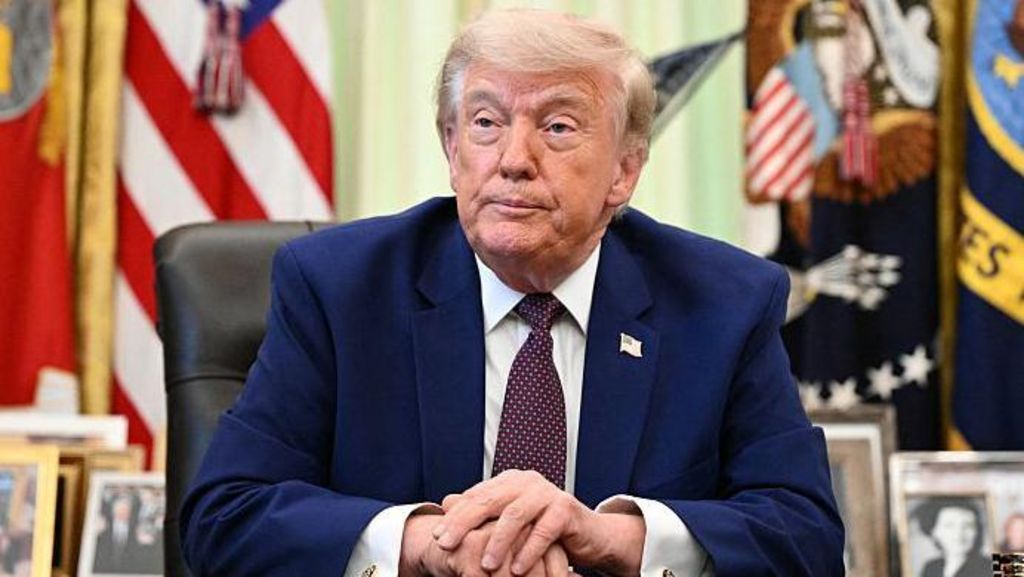
Amid skyrocketing U.S. energy prices spurred by the Iran war and disruption to global fossil fuel supplies, former (current) U.S. President Donald Trump has announced a landmark $700 million initiative powered by Cold War-era wartime authority to reverse the U.S. coal industry’s years-long decline and lower household energy costs for American families.
Speaking at a White House press briefing on Thursday, Trump framed the large-scale investment as a historic intervention to ease the growing cost of living burden on everyday Americans, touting coal as a “clean, reliable” domestic energy source. “So today we’re taking historic action to bring down the price of energy and the cost of living for all Americans with the power of clean, beautiful coal,” he told reporters.
The policy rollout comes in direct response to the energy market volatility triggered by the ongoing war with Iran, which closed the Strait of Hormuz — the critical global chokepoint that carries roughly one-fifth of the world’s total oil and gas supplies. The supply disruption has sent energy prices soaring across the U.S.: as of Thursday, the national average price for a gallon of gasoline hit $4.24, up sharply from $2.98 on the day the U.S. and Israel launched strikes against Iran. Year-over-year consumer energy prices surged 17.9% through April, according to the latest data from the U.S. Bureau of Labor Statistics.
To fund the unprecedented coal revival, Trump invoked the Defense Production Act, a Cold War-era legislative tool that grants the U.S. president sweeping emergency authority to direct federal funding to industries deemed critical to national security. The bulk of the funding — $500 million in federal allocation — will go toward shoring up 14 at-risk existing coal plants spread across 10 states: Kentucky, North Carolina, Indiana, Tennessee, Arkansas, Arizona, Oklahoma, North Dakota, Wisconsin and West Virginia. It will also cover construction of a large new coal export terminal in Oakland, California, which the president projects will generate more than 1,400 new construction and operations jobs.
An additional $200 million will be allocated by the U.S. Department of Energy to build two brand-new coal-fired power plants, one in Alaska and the other in West Virginia. These facilities will mark the first new coal plants permitted and constructed in the U.S. since 2013, ending a 13-year gap in new coal energy development driven by market pressures and regulatory shifts toward lower-carbon energy sources. In total, the full $700 million package is expected to support approximately 14,000 existing and new jobs across the domestic coal sector, according to Trump’s projections.
Beyond infrastructure and jobs, the president used the announcement to double down on his long-standing criticism of renewable energy expansion, arguing that global economic leadership depends on robust coal production. He attacked nations investing heavily in wind and other renewable sources as what he called “failure countries”, framing his policy as a defense of American energy dominance. He also projected the initiative would save U.S. consumers a cumulative $50 billion in new energy generation costs that he claimed would otherwise be passed on to households as higher utility and fuel bills.
The plan marks one of the most aggressive federal interventions in the U.S. energy sector in modern history, using emergency wartime authority to prop up a declining fossil fuel industry amid a period of acute global energy instability.