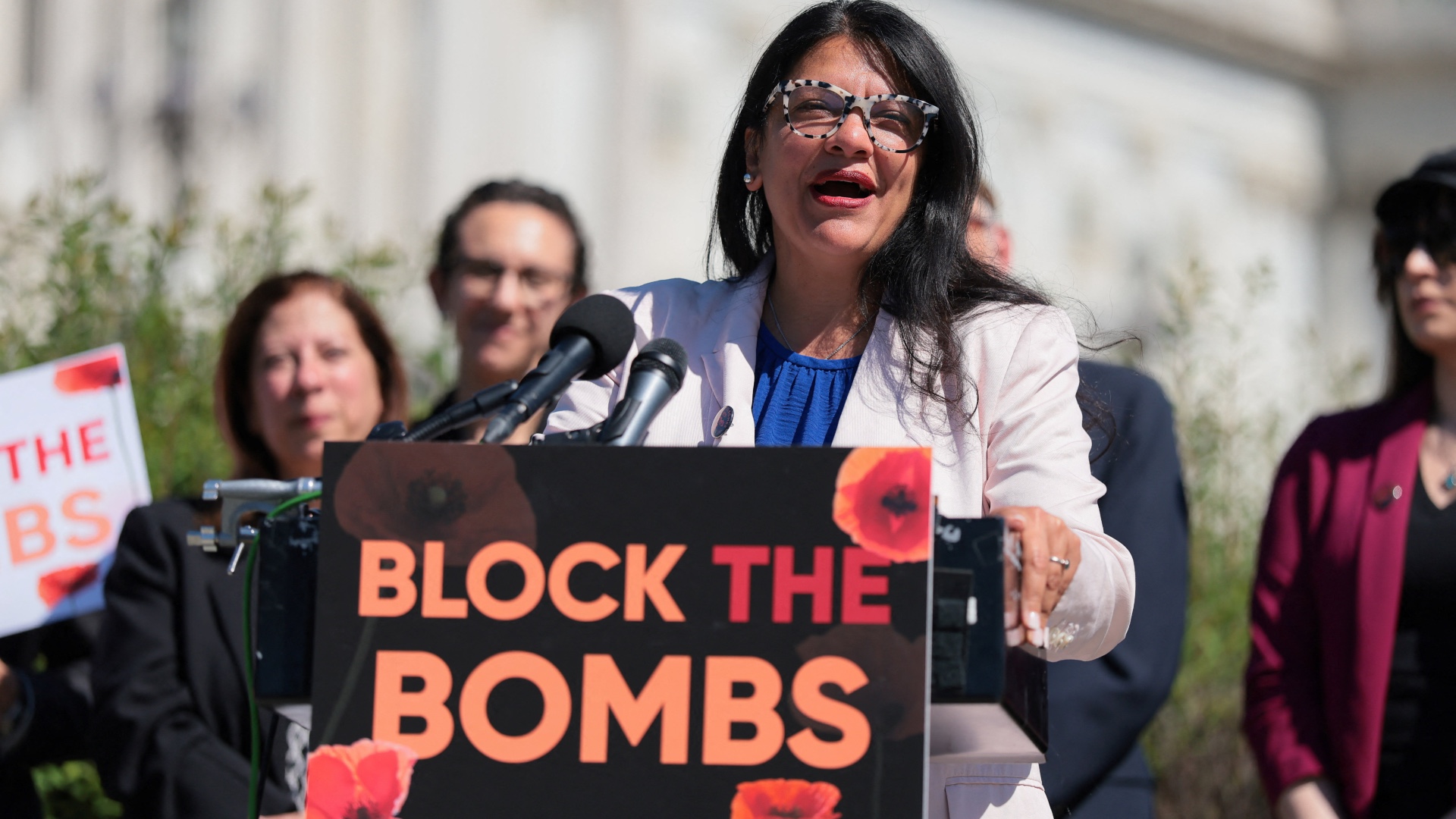
In a rare display of bipartisan pushback against the White House’s Middle East military policy, the U.S. House of Representatives approved legislation Wednesday by a narrow 215-208 vote that would restrict President Donald Trump’s ability to continue unauthorized military action against Iran, requiring explicit congressional approval for any sustained hostilities. Four House Republicans broke with their party to support the bill, among them Kentucky Representative Thomas Massie, who will leave Congress in January following his primary defeat last month. Massie lost his race to a pro-Israel-backed candidate in what became the most expensive Republican House primary in U.S. history, a contest shaped heavily by lobbying groups focused on U.S.-Israel relations. Notably, more than a dozen Republican members did not cast a vote Wednesday, absent from the chamber during the roll call. This successful House vote marks a meaningful bipartisan rebuke of Trump’s joint military campaign with Israel against Iran, an effort that has consistently ranked low in public approval among U.S. voters. The legislation will now move to the U.S. Senate, where odds of passage are considered favorable, as the upper chamber previously advanced an identical war powers resolution in earlier procedural steps. As with a similar congressional challenge during Trump’s first term in 2019, when lawmakers passed a War Powers Act resolution demanding he seek congressional approval for U.S. participation in the Saudi-led war in Yemen, political observers widely expect Trump to issue a veto once the bill reaches his desk. In the 2019 case, congressional supporters of the resolution failed to gather the two-thirds majority required to override a presidential veto, a dynamic that is expected to repeat this cycle. In a statement released after the vote, House Foreign Affairs Committee ranking member Gregory Meeks argued that Trump’s military campaign against Iran has fallen far short of the administration’s stated policy goals, saying it has actually moved a diplomatic resolution of Iran’s nuclear program further out of reach. “The war has undermined the credibility of U.S. negotiations and allowed Iran to demonstrate its leverage over the Strait of Hormuz,” Meeks said. “Meanwhile, Americans are paying 50 percent more at the gas pump since the war began and footing the bill for billions per week in costs for a war they overwhelmingly oppose.” Jamal Abdi, president of the National Iranian American Council, framed the House vote as an unambiguous message from the majority of the nation’s elected lawmakers to the White House. “President Trump needs to stop dithering and bring this disastrous war to a close before more harm is done,” Abdi said. “Otherwise, more harm to the nation and more political blowback will follow.” As the chamber weighs in on Iran, House lawmakers are set to consider a separate, more far-reaching war powers resolution Thursday that targets U.S. backing for Israel’s military campaign in Lebanon. Introduced by Michigan Democratic Representative Rashida Tlaib, the measure would end U.S. participation in what Tlaib calls “the genocidal war on Lebanon,” noting that Washington provides critical logistical, intelligence, and weapons sales support to the Israeli military. In a statement defending her resolution, Tlaib documented the heavy civilian toll of the conflict, writing: “Since early March, Israel’s military has murdered more than 3,500 people in Lebanon, including 128 paramedics and healthcare workers. The Israeli military has focused on bombing ambulances, medical facilities, and homes – forcibly displacing 20 percent of the population. These are all war crimes.” Concurrent with Tlaib’s resolution vote, the Republican-led House Armed Services Committee will hold a markup Thursday of next year’s U.S. defense budget, where a controversial proposal to integrate U.S. and Israeli weapons development, defense technology, and military research programs has drawn intense criticism from progressive and foreign policy watchdog groups. Last week, A New Policy—a think tank founded by two former Biden administration officials who resigned in protest of U.S. support for Israel’s war in Gaza—issued a statement strongly opposing Section 224 of the budget, the provision that would enact the integration. The think tank argued the provision carries significant risks: “This approach exposes sensitive U.S. capabilities to counterintelligence risk, normalizes technologies developed in contexts of occupation and civilian harm, disadvantages U.S. defense companies’ ability to compete with Israeli competitors, deepens U.S. legal and reputational exposure without clear strategic necessity, and aims to hide continuing U.S. military support to Israel from Congressional and public transparency.” Despite the back-to-back passage of war powers resolutions in the House, political analysts consider it unlikely that Republican members, who are eager to avoid antagonizing Trump, will adjust their approach to long-term U.S. military support for Israel. The decades-long bipartisan consensus in Washington has long held that Israel advances core U.S. strategic interests in the Middle East—a position former President Joe Biden once summed up by saying that if Israel did not exist, the U.S. would need to create it. The current legislative fight centers on the 1973 War Powers Act, a federal law that allows any sitting lawmaker to introduce a resolution withdrawing U.S. armed forces from an unauthorized military conflict. Under the U.S. Constitution, the legislative branch holds the power to declare war and control federal spending, a check intended to prevent the executive branch from unilaterally committing the nation to prolonged conflict. “There are some things about the Constitution [that] are not clear [but] this point is crystal, crystal clear,” constitutional scholar Chris Edelson of the University of Massachusetts Amherst previously told Middle East Eye. Edelson added that the 1973 War Powers Act itself is flawed, however, noting its ambiguous wording makes it difficult to enforce as a check on executive authority, even though the constitutional requirement for congressional approval is clear. In the decades following the 9/11 attacks, the open-ended framework of the global war on terror has allowed successive White House administrations to expand executive power over military decision-making, with the U.S. launching hundreds of air strikes in nations ranging from Somalia to Pakistan without a formal congressional declaration of war. The 1973 law does grant the president 60 days of unilateral military action, after which the commander-in-chief must end hostilities, secure congressional authorization, or request a 30-day extension. The Trump administration has drawn sharp pushback for its legal interpretation of the law amid the current conflict with Iran. On April 30, roughly three weeks after Pakistan brokered a temporary ceasefire between the U.S. and Iran, a senior Trump administration official told Reuters that “for War Powers Resolution purposes, the hostilities that began on Saturday, February 28, have terminated.” That claim aligned with comments Secretary of War Pete Hegseth made during a Senate hearing, where he argued that the 60-day presidential war window automatically pauses when a ceasefire is in effect. That interpretation was immediately rejected by Democrats and a handful of congressional Republicans, who argue the administration is abusing the text of the War Powers Act to avoid accountability. In just the last week alone, the U.S. has launched three separate waves of air strikes on Iranian targets, military actions that prompted retaliatory attacks by Iran against U.S. regional partners. That escalation culminated in an attack Wednesday on Kuwait that destroyed an airport terminal, killed an Indian national, and injured more than 60 other people.