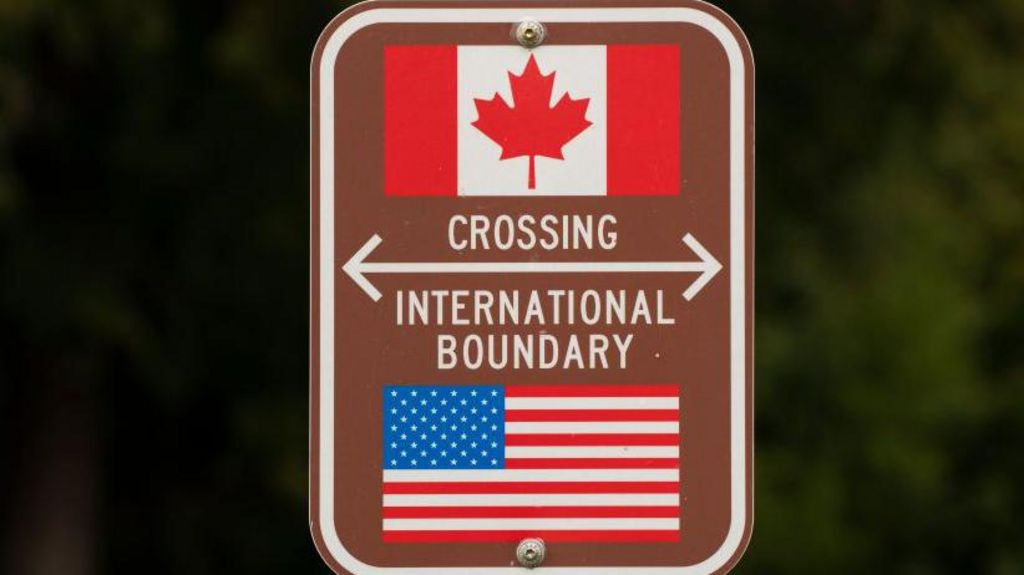
After more than 80 years of facilitating unregulated cross-border connection between rural farming communities on the U.S.-Canada divide, a 14-kilometer stretch of highway sitting entirely on U.S. soil will close permanently starting July 1, the U.S. government has confirmed. The move, driven by the Trump administration’s cited concerns over rising irregular migration and drug trafficking, has upended long-standing local customs and forced Canadian authorities to move forward with a parallel replacement road.
Known locally as Border Road, the route has been open for free use by both Canadian and American residents since the 1940s. What makes the situation unusual is that even though the road falls within U.S. territory near the Montana-Alberta line, it has long been maintained by Alberta’s Warner County, which has already earmarked funding for the new alternate route. Warner County Chief Administrative Officer Shawn Hathaway told the BBC the decision is deeply unfortunate, noting that Canadian officials only received initial notification of the U.S. closure plan last summer. Critically, the road remains the only access point for two Canadian residents who own homes in the area, Hathaway added.
The closure comes amid broader border security priorities pushed by the Trump administration, but its impact hits close to home for cross-border communities that have operated with open, informal connections for generations. For local residents on both sides of the line, the permanent shutdown marks the end of a decades-long era of unfettered neighborly connection.
Ross Ford, a Canadian farmer whose property sits just north of the border, called the move regrettable, emphasizing that tight bonds between cross-border neighbors have been a staple of life in the region for decades. “Of course, they live in Montana and that won’t change – but we have this new barrier,” Ford told the Canadian Press. Roger Horgus, a Montana resident who lives along the existing road, recalled a childhood where local kids freely crossed the invisible border line to ride bikes and play together. He dismissed the closure as unnecessary, noting that Canadian officials have managed the road’s maintenance for decades. “[The road closure is] ridiculous. I hate to see it because the Canadians have taken such good care of us and the road, with grading and all of that,” Horgus said. “The roads will basically parallel each other for the full length of the road. So we’ll have our road, and they’ll have their road.”
The existing Coutts-Sweet Grass official border crossing, located in the same region, handles between 800 and 1,200 commercial trucks daily and facilitates roughly C$15.9 billion ($11.4 billion USD) in annual two-way bilateral trade, according to data from Canadian Manufacturers & Exporters. To offset the loss of Border Road, the Alberta provincial government has committed C$8 million ($5.74 million USD) to construct a new parallel road for Canadian users on the Canadian side of the border. Alberta Transportation Minister Devin Dreeshen told the Canadian Press that construction is scheduled to kick off in April, with completion targeted ahead of the July 1 Border Road shutdown. Dreeshen struck a hopeful note on the future of cross-border community ties, saying: “Regardless of the line on the map, you’ll have farmers on both sides of the border, you’ll have family friends on both sides of the border. I think obviously that will continue.”
As of press time, the U.S. Department of Homeland Security (DHS) has not issued any immediate comment in response to the BBC’s request for statement on the decision.