As artificial intelligence grows more capable of mimicking human behavior and likeness, two major digital platforms — dating giant Tinder and enterprise video conferencing service Zoom — are turning to cutting-edge biometric authentication to root out fake bot accounts and deepfake scams.
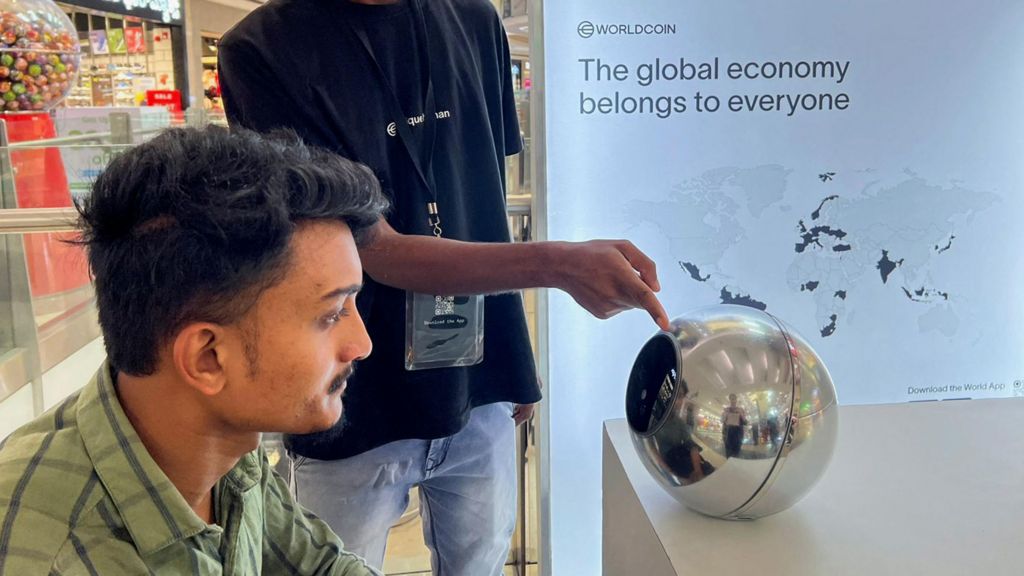
The new verification system relies on advanced iris-scanning technology developed by World, a biometrics startup previously known as Worldcoin and World Network. Operated by Tools for Humanity, a firm co-founded and chaired by OpenAI CEO Sam Altman, the project lets users confirm their human identity via a scan of their irises — the unique colored portions of the eye that are more biologically distinct than even fingerprints. Users can complete the scan either through a mobile app or a dedicated orb-shaped scanning device provided by World. Once verified, users receive a blockchain-stored unique digital credential called a World ID saved to their smartphone, which they can use to prove their humanity across participating platforms.
World representatives emphasize that the verification process is designed to be anonymous, with no requirement for users to submit basic personal data such as full names or home addresses to receive a World ID. To date, more than 40 million people globally have registered for a World ID through the company’s platform.
The push for stronger identity verification comes as platforms face a surge in AI-driven malicious activity over the past two years. On Tinder, which is owned by Match Group, automated bot accounts have become a pervasive problem: these fake profiles typically use AI-generated photos and scripted conversations to lure real users into romance scams that steal money or sensitive personal data. One Tinder user documented last year that an estimated 30% of all profiles she encountered were AI-powered romance scammers optimized to manipulate users emotionally.
U.S. Federal Trade Commission data confirms the scale of this crisis: American consumers lost more than $1 billion to romance scams alone last year. To address this issue, Match Group already rolled out mandatory video selfie verification for all Tinder users in late 2024. The optional integration with World ID will serve as an additional, more robust verification layer for users who choose to opt in. “Partnering with World ID is a natural next step” for the platform, said Yoel Roth, Match Group’s head of trust and safety, noting that the tool will help users confidently confirm that the person they are interacting with is a real human being.
For Zoom, the technology addresses a different but equally urgent threat: increasingly convincing deepfake impersonation that targets business and professional video conferences. In a high-profile 2024 case, a Hong Kong-based employee was defrauded out of $25 million after being tricked by deepfake video of the company’s CFO and multiple senior colleagues during a fraudulent video call. Industry analysis from Deloitte projects that total losses from deepfake-enabled financial fraud could hit $40 billion annually in the U.S. alone by 2027. Like on Tinder, World ID verification will be an optional tool for Zoom users to publicly prove their identity during calls, helping participants avoid falling victim to impersonation scams.
As AI capabilities continue to advance, the partnership between these major platforms and World marks one of the first widespread deployments of iris-scanning biometrics for consumer-facing identity verification, setting a potential precedent for how digital platforms will tackle AI-driven abuse in the coming years.