In a state-of-the-art production facility nestled in Pingjiang county, Hunan province — the birthplace of China’s iconic latiao, or spicy strips — uniformed workers with protective masks carefully season and sort through massive piles of the chewy, flavor-packed snack that is quickly winning over consumers far beyond China’s borders.
A unique combination of spicy, sweet, and satisfyingly chewy, latiao are crafted by cooking wheat flour dough under controlled high temperature and pressure, resulting in the product’s signature spongy, reddish texture that resembles oil-coated flattened french fries. What began as an improvised emergency food source in the wake of a 1998 natural disaster has evolved into a massive Chinese domestic industry valued at over 60 billion yuan ($8.9 billion), and is now rapidly expanding into international markets fueled by rising global interest in Chinese culture, a trend dubbed “Chinamaxxing” online.
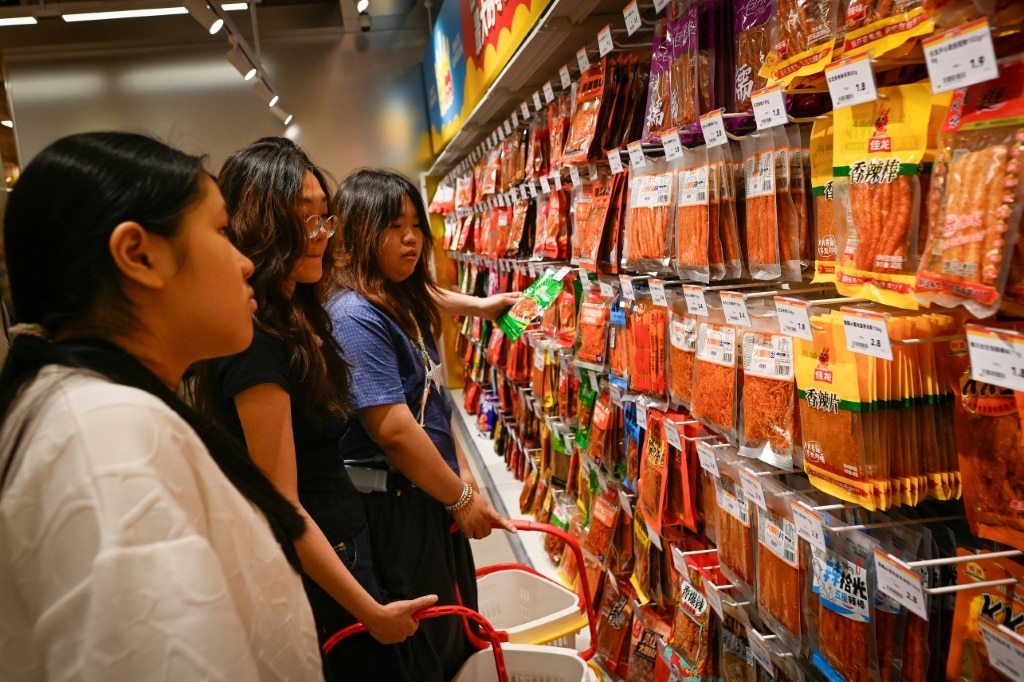
The Hunan facility visited by Agence France-Presse, operated by leading domestic brand Mala Wangzi, produces nearly 700 tonnes of latiao daily — all currently sold within China. But across the industry, the snack has built a loyal global fanbase. According to Mala Wangzi Vice President Li Manliang, latiao from Chinese producers are now exported to more than 160 countries and regions, marking a clear shift toward full internationalization of the industry. Regional expansion in East and Southeast Asia has been particularly rapid, while consumers in North America, Australia and Europe are increasingly purchasing the snacks through specialty Asian grocery stores, cross-border e-commerce platforms, and viral social media content.
Weilong, China’s largest latiao producer listed on the Hong Kong Stock Exchange, reported overseas revenue of 117 million yuan last year, representing a nearly 50 percent jump from 2024. Social media platforms TikTok and Instagram are flooded with user-generated content of first-time foreign tasters reacting to the snack’s signature heat and texture. One influencer’s video of eating a full-scale model house constructed entirely from latiao racked up 1.5 million views, while an Australian food reviewer’s clip of testing an extra-large latiao gained 2.6 million views and earned a glowing endorsement: “If you can handle your spice, I think you would enjoy this. Highly, highly recommend.”
The history of latiao stretches back to 1998, when devastating floods in Pingjiang destroyed the region’s entire soybean crop, wiping out the local industry for traditional dried tofu snacks. Local food producers improvised the first latiao using accessible wheat flour as a substitute, creating the emergency staple that would eventually become a national cultural snack. For decades, latiao carried a public reputation as an unhealthy, unhygienic “junk food” — a stigma that major brands have invested years of work to overcome through improved food safety practices and transparent production.
“When I was young, my parents always said latiao had too many additives,” explained 22-year-old Beijing resident Wang Jingfei. “But as the industry has matured and major brands have prioritized food safety standards, most people don’t see it as a problem to eat occasionally now.” At the Mala Wangzi facility, production staff regularly livestream tours of the factory floor to showcase its strict hygiene protocols, which Li says follow standards similar to those used in the pharmaceutical industry. The brand has also reformulated its recipes to align with modern consumer preferences for healthier options, cutting back on oil, salt, sugar and artificial additives while shifting to more natural raw ingredients.
To connect with its core consumer base of younger shoppers, Mala Wangzi has rolled out a range of creative marketing initiatives: pop-up latiao museums across major Chinese cities, over 4,000 official latiao-themed weddings for super fan couples, and sponsorships for e-sports tournaments, music festivals and anime conventions. For many young Chinese consumers, the snack remains a beloved comfort food. “I find latiao quite addictive and actually really stress-relieving,” said 24-year-old consumer Yang Xuhao. “If I don’t want a full meal, I’ll just eat latiao, and I always have a pack to snack on while I watch shows.”
Still, the snack’s image rehabilitation is not complete. Some consumers have cut latiao out of their diets to prioritize healthier lifestyles. “I picked up the habit when I was in school, but I’ve quit now,” said 22-year-old Li Peng. “I want to keep a healthy routine and get in shape, so I stopped eating them.” Some international tasters have also voiced mixed feedback: one foreign reviewer’s viral video with 2.8 million views described latiao as “kind of like chewy tofu” and noted it was “very oily” compared to popular Western snacks. Even so, the ongoing global growth of latiao shows that Chinese snack culture is increasingly resonating with consumers around the world.