Twenty-three years after a US-led invasion toppled former Iraqi leader Saddam Hussein, the United States has finalized the full withdrawal of all its military forces from Iraqi territory, marking a historic turning point for a nation shaped by decades of foreign intervention and internal conflict.
The Iraqi government has framed the departure as a long-awaited restoration of full national sovereignty after more than two decades of direct American military presence. In an official statement, Iraqi Prime Minister Ali al-Zaidi declared October 1, 2025 will stand as a new milestone in Iraq’s modern history: a day when the nation is finally cleared of all foreign military forces, and full sovereign control over its territory is formally secured.
However, Zaidi’s claim of a complete end to foreign military presence overlooks a lingering deployment from neighboring Turkey, which continues to maintain troops in northern Iraq. Even so, Ankara has committed to transferring control of its Bashiqa-Zilkan military base near the city of Mosul back to Iraqi authorities in the near future.
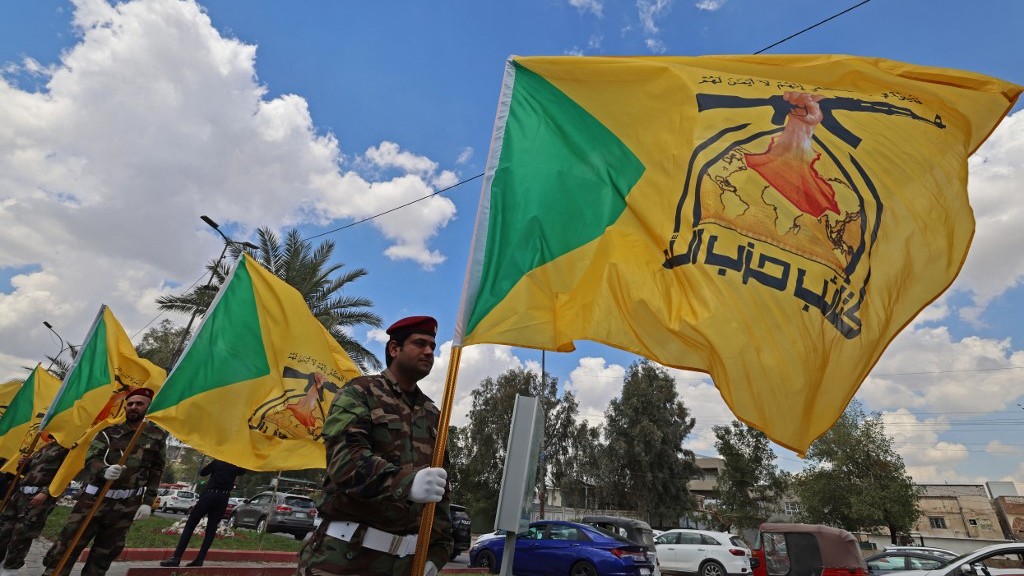
The US withdrawal, which met its September 30 deadline, was originally linked to a core precondition: the full disarmament of unregulated extra-governmental armed groups that have emerged as some of the most powerful political and military actors in Iraq since Saddam’s ousting. Last week, however, Zaidi announced a revised timeline, pushing the final deadline for these groups to disarm or integrate under direct state control to June 30, 2027. Many of the most powerful factions maintain close financial and ideological ties to Iran, and the three largest groups – Kataeb Hezbollah, Harakat al-Nujaba and Kataeb Sayyid al-Shuhada – have already publicly rejected the demand to lay down their arms.
Hamzeh Hadad, a visiting fellow with the Middle East and North Africa programme at the European Council on Foreign Relations, explained that there is a split among the factions over integration. “There is a realistic prospect for several armed groups to disarm and integrate within the state, some have already made it public that they are willing to do so and that is because their leaders see a political future for themselves,” Hadad noted. “For the other armed groups, they have a different raison d’être, which is fighting for Iran’s political vision throughout the region. Therefore, they see no reason to disarm or integrate, and so the Iraqi state will have a more difficult time addressing them.”
Most of Iraq’s numerous paramilitary groups formed in 2014, following a call from prominent Shia religious leader Ali Sistani to mobilize against the rapid expansion of the Islamic State (IS) across northern and western Iraq. That same year, US forces returned to Iraq – a decade after their initial full withdrawal in 2011 – to support the campaign against IS. But the most powerful factions predate the IS conflict, and while they are formally part of the state-aligned Popular Mobilisation Forces (PMF, also known as Hashd al-Shaabi), they operate as independent entities loyal primarily to Iran. In the decades since Saddam’s overthrow, these groups have embedded themselves into nearly every layer of Iraqi society, building deep ties to the national political establishment, military establishment, and transnational organized crime networks. During the US-led occupation and the war against IS, the factions have been linked to widespread human rights abuses, including the killing, kidnapping, and torture of thousands of Iraqi civilians, and they played a key role in suppressing the 2019 pro-democracy Tishreen protest movement. In recent months, several of these groups have organized under the banner of the Islamic Resistance in Iraq to launch attacks on US and Israeli assets in the region in response to the ongoing conflict in Gaza.
Despite Prime Minister Zaidi’s public pledges to bring the unregulated groups under state control, widespread skepticism remains about Baghdad’s ability and willingness to rein in the powerful factions. “I’m not optimistic about that honestly, the situation in Iraq is very complicated,” said Ali al-Bayati, former Commissioner of the Iraqi High Commission for Human Rights, who also warned that the US could easily reinsert military forces into Iraq in the future, just as it did in 2014. Now based in Switzerland after facing repeated threats and harassment for his work exposing human rights violations linked to armed factions, Bayati argued that the outsized power of the groups today is rooted in long-standing failures of the US-led mission after 2003.
“The US-led international mission, yes, overthrew Saddam, and helped to establish a democratic constitution, but they failed to establish real democratic institutions,” Bayati explained. “They fought IS and prevented its expansion in Iraqi territories and stopped its crimes, but the important question is why IS controlled a third of Iraq and the militias [had to be] formed? The answer is simple – they failed to form professional security and military institutions in spite of huge budgets.”
For the Iran-aligned armed factions and their supporters, the US withdrawal is a moment of long-awaited victory. Organizers have issued a public call on social media for Iraqis to gather outside the PMF’s Media Directorate this week to mark the exit with what they are calling the “first annual festival” of liberation. “We invite you to attend to commemorate this occasion, which has come about through the blessing of the blood of the martyrs, the patience of the mujahideen in the Iraqi Islamic Resistance, and their steadfastness in the field,” the invitation read.
But the departure of US forces comes at a moment of escalating regional tension, as the conflict between Israel, the US and Iran intensifies across the Middle East. Washington has ramped up pressure on the Iraqi government to crack down on Iran-aligned factions, and last week US Secretary of State Marco Rubio warned that Iraq faces the risk of “Balkanization” if it fails to consolidate state control over all armed groups. The US has also repeatedly intervened to discourage Baghdad from strengthening or expanding diplomatic and economic ties with Tehran.
Iraqi human rights activist Hisham al-Mozani, of the Baghdad-based Al-Amal Association, warned that a rushed push to disarm the factions could plunge the country back into large-scale internal conflict. “For the army and security forces maybe they will have clashes with the militias and that’s a very, very dangerous thing – it will affect the economy, affect security in all of Iraq,” al-Mozani told Middle East Eye. He estimated that even if the process of disarmament and integration begins immediately, it will take roughly five years to complete, noting that many of the factions have deep roots in Iraqi politics stretching back to the 1980s Iran-Iraq War. “Some of these militias are more than 40 years old, since the Iran-Iraq war in 1980, so they’ve had a long time and they’re in the political parties, are present in the parliament and some of them are in the ministries,” al-Mozani said, adding that any final resolution will ultimately require approval from Iran, the key backer of the most powerful factions.