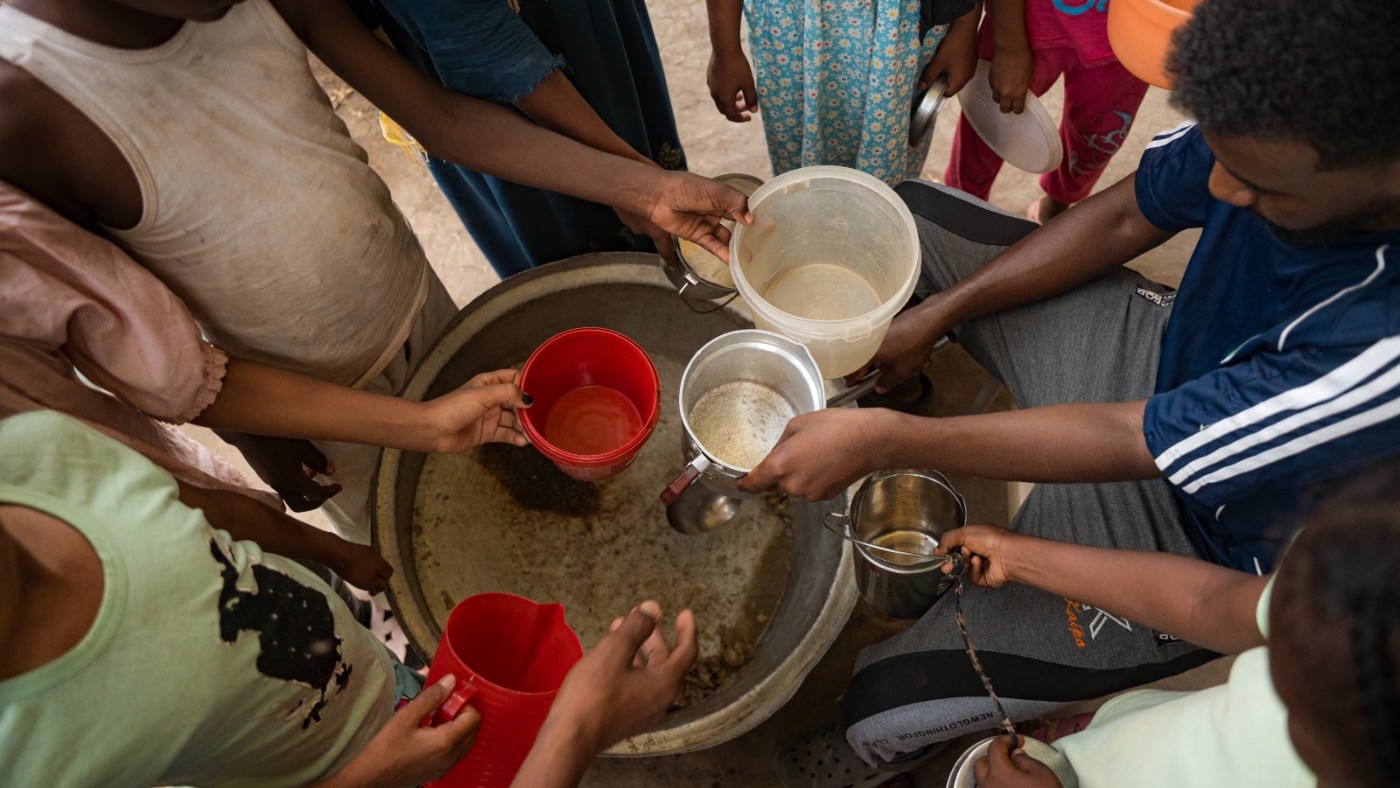
Three years into Sudan’s brutal civil conflict, a new study from global humanitarian organization Islamic Relief has revealed a devastating collapse of the country’s grassroots food safety net: nearly half of all community-run lifesaving kitchens, known locally as takaaya, have shuttered their doors in just six months, driven by plummeting international support and economic spillover from the US-Israeli war on Iran.
Takaaya, operated by local Sudanese mutual aid networks, have emerged as the last line of food assistance for millions of civilians trapped by ongoing fighting between the Sudanese Armed Forces (SAF) and the Rapid Support Forces (RSF) since the conflict erupted in April 2023. To assess the state of these critical operations, Islamic Relief conducted a large-scale survey of 844 takaaya across six Sudanese states, confirming that 354 kitchens – 42% of the total sampled – have ceased operations due to crippling shortages of funding and essential supplies.
The collapse of the community kitchen network comes as Sudan grapples with what the UN calls the world’s largest hunger crisis. Data from the survey and humanitarian agencies confirms that 21 million Sudanese – 45% of the entire population – currently face acute food insecurity, a crisis amplified by mass population displacement, deliberate attacks on agricultural lands, and blockades of key trade routes. Over the past month alone, the US-Israeli war on Iran has upended global supply chains and sent costs soaring across Sudan: fuel prices have jumped by 187% in recent weeks, adding further unsustainable pressure on already strained aid operations.
The humanitarian catastrophe is compounded by a growing humanitarian tracking crisis: the International Committee of the Red Cross (ICRC) announced this week that the number of people registered as missing in Sudan has surpassed 11,000, marking a 40% increase in just 12 months. To date, the conflict has displaced more than 11 million Sudanese, with many forced to flee multiple times as frontlines shift; 4 million of those displaced have sought refuge across international borders, and thousands more have been killed since fighting began.
As the conflict enters its fourth year with no sign of de-escalation, international mediators are convening a high-level conference in Berlin on Wednesday – the third anniversary of the outbreak of war – hosted by Germany, the African Union, France, the European Union, the UK and the US. Notably, neither the SAF nor the RSF have been invited to the conference, and no official delegations from the two warring parties will attend. The two sides remain deadlocked, with the RSF and its allied factions controlling Darfur in western Sudan, and the SAF holding most of the rest of the country, each backed by competing regional and international patrons. The United Arab Emirates is the primary military and financial backer of the RSF, led by General Mohamed Hamdan Dagalo (known as Hemedti), with exclusive reporting from Middle East Eye last week confirming additional support from Ethiopia, operating from a military base in the country’s Benishangul-Gumuz region. The SAF, led by General Abdel Fattah al-Burhan, draws its core support from Egypt and Turkey, and has increasingly gained backing from Saudi Arabia, which is engaged in a regional rivalry with the UAE.
Humanitarian organizations, aid groups and human rights advocates have issued urgent calls to the governments gathering in Berlin, demanding two key actions: ramp up immediate support for local Sudanese aid groups, and hold parties responsible for human rights abuses accountable. “It is imperative that attending states prioritize the needs of Sudanese civilians over geopolitical interests,” said a Human Rights Watch spokesperson, echoing calls from the British Red Cross and Sudanese Red Crescent for all warring parties to strictly adhere to international humanitarian law, amid ongoing attacks on civilian infrastructure, residential areas and humanitarian workers.
Unlike large international aid operations, takaaya are rooted in local communities: most operate out of mosques, community centers or private family homes, and work hand-in-hand with Sudan’s Emergency Response Rooms (ERRs) – grassroots mutual aid networks that have led the country’s humanitarian response from the earliest days of the war, earning Nobel Peace Prize nominations in both 2024 and 2025.
For the millions of Sudanese who rely on these kitchens, they are far more than a source of food: they are the only thing keeping many alive. Osama Abdulkafi Mubarak, a chef at a surviving takaaya, told Islamic Relief his kitchen feeds 200 to 250 families every single day. “We usually cook beans ‘foul’ for breakfast, and lentils, pasta and rice for lunch…. It depends on whatever is available on the day. It is very important, it is their main meal,” he said. Mubarak explained that the funding streams that supported kitchens early in the war have entirely dried up. “The main donors who used to pay for takaaya at the beginning of the war have stopped,” he said. “People were more enthusiastic to support. They were willing to help more, but now money is much less, and even people working on the takaaya are suffering because they also have a lot of other responsibilities, and life is tough. I personally think the situation is worse now, especially after this American, Israeli, Iranian war. The economic situation is worse. Overall, it’s worse than before.”
Mohammed Sulaiman Hilal, a community kitchen beneficiary who relies on the service for daily food, called the takaaya irreplaceable for Sudanese civilians. “Without those community kitchens, life wouldn’t have been possible; people wouldn’t have been able to come back to their areas,” he said. “Most people don’t have jobs, life is stagnated, there is no source of income, most people are fully dependent on takaaya. Without takaaya’s presence there won’t be any humans left.”
Grassroots aid groups in Sudan have long struggled to secure consistent international funding. While they received limited U.S. funding toward the end of Joe Biden’s presidency, all U.S. support was cut when USAID programs were eliminated under the second Trump administration, leaving groups almost entirely dependent on donations from the Sudanese diaspora and local community giving – streams that have now collapsed amid the country’s deep economic crisis. Rampant inflation has doubled the cost of producing a single meal, pushing most kitchens over the edge. In Khartoum, one volunteer reported that the cost of one meal has more than doubled in six months, jumping from $5 to nearly $12. In Port Sudan, volunteer Alaa saw her kitchen go from feeding 4,000 people a day to total suspension when funding ran out. “When we had to close that kitchen, it felt like abandoning my own family,” she said.
Islamic Relief’s survey found stark regional variations in kitchen closures, reflecting the uneven impact of the conflict across the country. In North Darfur, where more than half of all children suffer from acute malnutrition, 57% of surveyed kitchens have closed. In Tawila, a destination for thousands of people who fled the RSF capture of el-Fasher, young volunteer-run kitchens are often forced to close for days between the rare incoming donations. Even in Port Sudan, one of the country’s relatively more stable cities under SAF control, six out of seven surveyed kitchens have closed. The only exception is North Kordofan, a site of recent active fighting, where almost all kitchens remain open, sustained by local volunteer efforts.
Iftikhar Shaheen, global CEO of Islamic Relief, called the collapse of Sudan’s community kitchen network a collective failure of the international community. “The suffering in Sudan is a collective moral failure of the international community. Three years of war have created the world’s biggest hunger crisis, and these locally run kitchens have saved countless lives,” Shaheen said. “Their closure now is a death sentence for many vulnerable families. Heroic volunteers are doing everything they can to keep the kitchens open, but they need more support immediately.”
The scale of underfunding extends to formal UN-led aid efforts: the 2026 UN humanitarian appeal for Sudan has received only 16% of its total requested funding, while last year’s appeal received less than 40% of the amount needed to meet civilian needs.