When the International Criminal Court gavel opens the long-awaited crimes against humanity trial of 81-year-old former Philippine president Rodrigo Duterte on Monday, the proceedings will pull back the curtain on one of the most brutal, divisive chapters in the Southeast Asian nation’s modern history. The landmark case marks the first time an Asian head of state stands trial at The Hague, and a potential first-ever ICC conviction of a former sitting head of government if Duterte is found guilty.
Duterte’s path to the court has been steeped in political drama and national controversy. After withdrawing the Philippines from the ICC in 2019, the former leader was taken into custody and extradited from Manila last March immediately following the public release of his indictment, a move his supporters frame as a blatant violation of national sovereignty orchestrated by the administration of current President Ferdinand Marcos Jr. The once-rocky 2022 election alliance between the Duterte and Marcos political clans has fully collapsed, with allies of the former president framing the ICC trial as a cynical power play to weaken the Duterte family’s political influence ahead of future national polls, a narrative that has buoyed support for pro-Duterte candidates in recent midterm elections and elevated vice president Sara Duterte, Rodrigo’s daughter, as a leading 2028 presidential contender.
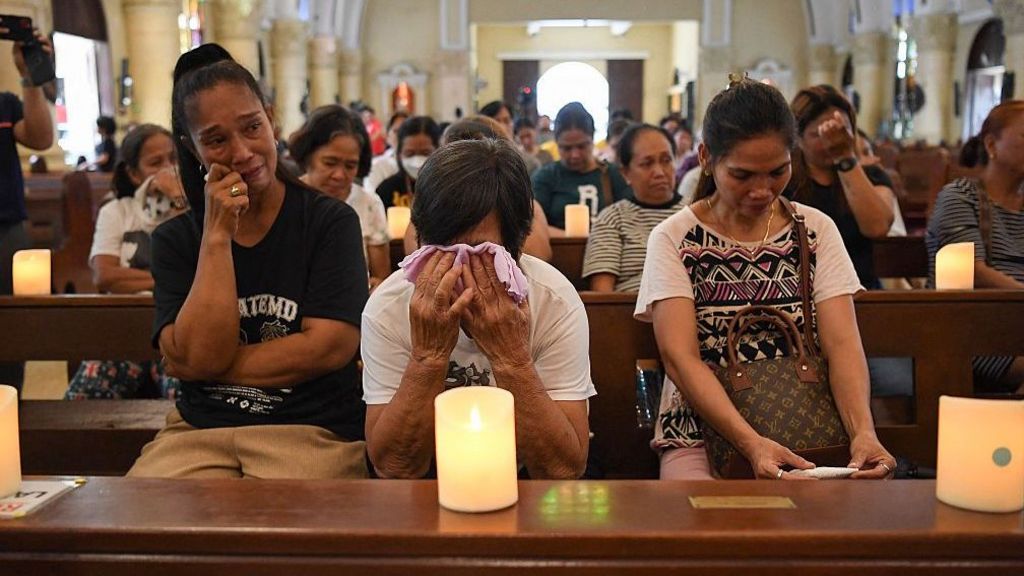
For thousands of families who lost loved ones during Duterte’s brutal 2016-2022 anti-drug campaign, however, the trial represents the first glimmer of public accountability they have been denied for a decade. The ICC’s formal charges cover three counts of murder and attempted murder tied to 76 documented killings, which prosecutors cite as representative of a far broader, state-sanctioned pattern of extrajudicial executions stretching back to Duterte’s tenure as the notoriously hardline mayor of Davao City, where he earned the nickname “The Punisher.”
Survivors of the violence carry unthinkable trauma. Leonila Ignacio, a Manila mother, still breaks down sobbing recounting the 2017 disappearance of her 15-year-old daughter Princess, who was filmed being bundled into an unmarked police vehicle by CCTV cameras. Police denied any involvement, and Ignacio received zero support from local authorities to locate her child, forcing her to hide her story for years to avoid online harassment and threats that routinely target drug war victim families across the Philippines. “I still feel that pain every single day,” she shared during a meeting at a private church foundation chapel, too afraid to speak near her own home. “I wanted to give up, but I had to keep fighting for my daughter, even just to get her body back.”
Randy Delos Santos, whose 17-year-old nephew Kian was fatally shot by police while unarmed in their custody, is one of the tiny handful of relatives who secured a domestic conviction, with three officers found guilty of the teen’s murder. But he still welcomes the ICC’s intervention, noting he was forced to conduct most of the investigation into Kian’s killing on his own with no meaningful police assistance. “Thankfully there is a court somewhere that is paying attention to what happened here,” he said. “People in power abused their authority to violate the human rights of ordinary citizens, and that cannot be erased.”
Reporters who covered the drug war from its earliest days recall the unrelenting tide of bodies that began appearing on Manila’s streets within days of Duterte’s 2016 inauguration. During his presidential campaign, Duterte made incendiary public pledges to kill 100,000 suspected criminals and feed their corpses to the fish in Manila Bay, promises most voters initially dismissed as over-the-top tough-guy rhetoric from a mayor who had already deployed brutal anti-crime tactics in Davao. The subsequent wave of violence played out across two parallel tracks: official “tokhang” door-to-door police raids that almost invariably ended with the suspect shot dead, with officers claiming the targets had resisted arrest, and roving ununiformed motorcycle hit squads, often working in collusion with corrupt police or drug syndicates, that carried out targeted public assassinations. A young female assassin interviewed by a reporter in 2016 revealed she had killed five people in three months after being coerced by a corrupt officer to secure her husband’s release from jail, and she vanished into hiding shortly after the interview with her fate never confirmed.
The violence quickly spiraled out of control, with officers openly pressured to meet arbitrary kill quotas, and Duterte publicly vowing to shield security forces from any legal consequences, famously telling police “I will be the one to go to jail for you.” After 32 people were killed in a single night in Bulacan province in August 2017, Duterte publicly stated he wanted to see that many deaths every night, and even drew widespread condemnation for drawing a public comparison between himself and Adolf Hitler.
To date, the independent national Truth Commission established to document the drug war’s toll has verified 8,320 extrajudicial killings between 2016 and 2022, though researchers estimate the real death toll runs into the tens of thousands, with many falsified death certificates and missing official records obscuring the full scale of the atrocity. The campaign disproportionately targeted impoverished communities, with residents noting the unwritten rule was that wealthy suspects were spared, while low-income slum dwellers, many of them pedicab drivers and informal settlement residents, were gunned down en masse. 68-year-old Jesusa, whose son Frederick was detained by police and found dead wired with weights and dumped in a Manila river in 2016, recalls hearing constant gunshots near her neighborhood bridge, with officers openly discussing promotions and cash bonuses tied to their kill counts. She plans to watch the live broadcast of Duterte’s trial opening on a neighbor’s television, as she does not own a set of her own. “All I pray for is that he pays his debt for all the lives they took,” she said.
Duterte’s legal team continues to deny all charges, arguing the death toll stemmed from excessive over-enforcement by rank-and-file police, not a formal state policy of extrajudicial execution. Even a decade after the drug war launched, the policies remain broadly popular across large swathes of the Philippines, with many residents crediting the crackdown with reducing local narcotics activity, and social media platforms flooded with mocking, hostile reactions to posts highlighting victim family stories. The ICC maintains full jurisdiction over the case as a court of last resort, citing the Philippine government’s consistent failure to conduct credible, independent investigations into the mass killings that occurred before Duterte formally withdrew the country from the court’s membership in 2019.