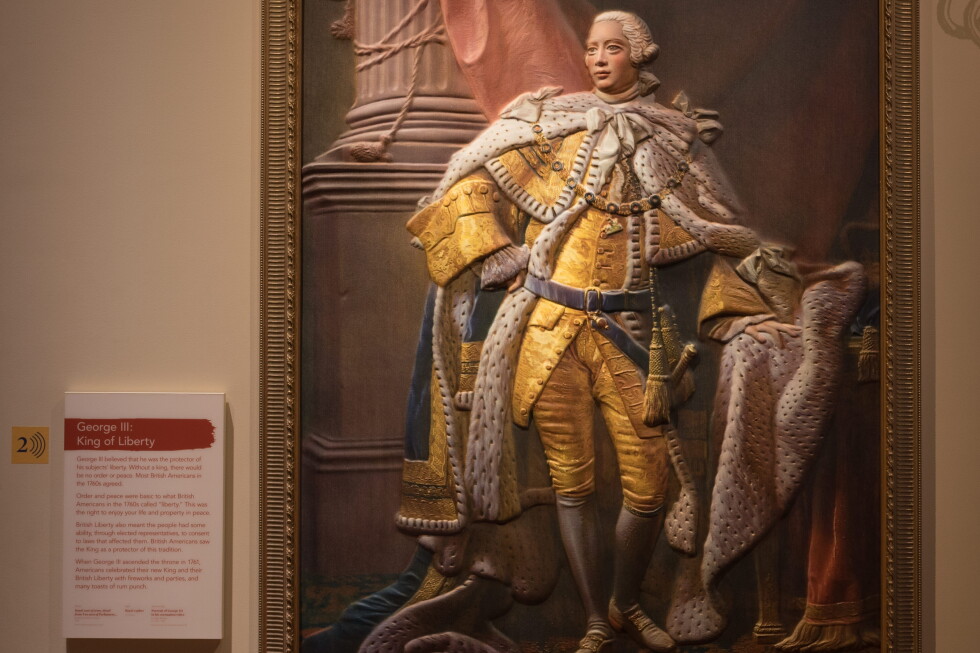
As the United States prepares to mark its 250th year of independence, a long-held popular portrayal of King George III – the man Americans were taught to see as a tyrannical, mad monarch who drove the colonies to revolution – is undergoing a long-overdue reassessment by historians and cultural institutions.
For generations, American popular culture has cemented this one-note image of George III: the maniacal villain of the Broadway megahit *Hamilton*, the central figure of *The Madness of King George*, and the tyrant referenced in the classic educational song *No More Kings* who imposed unfair taxes without colonial consent. But new archival access and modern scholarship are upending this long-accepted narrative, revealing that the founding story’s iconic villain was far more complex than wartime propaganda depicted.
Leading British historian Andrew Roberts, author of the 2021 biography *The Last King of America*, argues that the simplified caricature of George III grew from wartime misinformation, a pattern common to most conflicts. “Truth became the first casualty of the American War of Independence, as it is in most wars,” Roberts notes, pointing out that 25 of the 27 grievances against the king listed in the Declaration of Independence collapse under historical scrutiny. In his view, the American Revolution was not a reaction to fabricated tyranny of George III, but rather a reflection of colonists’ deep desire for political autonomy.
Even in 1972, decades before this recent wave of reappraisal, then-Prince Charles (now King Charles III) pushed back against the pervasive narrative in a foreword to a George III biography. “If the average schoolchild remembers anything about history after leaving school, he will remember that George III was mad,” Charles wrote. “If he is American as well then madness is often given as a reason for the ‘irrational’ behavior of the King toward the Colonists, making it necessary for them to declare independence.” He closed with a hope that Americans would one day see the true king without centuries of bias.
Historical context confirms that George III, who inherited the British throne in 1760 at just 22 years old, was a constitutional monarch operating within existing British political structures. As is still the case in the modern UK, all legislation and taxation were approved by Parliament, not imposed unilaterally by the crown. While George stood with Parliament as tensions escalated – from the 1765 Stamp Act to the 1773 Coercive Acts that responded to the Boston Tea Party – his role was largely ceremonial, bound by the will of elected lawmakers. When the first shots of the revolution rang out at Lexington and Concord in 1775, the conflict was as much a dispute between Parliament and colonial assemblies as it was a rejection of the monarchy itself.
A major catalyst for this historical shift came in 2015, when Queen Elizabeth II oversaw the public release and digitization of 280,000 uncatalogued Georgian Papers from Windsor Castle’s archives. The complete record revealed a meticulous, engaged monarch who tracked everything from crop yields to parliamentary politics in detailed journals and notes, and offered new granular insight into his long-debated medical condition. The long-popular theory that George suffered from the genetic metabolic disorder porphyria has now been discredited; modern medical analysis of the new records points to Type 1 bipolar affective disorder, which only caused severe, extended manic episodes after 1788 – more than a decade after the Revolutionary War ended.
That finding confirms a core claim of the reassessment: George III was not experiencing mental instability during the revolution, a point that cultural institutions across the U.S. are now highlighting as part of 250th anniversary programming. The Library of Congress’ major exhibit *The Two Georges* frames the revolution as a clash between two contemporary leaders – George III and George Washington – rather than a battle against a mad tyrant. Philadelphia’s Museum of the American Revolution opens its core exhibit by acknowledging that, in the 15 years before the revolution, many colonists held George III in such high regard that they widely referred to him as “the king of liberty” and displayed royal symbols on everyday household objects and public buildings.
This new framing received a high-profile public validation in April 2024, when current King Charles III twice referenced his five-times great-grandfather George III during a visit to Washington D.C., marking the upcoming 250th anniversary. Speaking from the U.S. Congress rostrum, he lightheartedly endorsed the “Tale of Two Georges” exhibit theme, joking: “King George never set foot in America, and, please rest assured, I am not here as part of some cunning rear-guard action.” The assembled lawmakers reacted with no hostility, and Charles repeated the reference that evening during a White House state dinner, noting “As the direct descendant of King George III, I know this is a nation that never gives up.”
Still, historian Roberts is skeptical that the traditional caricature will fade entirely from American popular memory. When asked if his scholarship had shifted broader public perception, he wrote via email: “Nothing will dislodge the Americans from their desire to see GIII as an evil dictator.”