Against a decades-long backdrop of Israeli occupation, a coordinated campaign of displacement is unfolding across the rural West Bank, as state-aligned settler groups methodically push Palestinian communities off their ancestral land to consolidate Israeli control. The overarching goal, openly stated by senior members of Prime Minister Benjamin Netanyahu’s ruling coalition, is to force Palestinians into overcrowded urban enclaves or into exile, cementing permanent Israeli control over all of the West Bank through the creation of irreversible “facts on the ground.” Despite widespread international condemnation that labels these actions illegal under international law and a fatal barrier to any future Middle East peace deal, Israeli officials have largely ignored external objections to advance their territorial agenda.
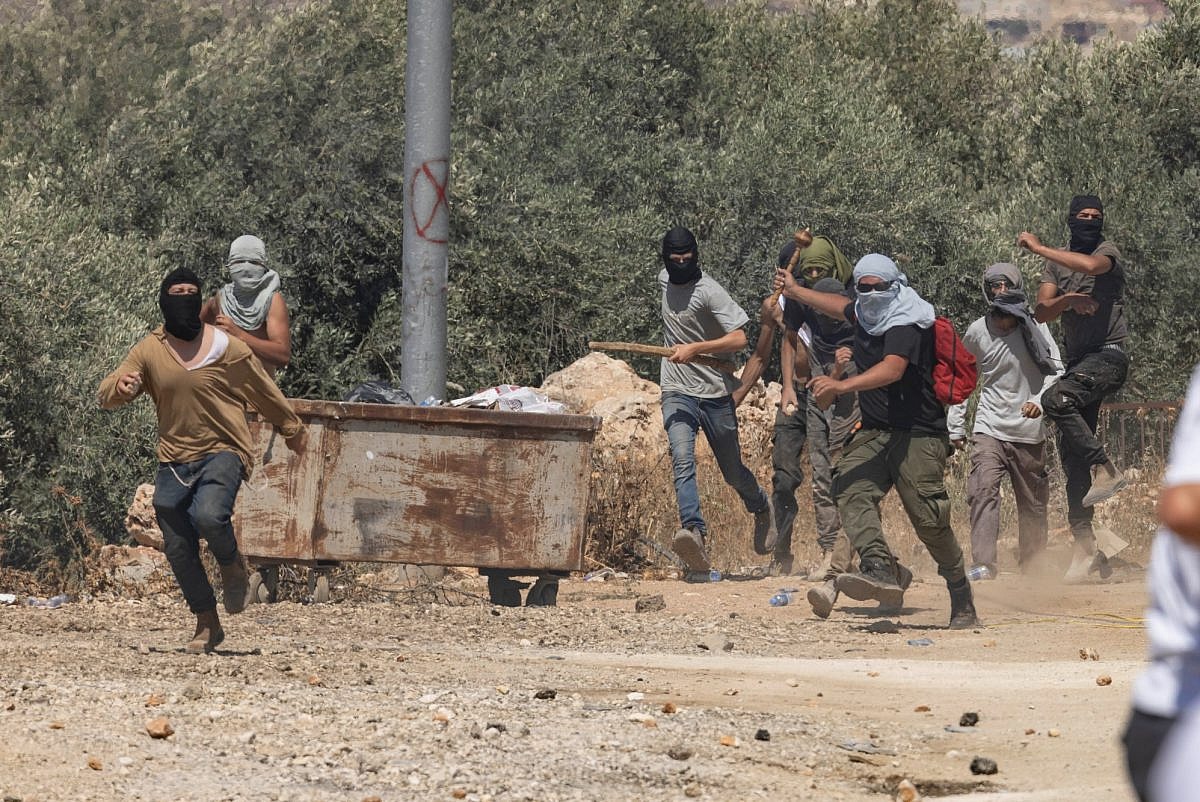
At the forefront of this campaign are the Hilltop Youth, a militant faction of civilian settlers that establishes makeshift, unauthorized outposts on hilltops adjacent to Palestinian rural communities. Backed openly by the Israeli military, these settlers employ a wide range of intimidation and violence to force out local residents: targeted physical assaults, the destruction of homes and agricultural infrastructure, the theft or slaughter of livestock, the arson of cultivated crop fields, and deliberate sabotage of critical water access. For Palestinians living in these at-risk areas, there is virtually no path to legal protection or intervention from Israeli authorities.
The Israel Defense Forces (IDF), which exercises full security control over most of the West Bank, claims it has no mandate to discipline Israeli settlers who attack Palestinians, arguing that this responsibility falls exclusively to civilian police. However, civilian police only operate within the boundaries of recognized Israeli settlements, leaving settlers in unauthorized outposts effectively beyond the reach of any law enforcement. This systemic gap creates a permissive environment for unchallenged violence, as confirmed by former IDF soldiers who have spoken out about their experiences. Nadav Weiman, a retired IDF sniper and researcher with Breaking the Silence – an organization that collects testimony from veterans who served in the Palestinian territories – says most frontline soldiers receive no formal instructions to intervene in settler attacks on Palestinian communities. “It’s almost impossible to enforce the law on violent settlers and very easy to do whatever we want to Palestinians,” Weiman explained in an interview.
Netanyahu has sought to frame the violence as the work of a small fringe of extremist settlers unrepresentative of the broader settler community, promising that perpetrators will face arrest and prosecution under Israeli law. But these pledges ring hollow against political reality: Netanyahu’s governing coalition relies heavily on far-right politicians who explicitly oppose any crackdown on settler activity and openly endorse the displacement of Palestinians to eliminate any possibility of a future Palestinian state. In February, Finance Minister Bezalel Smotrich laid out the government’s unvarnished long-term goal, stating that Israel would formally “embark on a path toward sovereignty, while encouraging emigration. There is no other long-term solution.”
This agenda aligns with Netanyahu’s longstanding political views, which have framed Palestinians as interlopers on land that rightfully belongs to Israel. As early as the 1970s, he was associated with the American lobby group “Jordan is Palestine, Inc.,” which argued that Jordan – already home to a large population of Palestinian refugees – should serve as the Palestinian national homeland.
For many Palestinians, the current campaign of displacement amounts to a second Nakba, or “catastrophe,” referencing the mass expulsion of hundreds of thousands of Palestinians during the 1948 and 1967 Arab-Israeli wars, whose descendants have never been allowed to return to their ancestral land. Amina Khalil, a 78-year-old 1948 refugee, told The New Arab that fear of a repeat of this catastrophe now haunts younger generations of Palestinians. “My grandchildren don’t ask me, ‘What happened?’ They’re asking, ‘Is this possible now? Will it happen again?’” she said.
Human rights organizations have documented the rapid acceleration of displacement since 2023. New York-based Human Rights Watch (HRW) confirms that at least 5,900 Palestinians have been fully or partially displaced from 107 West Bank communities over the past year. The Israeli government actively enables this campaign, HRW says, even providing monthly $50 stipends to settler groups that carry out harassment of Palestinian communities. “The Israeli government and the settlers share the same goal of maximum land and minimum Palestinians, with the authorities not only failing to stop settler violence, but actively enabling it,” wrote Sarah Sanbar, an HRW researcher focused on the region. “Settlers shoot, attack and expel Palestinians from their land, and the state provides the weapons, the legal cover, and the budget to do it.” The Israeli government has repeatedly denied it maintains any formal policy of forced displacement.
The legal structure of occupation creates additional barriers to accountability for settlers. Only Israel’s internal intelligence service, Shin Bet, can order the IDF to arrest Israeli civilians suspected of attacking Palestinians – a resource entirely inaccessible to Palestinian residents. The Israeli government also publishes almost no public data on arrests of violent settlers, unless an incident generates damaging international public relations. High-profile arrests are extremely rare: in June, six Hilltop Youth members were arrested for arson of a mosque and destruction of property in the village of Deir Dibwan after the attack was filmed and shared widely on social media, but no trial date has yet been set. When Shin Bet has ordered mass detentions of Hilltop Youth members, it has almost always targeted acts of violence against Israeli security forces, not Palestinian civilians.
In mid-August, Defense Minister Israel Katz acknowledged the growing frequency of violence by proposing that Israeli police take over responsibility for curbing settler attacks, arguing that the IDF’s core mission should focus on countering Palestinian resistance and border defense rather than policing settler activity. “The IDF’s role is to fight Palestinian terrorism, focus on defending borders and communities against threats, not chase boys on the hilltops,” Katz stated, though he has yet to release a formal plan or timeline for the proposed shift.
The Hilltop Youth movement itself traces its ideological origins to a call from late Israeli Prime Minister Ariel Sharon, who urged settlers to seize strategic hilltop territory to expand Israeli control. “Everyone that’s there should move, should run, should grab more hills, expand the territory. Everything that’s grabbed will be in our hands. Everything we don’t grab will be in their hands, Sharon famously declared. After the October 7, 2023 Hamas attacks that killed more than 1,200 people in southern Israel, Netanyahu authorized the creation of armed settler militias, framing the move as a security measure to prevent future incursions. The program has since devolved into widespread, unregulated vigilantism against Palestinian communities, with attacks growing in frequency and intensity across the West Bank.
On-the-ground examples of this campaign illustrate the systematic nature of the displacement. In the village of Qusra, near the northern West Bank city of Nablus, armed Hilltop Youth have besieged a single family home that currently shelters a dozen neighbors displaced from nearby properties for the past two weeks. Settlers occupied one of the abandoned local homes, and IDF troops who regularly visit the site make no attempt to remove the intruders. After settlers cut the village’s main water pipe, a UNICEF team has been delivering emergency food, water, medicine, and other critical supplies to the trapped residents, with no end to the siege in sight.
One of the most high-stakes ongoing expansions targets the E1 area, an 8-square-mile stretch of land between Jerusalem and the large Israeli settlement of Ma’ale Adumim that is currently home to 33,000 Bedouin Palestinians. Netanyahu recently announced plans to construct more than 1,200 new settlement apartments in the area, with a long-term goal of building 8,000 total residences that will be formally annexed to Jerusalem, effectively cutting the West Bank into two disconnected segments. The Bedouin community of Khan al-Ahmar, which has 6,000 residents, sits directly in the path of the new development and is marked for forced expulsion. For years, the Israeli government has refused to connect Khan al-Ahmar to water, electricity, and road infrastructure shared with the adjacent Ma’ale Adumim settlement, and leading Israeli human rights group B’Tselem warns that the coming demolition of the entire community – including a local school that serves children from 11 nearby Palestinian communities – amounts to a war crime for which Israeli leaders bear direct criminal liability. The UN High Commissioner for Human Rights has called for an immediate halt to the forced displacement and settlement expansion, but Netanyahu has moved forward with the plan, approving $92 million for the construction of a separate Palestinians-only road along the eastern edge of Ma’ale Adumim to segregate Palestinian and Israeli traffic.
In the 8,000-person village of Tel, known for its fertile fig and olive harvests, annual violence has destroyed the local agricultural economy. Over 38 years, settlements and a military base have surrounded the village, uprooting hundreds of olive trees to make way for construction. This year, a raid by dozens of settlers left four Palestinians and two Israelis dead, after which the IDF sealed off the entire village and arrested 40 residents. This year’s fig harvest is rotting unpicked on the trees, leaving residents with no source of income. “The sweetness of Tel’s figs has turned into bitterness,” said local resident Omar Ishtayeh. “The fruit that once symbolized prosperity has become a witness to a new reality threatening both the land and the people who live on it.”
Decades-old Palestinian refugee camps in the West Bank, established after the 1948 and 1967 wars, have become another major target of Israeli military and settler activity. The camps, long centers of resistance to Israeli occupation, have been systematically raided and bulldozed over the past year, with narrow alleyways flattened to make way for Israeli tanks and aircraft. According to the United Nations Relief and Works Agency (UNRWA), the UN body responsible for supporting Palestinian refugees, at least 700 residents have been killed, 23,000 arrested, and more than 33,000 displaced in the operations. While UNRWA has developed reconstruction plans for destroyed camps in Gaza, it has only been able to address urgent humanitarian needs for displaced refugees in the West Bank, with no plans for rebuilding and no permission for residents to return to their former homes to recover belongings.
Even Palestinian Christian communities have not been spared, despite Israeli efforts to court evangelical Christian support internationally. The 1,200-person Christian village of Taybeh has faced ongoing systematic harassment from settlers, who graze livestock on village farmland, set fire to crops, destroy fences and infrastructure, cut water and power lines, and break into private homes. After senior Vatican leaders and the World Council of Churches condemned the attacks and called for accountability, the IDF established a closed military zone around the village to bar settler entry. However, the closure also blocks residents from accessing their agricultural fields and prevents visitors, pilgrims, and aid workers from entering the village, while Hilltop Youth continue to gather at the perimeter to taunt residents in open violation of the military order.
International criticism of the campaign has been widespread but largely ineffective. The European Union has repeatedly confirmed that Israeli settlements in the West Bank, including the E1 expansion, are illegal under international law, but has rejected calls from the European Parliament to cancel preferential trade deals that benefit Israel. In the United States, a State Department spokesperson says the Trump administration does not officially support Israeli annexation of the West Bank, and US Ambassador to Israel Mike Huckabee – a longtime supporter of Israeli settlement expansion – has called violent settlers “terrorists” despite previously arguing that settlements are legitimate Israeli communities. No diplomatic or punitive actions have followed these public statements, leaving the displacement campaign to proceed unimpeded.