Official Indian government economic data released recently shows national retail inflation surged to 6.09% in October, up notably from the 5.54% recorded in September, with food price growth far outpacing the broader headline rate to hit a steep 8.94%. The cost squeeze is even more acute in rural communities, where food inflation hit 9.09% compared to 8.68% in urban areas, as basic grocery bills eat up a larger share of household budgets across the country.
Economists attribute the sharp upswing in food costs to a confluence of overlapping pressures: erratic weather patterns, widespread supply chain gaps, and steadily climbing agricultural input expenses. Roughly 60% of India’s cultivated farmland relies entirely on seasonal monsoon rainfall, leaving the country highly exposed to unpredictable shifts in annual precipitation. This year’s southwest monsoon ran 13% below historical average levels and was distributed unevenly across growing regions, while intensifying El Niño climate conditions have created further downward risks to agricultural output.
While food now accounts for a smaller portion of average Indian household spending than in previous decades, it remains the single largest driver of national inflation movements. Food and beverages make up 36.75% of the current official consumer price index basket, a marked drop from the 45.86% weighting in the prior measurement series that reflects shifting consumption patterns as households allocate more of their income to services, transportation, healthcare, education, and other non-food expenditures. Even so, sudden sharp spikes in food prices can move the overall national inflation rate significantly, with vastly unequal impacts across different income brackets.
“Adjustability for a low-income nation like India is extremely limited,” explained Rajeswari Sengupta, associate professor of economics at Mumbai’s Indira Gandhi Institute of Development Research, noting that a large share of household earnings still goes directly to covering basic food costs. Data from CRISIL chief economist Dharmakirti Joshi quantifies this disparity: the bottom 20% of rural households faced an overall inflation rate of 6.9% in October, compared to just 6.5% for the wealthiest 20% of rural families. In urban areas, the gap was even starker, with the lowest income quintile facing 6.1% inflation while the top 20% saw only 5.3% cost growth.
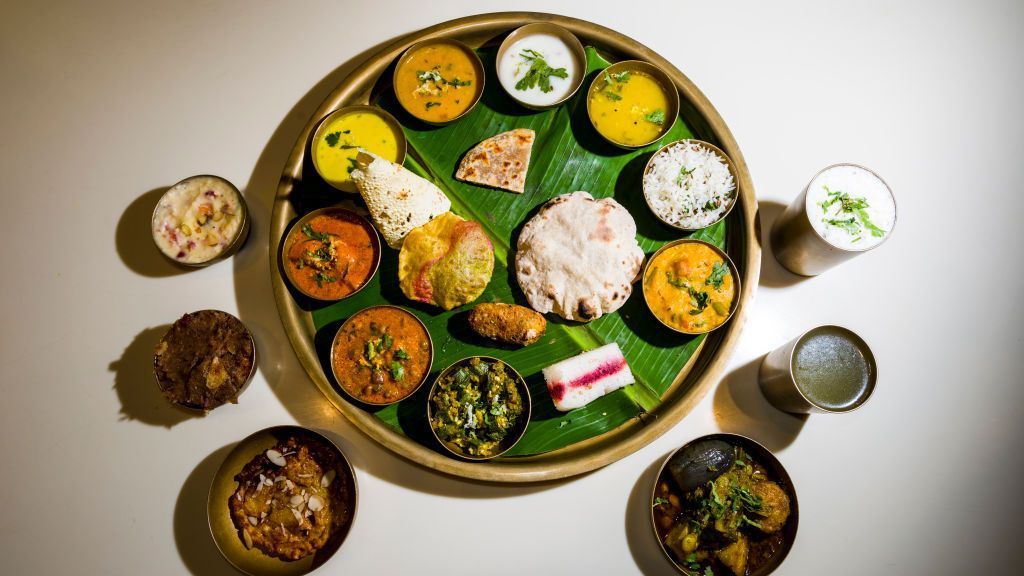
This affordability strain is visible even in the cost of standard home-cooked meals. CRISIL’s Roti Rice Rate analysis found that the average cost of a vegetarian thali rose 12% year-over-year in October, driven by steep price hikes for onions, tomatoes, assorted vegetables, edible oil, rice, and cooking gas, while a non-vegetarian thali saw a 9% annual cost increase. CRISIL director of intelligence Pushan Sharma noted that rice prices are up roughly 10% year-on-year, pulses up 8%, edible oil up 13%, and LPG cooking gas up 10%. “This is no longer a price surge driven by just a handful of commodities; the inflationary pressure is becoming far more broad-based,” Sharma confirmed.
While consumers can reduce onion consumption temporarily to offset cost spikes, it is nearly impossible to substitute core staples like rice, pulses, and cooking oil, leaving families with little room to adjust their grocery budgets. The persistent price volatility stems not only from on-farm production challenges, but also systemic gaps in post-harvest infrastructure: inadequate storage, processing, and transportation networks often turn temporary seasonal shortages into dramatic price surges, while bumper harvests frequently lead to massive food waste when surplus produce cannot be distributed efficiently.
Onions are a particularly high-profile example of this dynamic: the rabi winter onion crop, which accounts for roughly two-thirds of national production, is harvested in March and April and stored for months, leading to predictable sharp price hikes as stockpiles dwindle in the months before the next harvest. Tomatoes similarly face regular summer price spikes when heat stress damages crops and market arrivals drop. Sharma notes that perishable horticultural goods drive short-term food inflation volatility, while staples like rice and wheat create longer-lasting, structural increases in food costs. India still lacks sufficient cold storage, sorting, grading, and food processing capacity to smooth out these supply and demand swings, meaning farmers often sell produce at a loss during gluts only for consumers to face exorbitant prices a few months later. Sharma argues that expanding processing capacity to turn surplus tomatoes into puree and other shelf-stable products could drastically reduce these extreme price swings.
Additional external pressures are also pushing costs higher: global energy shocks raise expenses for agricultural transportation, irrigation, and fertiliser, while India’s heavy reliance on imported edible oils leaves the domestic market exposed to global commodity price fluctuations. The Indian government does hold significant buffers against the worst food inflation outcomes: national public cereal stockpiles sit well above legally mandated minimum levels, and a free public food distribution programme serving nearly 800 million vulnerable citizens provides a critical safety net against rising grocery costs, with rice reserves particularly abundant.
Even so, Sengupta warns of broader macroeconomic risks: “Food inflation may start as a supply shock, but its impacts can cascade across the entire economy. Workers who find their wages no longer cover basic living expenses will demand higher pay, and businesses facing rising labour costs will pass those expenses on to consumers, creating the self-reinforcing wage-price spiral that central banks work aggressively to avoid.”
This creates a delicate balancing act for Indian policymakers. The agricultural sector remains relatively low-productivity, and the government has long supported farm livelihoods through minimum support price schemes that guarantee a minimum purchase price for key crops to prevent market crashes. At the same time, food prices are deeply politically sensitive: sharp spikes in staples like onions and tomatoes can quickly trigger widespread public anger, prompting governments to implement emergency measures such as export bans, stockholding limits for traders, and other market interventions to push prices back down.
Recent consumption survey data spanning 2011-12 to 2023-24 also reveals a long-term shift in Indian eating patterns: the share of household food spending allocated to cereals has dropped sharply, particularly for the poorest families, a trend largely driven by the government’s subsidised food distribution programmes. Consumption of nutrient-dense foods including dairy, fruit, and meat has risen across all income groups, with the largest gains recorded among the lowest income households. While India’s national food basket is growing far more diverse, that diversity will only remain meaningful if ordinary working families can afford to put that varied, nutritious food on their plates, rather than being forced to cut back as inflation continues to climb.
The rising cost of putting food on the table in India