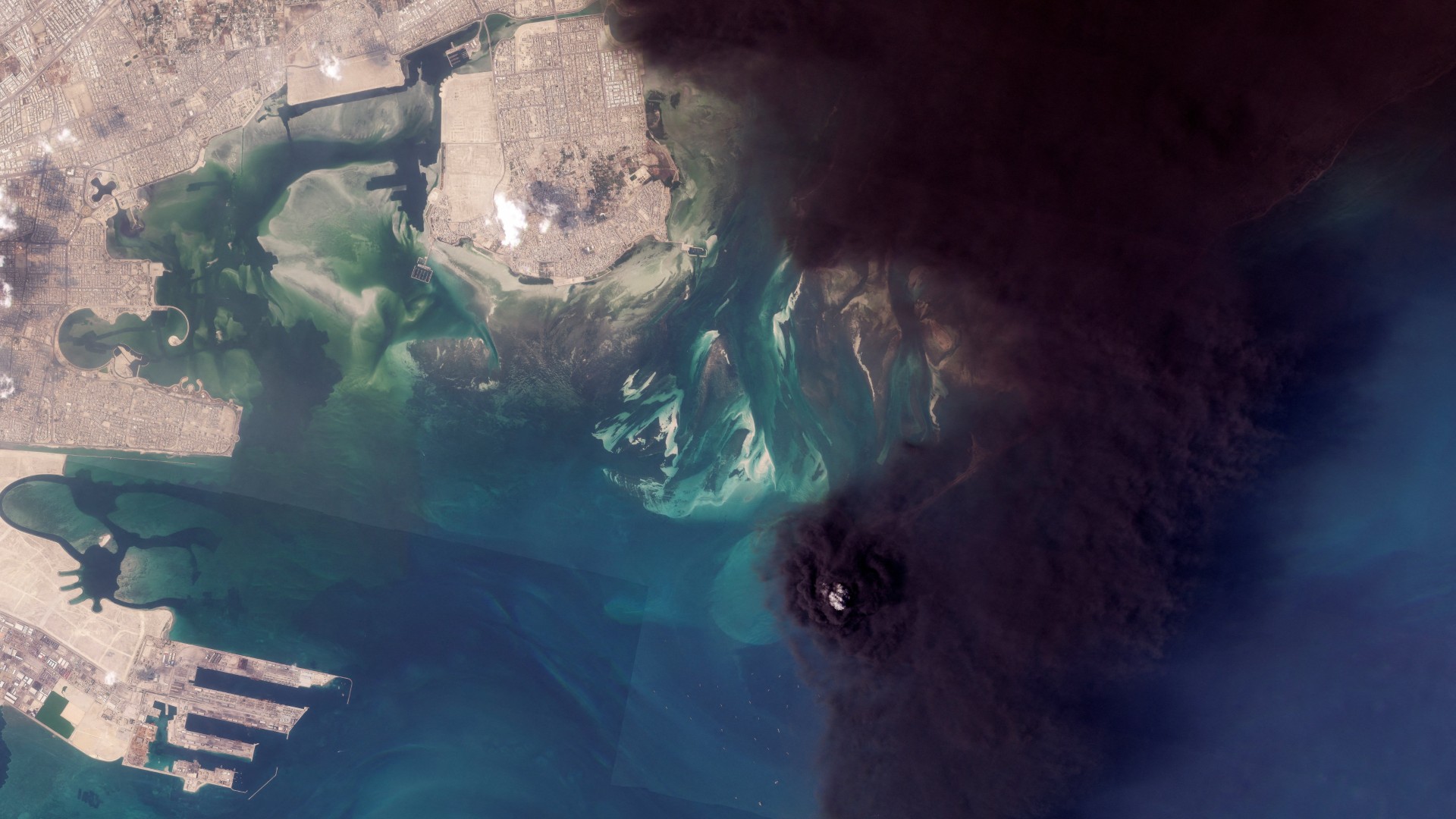
On Wednesday, Yemen’s Houthi movement, officially known as Ansar Allah, formally took responsibility for a direct assault on Saudi Arabia’s Ras Tanura facility, the kingdom’s largest and most strategically vital oil refinery, framing the operation as legitimate retaliation for repeated Saudi aerial strikes that have killed dozens of Yemeni civilians in recent days. Houthi military spokesperson Yahya Saree laid out details of the operation in a series of public posts on social media platform X, confirming that the strike ignited large-scale fires at the refinery, and explicitly citing unprovoked Saudi military aggression against Yemeni territory as the core motivation. Saree specifically referenced a recent Saudi air raid on passenger buses and civilian transport trucks in the Al-Maqatirah district of Lahij governorate that killed no fewer than 26 people, alongside a string of other deadly attacks targeting residential areas in Yemen’s capital Sanaa and multiple other governorates. In a subsequent post addressing public threats from Saudi officials to launch retaliatory strikes against Yemen’s civilian Hodeidah port — a site the Saudi military has already bombed in prior operations — Saree issued a stark warning that every Saudi port located along the Red Sea coast would be classified as a valid target for future Houthi operations. The statement urged all port staff, contract workers and bystanders in the vicinity of these targeted sites to evacuate immediately, and called on global shipping firms to pull their vessels out of these Saudi Red Sea ports without delay. The Houthi movement currently controls Sanaa and large swathes of northern and western Yemen, and resumed launching missile and drone assaults on Saudi airports, critical oil infrastructure and government facilities in July, after a years-long frozen Yemeni civil war reignited as a spillover effect of the Israel-US military conflict against Iran. Riyadh formally broke a long-standing bilateral ceasefire arrangement on July 13 that year, when its warplanes carried out a bombing raid on Sanaa International Airport. Since that ceasefire collapse, Saudi military forces have failed to neutralize Houthi combat capabilities, and have struggled to push back against the group’s operations targeting both Saudi territory and Saudi-aligned forces inside Yemen. The sustained wave of cross-border Houthi assaults has inflicted cascading damage on the Saudi national economy, its core oil supply infrastructure, and the kingdom’s carefully curated global international reputation. Multiple major international airlines have suspended regular flight services to and from Riyadh, Saudi Arabia’s capital, while prior attacks on oil processing and export hubs have triggered intermittent disruptions to Saudi crude supplies. The ongoing security crisis has also forced Saudi authorities to delay or cancel a slate of high-profile global events, including the Asian Football Confederation’s Asian Cup and the kingdom’s flagship annual Future Investment Initiative conference. In official statements released earlier Wednesday, Saudi defence authorities confirmed that their air defence systems had intercepted and destroyed four incoming drones near the Ras Tanura site in the kingdom’s Eastern Province, but notably declined to refute reports that at least part of the attacking force successfully struck the sprawling refinery complex. Satellite imagery analyzed and verified by Reuters showed vast plumes of thick, dark black smoke spreading out from the refinery site, covering a total area of roughly 600 square kilometres. The 550,000-barrel-per-day Ras Tanura refinery, located on Saudi Arabia’s Gulf coast facing Iran, has been targeted by Houthi forces in prior rounds of the long-running Yemeni conflict, and forms the backbone of the kingdom’s primary oil export complex that handled the vast majority of Saudi crude shipments before the Israel-US conflict against Iran broke out on February 28. Since that regional conflict erupted, Saudi authorities have been forced to reroute a significant share of their oil exports through the Red Sea port of Yanbu on the kingdom’s western coast, which receives crude via the cross-country East-West pipeline, and that facility has also come under repeated Houthi assault. In a separate announcement the same week, Saree confirmed that Houthi forces had carried out a three-phase coordinated strike targeting Riyadh’s central financial district. Saudi civil defence officials confirmed that a Tuesday strike on a major high-rise tower in the district left 11 people injured; the landmark skyscraper, the tallest building in Riyadh, houses the headquarters of Saudi Arabia’s Public Investment Fund, the kingdom’s $770 billion sovereign wealth fund. This marked the second assault on the same tower in less than seven days: the first strike on November 19 caused structural damage to the building but resulted in no recorded casualties. Images posted by Saudi civil defence authorities in the aftermath of the Tuesday attack showed visible impact damage to the tower’s exterior facade roughly halfway up its height, consistent with the damage pattern from the previous week’s strike.
Houthis say they attacked Saudi Arabia’s largest oil refinery in retaliation for deadly strikes