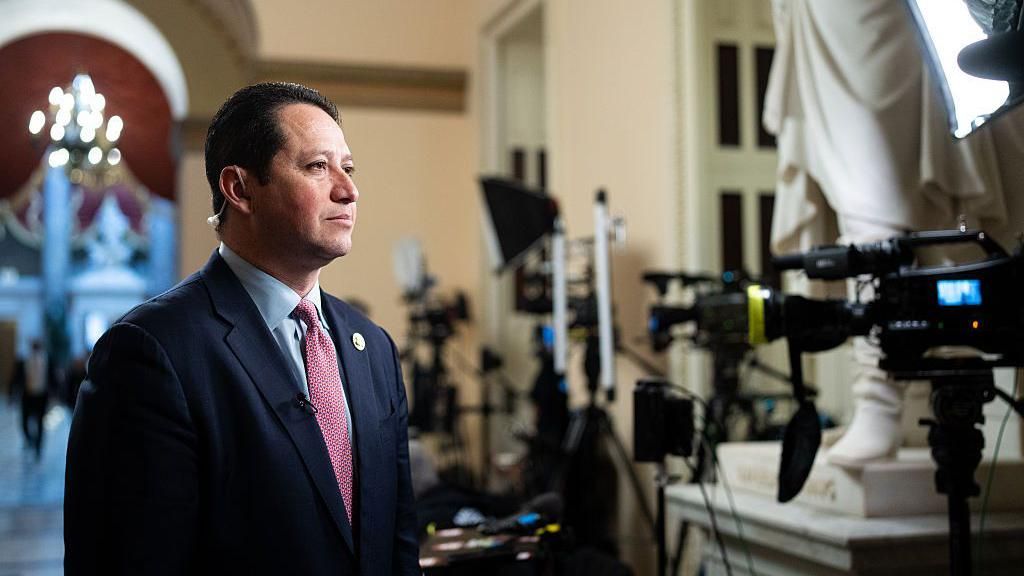
In a seismic development that has sent shockwaves through Capitol Hill, two sitting U.S. congressmembers — one Republican and one Democrat — formally stepped down from their congressional seats this week, exiting office amid mounting ethical pressure and public allegations of sexual misconduct.
Texas Republican Representative Tony Gonzales was the second lawmaker to submit his resignation on Tuesday, capping weeks of growing controversy that began when he ultimately confirmed a years-long extramarital affair with a married congressional staffer, Regina Santos-Aviles. Santos-Aviles died by suicide in September 2025 near her Uvalde, Texas home after setting herself on fire, a finding confirmed by the local medical examiner and first reported by CBS News, the U.S. partner of the BBC.
The timeline of the scandal accelerated rapidly over the past month. Gonzales, who had initially dismissed the claims of an affair as a coordinated political blackmail campaign to force him out of office, had already announced he would not seek re-election in the November 2026 midterm vote. But as new details of his misconduct emerged and a formal congressional ethics probe was launched, pressure for an immediate departure grew overwhelming.
Parallel developments unfolded for California Democratic Representative Eric Swalwell, who faced a separate set of public allegations ranging from sexual harassment to assault against a former member of his own staff. After the allegations became public over the weekend, a groundswell of bipartisan criticism erupted, and congressional leadership moved quickly to open a formal ethics inquiry and debate holding full votes to expel both men from office. Maneuvering to avoid a humiliating forced expulsion — which would have cost both lawmakers their post-congressional pension benefits — both lawmakers opted to submit voluntary resignations, effective immediately this week.
Swalwell, who had been running for the Democratic nomination for California governor before the allegations broke, dropped his gubernatorial campaign Sunday and announced his resignation Monday, even as he and his legal team have forcefully denied all claims against him. “These accusations are false, fabricated, and deeply offensive – a calculated and transparent political hit job,” said Swalwell’s attorney Sara Azari. In his final resignation letter submitted Tuesday, however, Swalales offered a muted apology, writing: “I am deeply sorry to my family, staff, and constituents for mistakes in judgement I’ve made in my past.”
Gonzales, for his part, offered only a brief farewell in his own resignation letter, noting: “It has been my privilege to serve the residents of Texas’s 23rd congressional district.”
The dual resignations, one from each major political party, have little impact on the partisan balance of power in the U.S. House of Representatives, where Republicans hold a narrow but stable majority. Even with the two vacancies, Republicans will retain their controlling grip on the chamber for the remainder of the 119th Congress.
The scandal has already reignited broader conversations about congressional accountability, workplace culture on Capitol Hill, and the leniency of rules that allow members accused of misconduct to resign voluntarily and retain taxpayer-funded benefits, rather than face expulsion and lose those privileges.